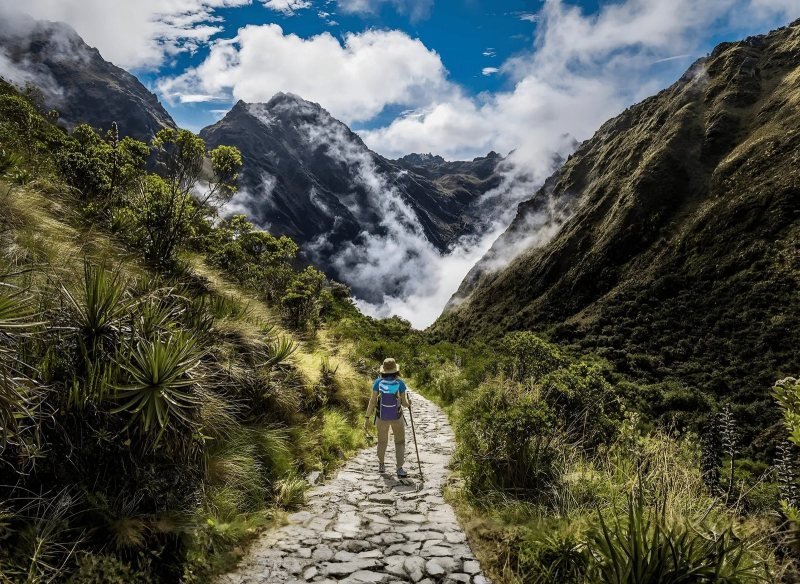
The Inca stone road into Machu Picchu: 43 km (26 mi) in 4 days from km 82, over Dead Woman's Pass at 4,215 m (13,829 ft), on a permit limited to 500 people a day.
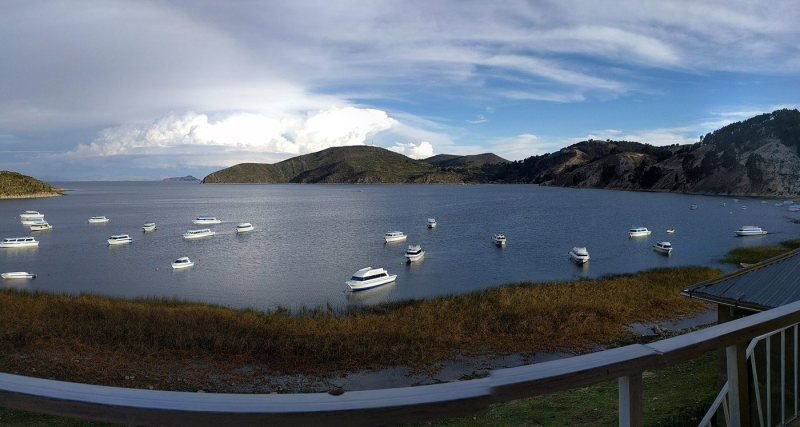
The Bolivian side of Lake Titicaca (Copacabana, Isla del Sol), La Paz and the Uyuni salt flats, reached by road from Puno in our Peru and Bolivia tours.
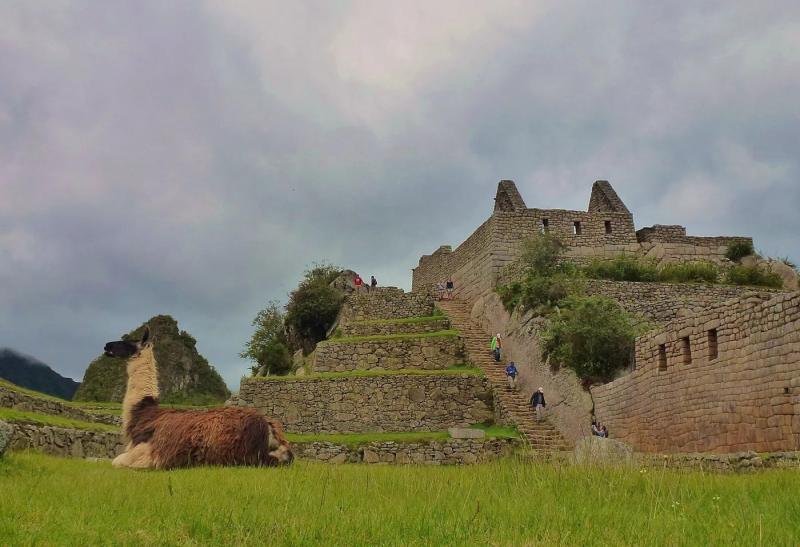
Machu Picchu is an Inca royal estate built for the emperor Pachacuti in the 1400s on a ridge at 7,970 ft (2,430 m). Radiocarbon dates put its use between about AD 1420 and 1530. It was left around the Spanish conquest, never found by the Spanish, shown to the world by Hiram Bingham in 1911 and listed by UNESCO in 1983.
Huayna Picchu (route 3-A) is the steep peak behind the classic view, about an hour up on narrow, exposed Inca stairs. Machu Picchu Mountain (route 1-A) is higher and longer but wider and calmer. Huchuy Picchu (route 3-D) is a short climb. Pick by your fear of heights, then book early.
The Hiram Bingham is Belmond's luxury train to Machu Picchu. It leaves Poroy, near Cusco, at 9:05 a.m. and the fare covers brunch, dinner, drinks, the bus to the citadel, a guide and tea at the Sanctuary Lodge. Fares start around US$500 each way (as of June 2026). Book it for the day out, since every train shares the same view.
The highest guest scores in Aguas Calientes on Booking.com (as of October 1, 2026) belong to Tierra Viva and Casa Andina Standard at 8.9, and Casa de Luz at 8.8. The Sanctuary Lodge at the citadel gate scores 9.3 at over US$2,100 a night. Sleep near the bus stop.
Aguas Calientes, officially Machu Picchu Pueblo, is the small town at 6,690 ft (2,040 m) at the foot of Machu Picchu. No road reaches it: you arrive by train or on foot, and a bus climbs to the ruins in about 25 to 30 minutes. One night here lets you enter Machu Picchu early.
Fly Lima to Cusco in about 1 hour 20 minutes, drive 1.5 to 2 hours to Ollantaytambo, ride the train 1.5 to 2 hours to Aguas Calientes, then take the Consettur bus 25 to 30 minutes to the gate. No road reaches Machu Picchu. The alternatives are treks or the Hidroeléctrica walk.
Buy Machu Picchu tickets only on tuboleto.cultura.pe, the Ministerio de Cultura site. A foreign adult pays S/152 plus an S/11 SERNANP fee (as of February 2026). Pick a circuit, route and hourly slot, type each passport exactly, and book morning slots and Huayna Picchu once your dates are firm.
A Machu Picchu day from Cusco costs about US$250 to US$370 per person if you buy each piece yourself: the S/163 entry ticket (about US$48, as of February 2026), US$150 to US$250 for the round-trip train, US$24 for the bus, a guide and the ride to Ollantaytambo. Our day trip with all of it arranged costs US$317.
The best months to visit Machu Picchu are May and September: dry mornings, green terraces and fewer people than June to August. The driest months are June to August, also the busiest. January to March bring about 13 in (340 mm) of rain a month and the Inca Trail closes every February. The sun clears the ridges well after the gate opens.
PeruRail and Inca Rail run the Machu Picchu train on the same track. Both leave Ollantaytambo and reach Aguas Calientes in about 1 hour 30 minutes. PeruRail also runs from Poroy and San Pedro in Cusco from May to December. Book your entry ticket first, then the train, and pay for big windows only on daylight trains.
Machu Picchu has 3 circuits and 10 one-way routes, set by the Ministerio de Cultura. For a first visit, book Circuit 2 and take route 2-B if it has space: it stops at the lower platform with the classic view, then crosses the temples. Circuit 1 stays above the city. Circuit 3 leads to Huayna Picchu.
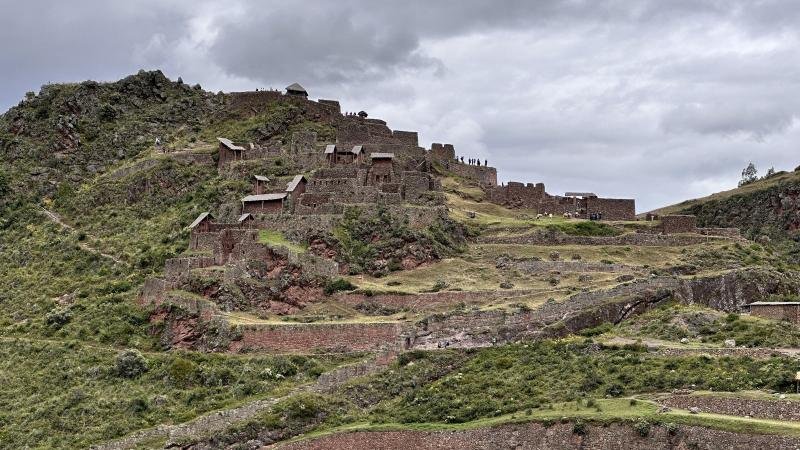
The Sacred Valley is the Urubamba River valley between Pisac and Ollantaytambo, 21 to 37 mi (33 to 60 km) north of Cusco and about 1,640 ft (500 m) lower. The things to do are five Inca sites and one market: Pisac, Ollantaytambo, Chinchero, Moray and the Maras salt pans. One long day covers three or four of them.
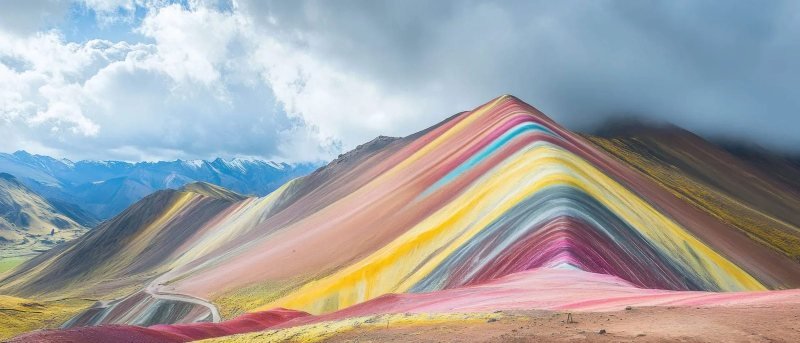
Rainbow Mountain (Vinicunca) stands at 16,522 ft (5,036 m) at the viewpoint most tours reach, about 100 km (62 mi) and three hours by road southeast of Cusco. The walk up from the trailhead takes 90 minutes to two hours. The stripes are mineral layers, and the dry months of April to October show them best.
Q'eswachaka is the last Inca rope bridge still in use, a 92 ft (28 m) span of woven grass over the Apurímac River in Canas province, about 3.5 hours south of Cusco. Four Quechua communities rebuild it by hand every June in three days. UNESCO inscribed the renewal on its Intangible Heritage list in 2013.
Ollantaytambo is a living Inca town at the western end of the Sacred Valley, 9,160 ft (2,792 m) up and about two hours from Cusco. It has a terraced fortress with an unfinished sun temple, streets laid out by the Incas and still lived in, and the station where most trains to Machu Picchu leave.
The Maras salt mines are about 3,000 shallow pools fed by a salty spring on a hillside above the Sacred Valley, worked by local families. Moray, 20 minutes away, is a set of round Inca terraces sunk into the plateau, about 100 ft (30 m) deep. Both sit about 1 hour 20 minutes from Cusco and fit in half a day.
The highest-rated Sacred Valley hotels on Tripadvisor (as of October 2026) are Tambo del Inka at 4.9 of 5, then Sol y Luna, Belmond Rio Sagrado, Aranwa and Inkaterra Hacienda Urubamba at 4.8. Sleep in Urubamba for resort space, in Ollantaytambo for the early train, and in Pisac for the market.
The highest-rated hotels near the Plaza de Armas in Cusco on Booking.com (as of October 1, 2026) are Monasterio at 9.8, Casa San Blas at 9.5, and Cooper, Aranwa, Palacio del Inka, Atoq San Blas and Casa Matara at 9.4. Sleep on the flat streets near the plaza first.
The highest-rated hostels near the Plaza de Armas in Cusco on Booking.com (as of October 1, 2026) are Viajero Cusco at 9.3, Way Kap at 9.2, Auquis at 9.1, and Pariwana, Black Llama and Casa Tunki at 9.0. Dorm beds ran about US$7 to 32 a night.
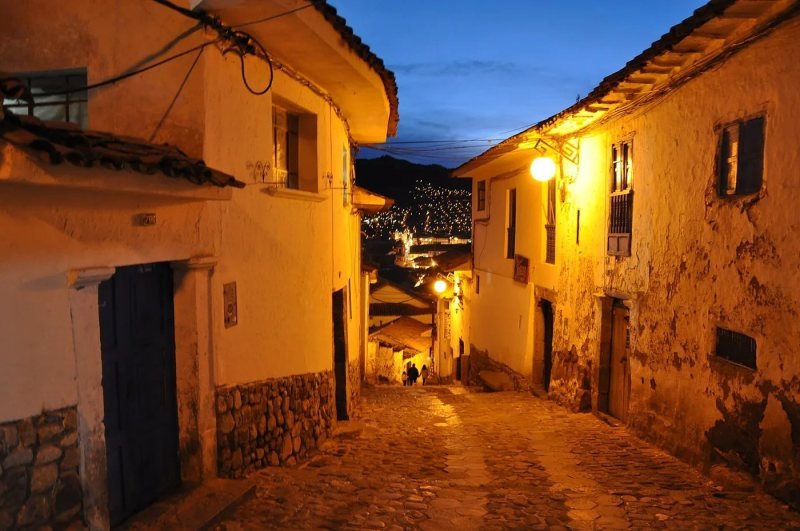
Twelve things in Cusco worth your hours: Qorikancha, Sacsayhuamán, the cathedral, San Pedro market, San Blas, the twelve-angled stone, the Inca sites above the city, two museums, the San Cristóbal viewpoint and the South Valley. Plan three nights, with the first afternoon slow for the altitude, and buy the Boleto Turístico only if you will use the Sacred Valley sites too.
Vinicunca is the famous one and worth the climb if you have slept two nights in Cusco and can walk uphill for 90 minutes at 16,000 ft. Palccoyo gives the same colors on a near-flat ridge for people who are short on time or breath. Pallay Punchu is the jagged ridge with almost nobody on it, at the cost of the longest drive.
Cusco sits at about 3,400 m (11,150 ft), and the CDC treats flying straight in as a high-risk ascent. Expect a headache and short breath the first day. Sleep lower in the Sacred Valley first if you can, keep two days easy, skip alcohol, and ask your doctor about acetazolamide.
The Classic Inca Trail runs about 26 mi (43 km) from KM 82 near Ollantaytambo to the Sun Gate above Machu Picchu, walked in 4 days with 3 nights in tents. The high point is Dead Woman's Pass at 13,829 ft (4,215 m) on day 2. The stairs and the altitude make it hard, not the distance.
Choquequirao is an Inca city at about 10,010 ft (3,050 m) on a ridge above the Apurímac canyon, reached by two days of walking from Cachora, four hours by road west of Cusco. Only 30 to 40 percent is excavated, there is no road or train, and the cable car is announced, not built.
Our ranking of the treks from Cusco, after guiding all of them: the Classic Inca Trail for the ruins and the Sun Gate arrival, Salkantay for the mountains without a permit, Lares for the villages, Inca Jungle for variety, Choquequirao for solitude. The table compares days, altitude, permits, comfort and price.
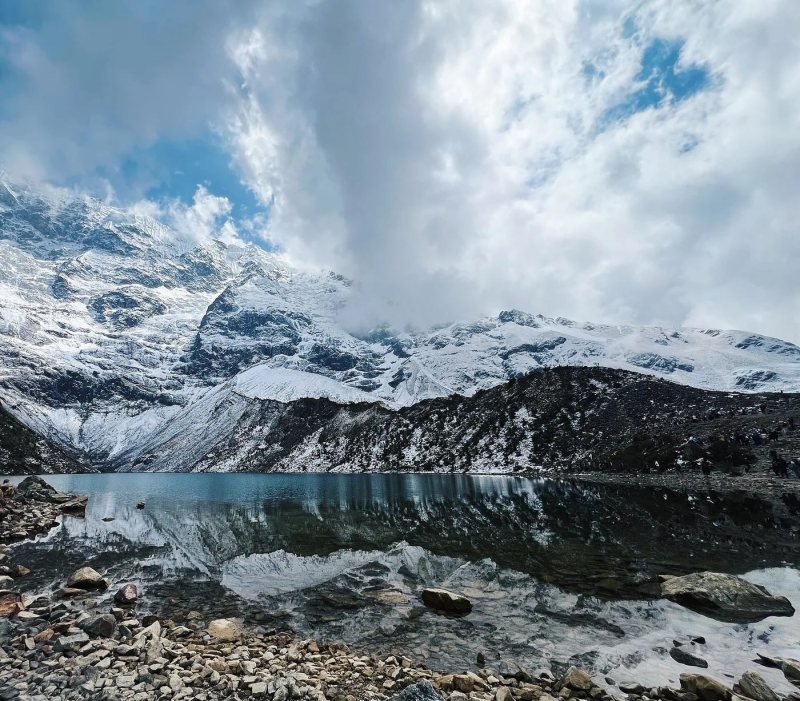
The Salkantay trek is a 4 to 5 day hike of about 45 miles (72 km) from Soraypampa over the 15,190 ft (4,630 m) Salkantay Pass, down through cloud forest to Aguas Calientes and Machu Picchu. No Inca Trail permit is needed, it runs all year, and altitude is the hard part.
Choose the Classic Inca Trail if you want Inca stone under your boots, ruins every day and the walk through the Sun Gate into Machu Picchu, and you can book months ahead for a permit. Choose Salkantay if you want glaciers, a higher pass, more miles, no permit and the freedom to book weeks out. The Inca Trail is harder on the knees, Salkantay on the lungs.
You cannot buy an Inca Trail permit yourself. Licensed tour operators book it in your name and passport number, with a cap of 500 people a day on the classic routes, staff included. The trail closes every February. For May to August, book when the season opens, typically months ahead.
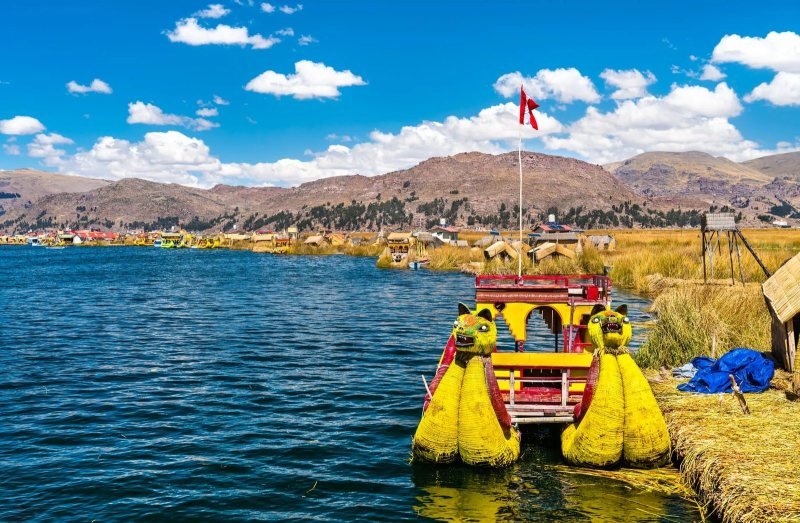
The Uros floating islands are reed platforms in the bay of Puno, Peru, about 30 minutes by boat from the port. Families build them from blocks of totora root tied together and covered with cut reeds, anchored to poles in the lake bed. A visit takes about an hour and is included in most Lake Titicaca boat days.
Taquile and Amantaní are two Quechua-speaking islands about three hours by boat from Puno. Taquile is the day visit: a stone path up to a village at 12,960 ft (3,950 m), lunch cooked by families and textiles on UNESCO's heritage list. Amantaní is the overnight: a bed in a family's house and a sunset climb to the Pachatata hilltop.
Puno is the Peruvian port on Lake Titicaca at about 12,560 ft (3,830 m), and the islands are only half of it. The other half is on land: the Sillustani burial towers on Lake Umayo, the Candelaria festival in early February, the Aymara shore from Chucuito to Juli, and the old steamer Yavari. Plan two nights, three with the shore.
On Tripadvisor (as of October 2026), the highest-scored lakefront hotel in Puno is GHL Hotel Lago Titicaca at 4.7 of 5, and in the center Tierra Viva Puno Plaza scores 4.6. Titilaka, an all-inclusive lodge outside the city, scores 4.8. For one night with a family, choose Amantaní.
Lake Titicaca lies on the Peru and Bolivia border at 3,812 m (12,507 ft). It covers 8,372 km² (3,232 sq mi) and is up to 281 m (922 ft) deep. Puno is the main town on the Peruvian shore and Copacabana on the Bolivian shore.
Cusco to Puno is about 390 km (242 mi) by road. A direct bus takes 6 to 7 hours, the daytime tourist bus with guided stops takes about 10, and the PeruRail Titicaca train takes about 10 and a half on set days. There is no direct flight. Take the tourist bus if you have the day, the night bus if you do not.
Give Lima one full day before Cusco, two if you like to eat: the colonial center and the San Francisco catacombs, then the Miraflores cliffs and Barranco at sunset, with the Larco Museum and Pachacamac or a food walk on day two. Sleep in Miraflores or Barranco, at sea level, and fly up to Cusco rested.
Paracas is a desert bay town about 160 mi (260 km) south of Lima, 3.5 hours by road. The draw is a two-hour boat around the Ballestas Islands, loud with sea lions and Humboldt penguins, and the Paracas National Reserve behind the town. One long day from Lima covers both, and a night away does it better.
The Nazca Lines flight is a 30-minute loop from the Nazca airfield or about 1 hour 40 minutes from Pisco over figures scraped into the desert between 500 BC and AD 500. Nazca is about 280 mi (450 km) from Lima, so it takes two days. The planes bank hard, airsickness is common and the accident record deserves a read before you book.
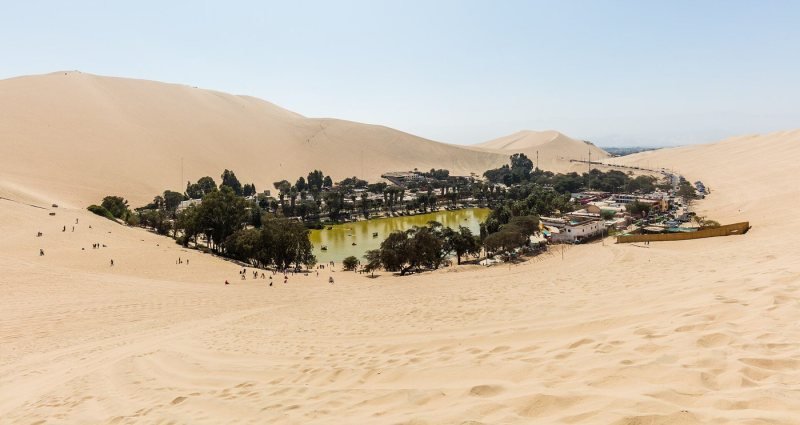
Huacachina is a small desert oasis 5 km (3 mi) from Ica, about 300 km (186 mi) south of Lima. Go for dune buggies, sandboarding and the sunset over the dunes. A long day trip from Lima works, but one night, paired with Paracas and the Ballestas Islands, is better.
Copacabana is the Bolivian lakeside town where boats leave for the Isla del Sol, the island Inca belief names as the birthplace of the sun. It sits at 12,602 ft (3,841 m), about 88 mi (142 km) from Puno through the Kasani border. Plan one night in town and a full day on the island, two nights to sleep on it.
The Salar de Uyuni is the largest salt flat on Earth, about 10,582 km² at 3,663 m (12,018 ft) in southwest Bolivia. Go January to March for the mirror effect, or May to November for the white crust and the 3-day route to Laguna Colorada and the geysers.
US citizens need no tourist visa for Bolivia since December 1, 2025: bring a passport valid six months, your hotel address and a yellow fever certificate. Bolivia suits prepared travelers, but blockades happen, so read the State Department advisory before booking.
Inti Raymi is Cusco's Festival of the Sun, staged every June 24 at the Qorikancha, the Plaza de Armas and Sacsayhuamán. The first two stages are free. Sacsayhuamán needs a grandstand ticket sold only on Teleticket, in soles, or a free spot on the hillsides. Book Cusco hotels months ahead.
The Aymara are an Andean people of about 2 million, most of them on the high plateau around Lake Titicaca in Bolivia and Peru, with smaller communities in Chile and Argentina. They speak Aymara, an official language of Bolivia, farm potatoes and quinoa on the altiplano and live on the southern shore of the lake, from Chucuito to the Bolivian border.
A despacho is an offering that Quechua and Aymara communities make to the Pachamama (the earth) and the mountains. A ritual specialist arranges coca leaves, seeds, sweets, fat and flowers on paper, folds them into a bundle and burns or buries it to give thanks. Visitors can join when invited.
Peru's currency is the sol (S/, code PEN). Pay in soles for almost everything, keep some clean US dollars for tours and hotels that price in dollars, and use a credit card where one is accepted. Withdraw soles from bank ATMs in cities, since the islands and the trails have none, and tip in soles, in cash.
US citizens do not need a visa to visit Peru as tourists. You need a passport valid for six months beyond your arrival, and the immigration officer grants up to 183 days, recorded digitally rather than on a paper card. Bring proof of onward travel. No vaccine is required for entry and no insurance is required by law.
Fly. Lima to Cusco is about 1 hour 20 minutes in the air on LATAM, Sky or JetSMART, with departures through the day. The bus takes 21 to 22 hours over the Andes on a road of about 1,100 km (680 mi). Book a morning flight, land at 3,400 m (11,150 ft), and keep the first afternoon light.
Ten days is the right length for a first Peru trip: Lima, the Sacred Valley, Machu Picchu, Cusco and Lake Titicaca. Seven days covers Lima and the Cusco region. Fourteen adds Arequipa and the Colca Canyon. Always sleep low first and go high later.
The best time to visit Peru is May to September, the dry season in the Andes, when Cusco, Machu Picchu and Lake Titicaca have clear skies and cold nights. Our pick is May or September for dry trails and smaller crowds. The coast is sunniest December to March, the Amazon driest May to October.
Pack layers, not bulk: Cusco mornings are near freezing and afternoons are warm, Machu Picchu is humid and rainy, the lake is cold at night and burns by day. One daypack under 40 by 35 by 20 cm for Machu Picchu, a soft duffel for the train's 8 kg limit, and no poles, tripods or umbrellas at the citadel. The checklist is below.
Ten to twelve days is the right length for a Peru honeymoon: two in Lima, three in the Sacred Valley with a quiet Machu Picchu, two or three in Cusco and two on Lake Titicaca. Sleep in the valley rather than the city, enter Machu Picchu at the first or last slot, and budget from about US$900 per person for the tours and hotels in a 3-star tier, more for the 5-star version.
Yes, for the trips most Americans take. The US State Department keeps Peru at Level 2, exercise increased caution, with stricter advice only for remote zones far from Lima, Cusco, Machu Picchu and Lake Titicaca. The risks that touch tourists are pickpockets, street taxis, ATM scams and strikes that close roads. Each has a simple answer.