




Sacred Valley Altitude: Town by Town, and Why to Sleep There First
The Sacred Valley floor sits between about 2,792 m (9,160 ft) at Ollantaytambo and 2,972 m (9,750 ft) at Pisac, with Urubamba at about 2,871 m (9,420 ft). That is 430 to 600 m below Cusco at 3,399 m (11,152 ft), which makes the valley the easiest first night after a flight from Lima.

In this guide
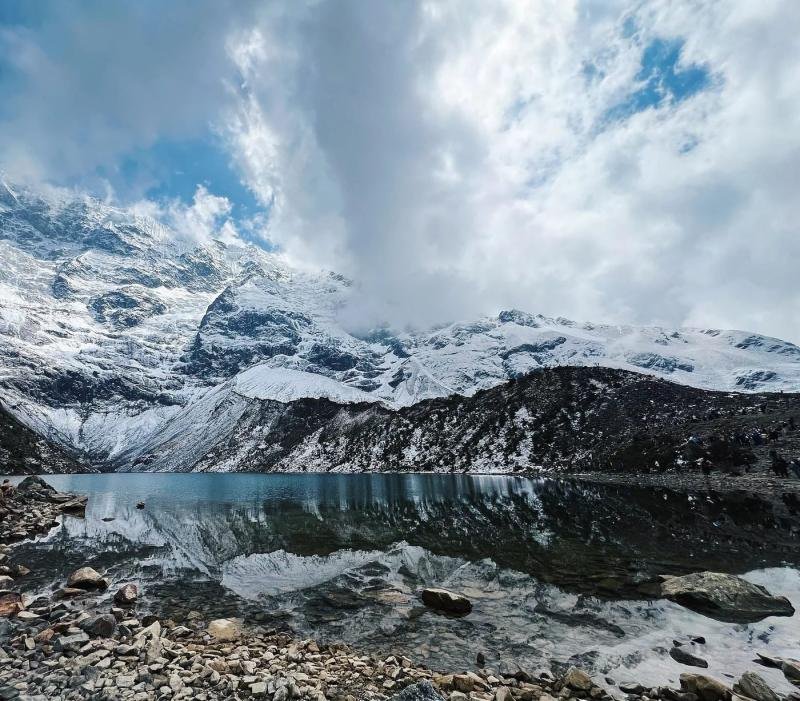
An hour out of Cusco airport, the van crosses the cold, open plateau around Chinchero, where the wind bends the grass and the snow peaks line up on the horizon. Then the road tips over the edge and drops in long curves toward the Urubamba River. By the time you reach the valley floor the air is warmer, tall eucalyptus lines the road, and you can hear the river from the hotel garden.
Short answer: The Sacred Valley floor sits between about 2,792 m (9,160 ft) at Ollantaytambo and 2,972 m (9,750 ft) at Pisac, with Urubamba at about 2,871 m (9,420 ft). That is 430 to 600 m below Cusco at 3,399 m (11,152 ft), which makes the valley the easiest first night after a flight from Lima.
The Sacred Valley of the Incas is the valley of the Urubamba River north of Cusco, running roughly from Pisac to Ollantaytambo. The Machu Picchu trains leave from here, and it is the lowest place in the Cusco region where you can sleep in a proper town with a choice of hotels. That second fact matters more than most travelers realize. The valley is lower than Cusco, the plateau you cross to get there is higher, and a single day can take you up and down by almost 1,000 m (3,300 ft).
How high is the Sacred Valley?
The valley floor runs from about 2,972 m (9,750 ft) at Pisac in the east down to 2,792 m (9,160 ft) at Ollantaytambo in the west, following the river downstream. Urubamba, the largest town and the one with most of the hotels, sits in the middle at about 2,871 m (9,420 ft). Every one of them is lower than Cusco.
The catch is the road. Between Cusco and the valley lies a high plateau, the Pampa de Anta and Chinchero, where the towns sit well above Cusco. Chinchero is at 3,762 m (12,343 ft) and the Moray terraces at about 3,500 m (11,480 ft). Most Sacred Valley day tours visit both, so you spend part of the day above Cusco and part of it below. The table shows where each stop falls.
Altitude of each Sacred Valley town and site
The table lists the towns where people sleep and the sites they visit, from highest to lowest, with the difference from Cusco. The towns on the valley floor are below Cusco. The plateau sites on the Chinchero route are above it.
| Place | Type | Altitude (m) | Altitude (ft) | Compared with Cusco | Source |
|---|---|---|---|---|---|
| Chinchero | Plateau town and market | 3,762 | 12,343 | About 360 m higher | Wikipedia infobox |
| Moray terraces | Plateau site | about 3,500 | about 11,480 | About 100 m higher | Published figure, to confirm |
| Cusco | Reference | 3,399 | 11,152 | Reference | Wikipedia infobox |
| Pisac | Valley town | 2,972 | 9,750 | About 430 m lower | Wikipedia infobox |
| Urubamba | Valley town, most hotels | about 2,871 | about 9,420 | About 530 m lower | Wikipedia infobox gives 2,870 m |
| Ollantaytambo | Valley town, train station | 2,792 | 9,160 | About 600 m lower | Wikipedia infobox |
| Aguas Calientes | Town below Machu Picchu | 2,040 | 6,690 | About 1,360 m lower | Site value, Wikipedia infobox |
Why sleeping in the valley first helps
The valley is the closest place to Cusco's airport where you can sleep several hundred meters lower, and that is the move the CDC describes for travelers flying into Cusco. Its Yellow Book notes that in Cusco travelers can descend to sleep lower than the airport for one or two nights. The general CDC rule above 3,000 m (9,800 ft) is to raise the altitude you sleep at by no more than 500 m (1,650 ft) a night. A flight from Lima breaks that rule in 80 minutes. A first night in Urubamba softens the blow.
On the ground it goes like this. You land in Cusco around mid-morning, and the van climbs out of the city, crosses the plateau and drops into the valley in about 1 hour 30 minutes. You eat lunch in Urubamba or Ollantaytambo, take a nap and sleep at about 2,800 m (9,200 ft). The next day you ride the train to Aguas Calientes, lower again at 2,040 m (6,690 ft), and visit Machu Picchu. When you finally sleep in Cusco, your body has had three nights to adjust. That is the order we recommend to anyone who asks.
Two honest caveats. The valley still counts as high altitude. The CDC places the start of altitude illness risk at sleeping altitudes of 2,450 m (8,000 ft), and every valley town is above that, so you may still get a headache the first night. And the plateau stops on the way down, Chinchero and Moray, are higher than Cusco. Take them slowly or save them for later in the trip.
How our packages use the valley
Our standard packages start with a night in Cusco and spend the second night low, in Aguas Calientes, after a Sacred Valley day. The 4-day Machu Picchu and Cusco package with a Sacred Valley day, from US$774 per person, follows that pattern: city tour on day 1, Chinchero, Moray, Maras and Ollantaytambo on day 2, the train down to Aguas Calientes for the night, and Machu Picchu on day 3.
With only two days, the Sacred Valley and Machu Picchu in 2 days, from US$627, goes through Pisac, Urubamba and Ollantaytambo, sleeps in Aguas Calientes and visits the citadel the next morning. Travelers who already sleep in Cusco can see the valley in one go on the Sacred Valley day tour from Cusco, from US$127.
If you want your first night in the valley itself, ask for it on the quote form and a planner on our team in Cusco will build the hotels around it. The hotels in the Sacred Valley guide lists the towns and the places we know.
Which valley town to choose
For altitude alone, Ollantaytambo is the lowest valley town at 2,792 m (9,160 ft), and it has the train station, which saves a transfer on Machu Picchu day. Urubamba, about 80 m (260 ft) higher, has the widest choice of hotels with gardens and room to spread out. Pisac, at 2,972 m (9,750 ft), is the highest of the three and the closest to Cusco, about 45 minutes by road. It suits a market morning but gives you less altitude relief.
Our pick for a first night is Urubamba or Ollantaytambo. Both are about 530 to 600 m (1,730 to 1,990 ft) below Cusco, both are warm in the afternoon, and both keep the train a short drive away.
What to expect on the first afternoon
You will still feel the height, even in the valley. Climbing the Ollantaytambo terraces or the stairs above Pisac leaves most people breathing hard, and the dry air gives some a mild headache. Walk slowly, sip water through the day and keep dinner light. The CDC advises avoiding alcohol for the first 48 hours at altitude.
This page gives altitude facts, not medical advice. Ask your doctor about altitude medication before the trip, especially if you have a heart or lung condition. For symptoms, warning signs and the full CDC guidance, read our main Cusco altitude guide, and for the ruins themselves the Machu Picchu elevation guide.
Related tours


Questions people ask
What is the altitude of the Sacred Valley?
The Sacred Valley floor lies between about 2,792 m (9,160 ft) at Ollantaytambo and 2,972 m (9,750 ft) at Pisac, with Urubamba at about 2,871 m (9,420 ft). The plateau above it, with Chinchero at 3,762 m (12,343 ft), is higher than Cusco. So the valley towns sit below Cusco and the plateau sites on the way sit above it.
Is the Sacred Valley lower than Cusco?
Yes, the valley towns are 430 to 600 m lower than Cusco, which sits at 3,399 m (11,152 ft). Pisac is about 430 m lower, Urubamba about 530 m and Ollantaytambo about 600 m. The exception is the plateau between them, where Chinchero is about 360 m higher than Cusco.
Should I stay in Cusco or the Sacred Valley first?
The Sacred Valley first, if your dates allow it. The CDC notes that travelers flying into Cusco can sleep lower than the airport for one or two nights, and the valley is the closest place to do that. Spend those nights in Urubamba or Ollantaytambo, see Machu Picchu, and save Cusco for the end of the trip.
Can you get altitude sickness in the Sacred Valley?
Yes, though for most people it is milder than in Cusco. The CDC places the risk of altitude illness from sleeping altitudes of 2,450 m (8,000 ft), and every valley town is above that line. Expect to get winded on stairs and possibly a headache the first night. Severe symptoms or breathlessness at rest mean seeing a doctor the same day.
Is Ollantaytambo or Urubamba better for acclimatizing?
Ollantaytambo is about 80 m lower and has the Machu Picchu train station, so it is the better base the night before the train. Urubamba has more hotels with gardens and space to rest. The altitude gap between them is small, so choose by hotel and logistics, and keep the plateau sites off your first afternoon.
Sources
- CDC Yellow Book, High-Altitude Travel and Altitude Illness checked October 2026
- Wikipedia, Cusco (infobox elevation 3,399 m) checked October 2026
- Wikipedia, Ollantaytambo (infobox elevation 2,792 m) checked October 2026
- Wikipedia, Urubamba, Peru (infobox elevation 2,870 m) checked October 2026
- Wikipedia, Pisac (infobox elevation 2,972 m) checked October 2026
- Wikipedia, Chinchero (infobox elevation 3,762 m) checked October 2026
- Our guide, Maras and Moray (Moray about 3,500 m)
- Our package pages: itineraries and 'from' prices (Essential tier, per person, double room) checked October 2026
This guide was last reviewed in October 2026. Prices, rules and timetables are quoted with the date we checked them.