


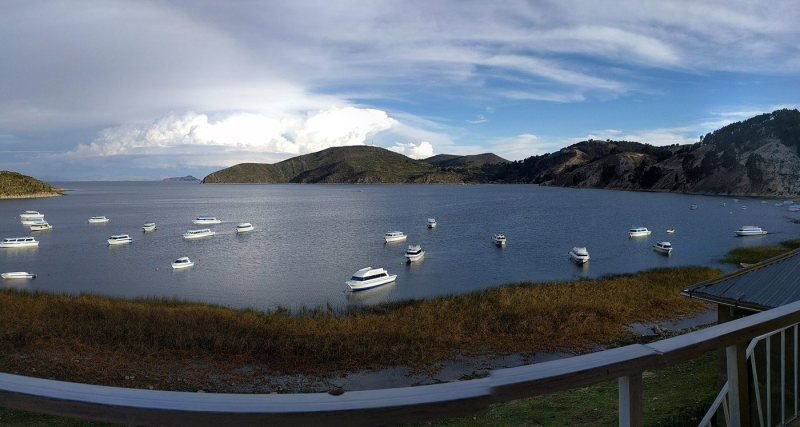
The Aymara of Lake Titicaca: Language, Land and Life Today
The Aymara are an Andean people of about 2 million, most of them on the high plateau around Lake Titicaca in Bolivia and Peru, with smaller communities in Chile and Argentina. They speak Aymara, an official language of Bolivia, farm potatoes and quinoa on the altiplano and live on the southern shore of the lake, from Chucuito to the Bolivian border.

In this guide
Short answer: The Aymara are an Andean people of roughly 2 million, most of them on the altiplano around Lake Titicaca in Bolivia and southern Peru, with smaller communities in northern Chile and Argentina. They speak Aymara, an official language of Bolivia and co-official in the parts of Peru where it dominates, and they farm potatoes, quinoa and livestock at around 12,500 ft (3,800 m). Around the lake you meet them on the southern shore between Puno and the border, in La Paz and in Copacabana.
Where the Aymara live
The Aymara homeland is the altiplano, the high plain between the two Andean ranges, centered on Lake Titicaca. On the Peruvian side they live mostly south of Puno, in the string of towns along the shore from Chucuito through Juli and Pomata to Desaguadero on the border, and inland around Ilave. In Bolivia they are the largest Indigenous people: the 2012 census counted 1,191,352 people who identified as Aymara, concentrated in the La Paz and Oruro departments, in El Alto above La Paz, and in the villages around Copacabana and the Isla del Sol. In Peru, 548,292 people aged 12 and over said they were Aymara in the 2017 census, about 2.4 percent of that age group, almost all in the Puno Region, Tacna and Moquegua. Chile's far north around Arica and Argentina's Jujuy province hold the rest.
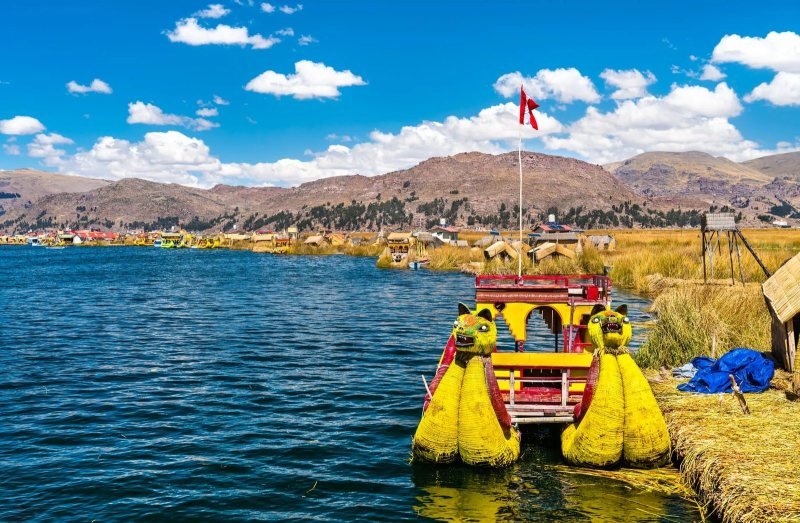
The map matters when you plan a lake trip, because the two shores speak different languages. The islands of Taquile and Amantaní and the Capachica peninsula are Quechua-speaking. The Uros families on the reed islands speak Aymara. The road south to Bolivia is Aymara country from the first town out of Puno. Our Lake Titicaca facts guide explains the geography, and things to do in Puno covers the shore road.
The language
Aymara is spoken by about 1.7 million people, according to Ethnologue, most of them in Bolivia, where it has been an official language alongside Spanish, Quechua and 33 other Indigenous languages since the 2009 constitution. In Peru it is co-official where it predominates, under article 48 of the constitution, and the 2017 census counted 444,389 Peruvians who learned it as their first language. Three dialects exist and people understand each other across them.
Linguists argue about whether Aymara and Quechua are related. The two share a lot of words and sounds, and the majority view is that they borrowed from each other over centuries of living side by side rather than descending from one parent language. What travelers notice is the sound: three vowels only, a, i and u, and a stream of clicks and aspirated consonants that sound nothing like Spanish. One idea from the language that guides love to tell: in Aymara the past is in front of you, because you can see it, and the future is behind you, because you cannot. The word for future days is qhipa uru, back days.
Before the Incas and after
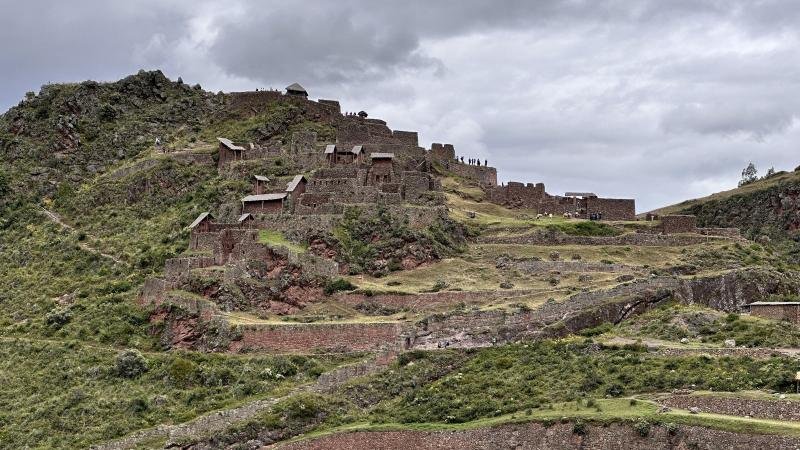
The lake has been Aymara country for a very long time. The Tiwanaku culture, whose stone city stands near the southern shore in Bolivia, dominated the basin between about AD 500 and 1000, and the raised fields it built, the waru waru, still show on the plain near Juli. After Tiwanaku, a group of Aymara kingdoms held the shore. The Lupaqa ruled the southwestern side from Chucuito, with seven towns from Chucuito to Zepita, and the Qulla built the burial towers of Sillustani on the northern side. The Incas conquered them in the 1460s under Pachacuti, crushed a revolt under his son and kept Chucuito as a provincial capital. A Spanish inspector who counted the province in 1567 recorded 20,080 households, about 100,000 people, most of them Aymara and a fifth of them Uru.
The Spanish took the land, sent men to the silver mines of Potosí and built the stone churches you see in Juli and Pomata, where Jesuit priests ran a press that printed books in Aymara by 1612. The kingdoms disappeared from the records by 1600, but the people, the language and the fields did not.
Life on the lake today
Most Aymara families on the Peruvian shore farm and keep animals, and many have a relative in Puno, Juliaca, Lima or La Paz sending money home. The crops are the ones the altiplano allows: potatoes in dozens of varieties, some of them freeze-dried in the June frosts into chuño that keeps for years, quinoa, barley, broad beans and the root called oca. Llamas and alpacas graze the hills, sheep and a few cows the plain, and families along the water cut totora reed for roofs, boats and fodder and raise trout in net cages, a business that arrived in the 20th century.
The year turns on the rains and on the festivals. Carnival in February and March brings the ch'alla, when homes, trucks and shops are sprinkled with alcohol and confetti for luck. August is the month of offerings to the Pachamama, the earth, before planting. June 21, the southern winter solstice, is Willkakuti, the return of the sun, which Bolivia made a national holiday in 2009 and which draws thousands to the Tiwanaku ruins to wait for sunrise. The Candelaria festival in Puno in early February mixes Aymara and Quechua dance troupes by the thousand, and UNESCO listed it in 2014. The wiphala, the square rainbow flag of seven colors, flies at all of them.
Religion on the shore is Catholic and Andean at the same time, with no contradiction felt. A family hears mass in a colonial church and the same week has a yatiri, a ritual specialist, read coca leaves and burn an offering for a sick relative or a truck just bought. The mountains, the achachilas, are protectors you greet, and the lake is spoken of as a living thing.
Visiting Aymara communities as a guest
The easiest way to spend time on the Aymara shore is the road south of Puno. The Aymara Route day tour stops in Chucuito, at the chullpas of Molloco, in the waru waru fields, at the carved rock of Amaru Muru and in Juli for lunch, with an Aymara-speaking guide from the region. The Peru and Bolivia trips on the Lake Titicaca destination page continue along the same shore to Copacabana and La Paz.
A word on our ceremony trips, because the name confuses people. The lake trips with an offering ceremony are sold as the Aymara baptism, a name the program has carried for years. The ceremony itself is held at Llachón, on the Capachica peninsula, and on Amantaní island, and both communities speak Quechua, not Aymara. Aymara communities on the southern shore make similar offerings to the earth and the lake. Our guide says on the day whose ceremony you are joining, and our guide to Andean offerings explains what happens. The trips with a lake ceremony are listed on one page.
How to behave is simple. Ask before a photo and accept a no. Buy from the person who made the thing. Chew the coca leaf if it is offered and do not take leaves home, since they are illegal to bring into the United States. Do not call anyone's belief a superstition, and do not call Amaru Muru a stargate. A despacho on the shore is a community practice with a fixed payment, and nobody will ask you for more during it.
| Fact | Value | Source |
|---|---|---|
| Total population | about 2 million (Wikipedia gives 2.3 million across four countries) | en.wikipedia.org |
| Bolivia | 1,191,352 self-identified as Aymara (2012 census) | ine.gob.bo |
| Peru | 548,292 self-identified (2017 census, aged 12 and over) and 444,389 with Aymara as first language | elcomercio.pe |
| Speakers of the language | about 1.7 million (Ethnologue) | en.wikipedia.org |
| Official status | Bolivia: official since the 2009 constitution. Peru: co-official where predominant (article 48) | en.wikipedia.org |
| Aymara shore in Peru | Chucuito, Ilave, Juli, Pomata, Yunguyo, Zepita, Desaguadero (south of Puno) | en.wikipedia.org |
| Altitude of the homeland | about 12,500 ft (3,800 m) and above | en.wikipedia.org |
| Willkakuti, return of the sun | June 21, Bolivian national holiday since 2009 | en.wikipedia.org |
| Candelaria festival | early February in Puno, UNESCO 2014, Aymara and Quechua troupes | ich.unesco.org |
Sources
- INE Bolivia, self-identification in the 2012 census
- El Comercio on INEI, self-identification in the 2017 census of Peru
- Andina on INEI, mother tongues in the 2017 census of Peru
- Aymara language, Wikipedia (Ethnologue speakers, official status, dialects, vowels, past in front)
- Aymara people, Wikipedia (distribution, history, crops, religion, wiphala)
- Lupaca, Wikipedia (kingdom, Chucuito, Inca conquest, 1567 count)
- Willkakuti, Wikipedia (June 21, 2009 holiday, Tiwanaku)
- Waru Waru, Wikipedia
- UNESCO, Festivity of Virgen de la Candelaria of Puno
- Juli, Wikipedia (printing press 1612)
Questions people ask
Where do the Aymara people live?
On the high plain around the lake: in Bolivia's La Paz and Oruro departments, including El Alto and Copacabana, and in Peru's Puno Region south of Puno, from Chucuito to the border at Desaguadero. Smaller communities live in northern Chile around Arica and in Argentina's Jujuy. Bolivia counted 1,191,352 Aymara in 2012 and Peru 548,292 in 2017.
What language do the Aymara speak?
Aymara, spoken by about 1.7 million people, plus Spanish. It is an official language of Bolivia under the 2009 constitution and co-official in the Peruvian zones where it predominates. It has three vowels, a, i and u, and is not proven to be related to Quechua despite centuries of shared words.
What languages are spoken in Peru and Bolivia?
Spanish is the main language of both. Peru also recognizes Quechua, Aymara and dozens of Amazonian languages as official where they predominate. Bolivia's 2009 constitution lists 36 Indigenous languages as official, with Quechua and Aymara the largest. Around Lake Titicaca you hear Spanish in town, Quechua on the islands north of Puno and Aymara on the southern shore.
Are the Uros people Aymara?
The families on the Uros reed islands call themselves Uros, a distinct people whose own language has nearly disappeared. Today they speak Aymara and Spanish, and they share the lake's farming and fishing culture with the Aymara towns on the shore. A Spanish census of 1567 already counted the Uru as a fifth of the households in the Chucuito province.
Is the Aymara baptism ceremony really Aymara?
The name is the program's, used for years. The ceremony on our lake trips takes place at Llachón and on Amantaní, both Quechua-speaking communities, and is led by a ceremony leader from the host community. Aymara villages south of Puno hold offerings of the same kind. Our guide tells you whose ceremony you are joining.
How do I visit Aymara communities respectfully?
Go with a guide from the region, ask before any photo, buy from the maker, accept coca if offered and leave the leaves in Peru. Treat offerings and the stories around places like Amaru Muru as living belief, not as a show or a mystery. The Aymara Route day tour from Puno pays community entrance fees and lunch in Juli as part of its price.
This guide was last reviewed in October 2026. Prices, rules and timetables are quoted with the date we checked them.