



Bolivia for US Travelers: Visa, Safety and the Border
US citizens need no tourist visa for Bolivia since December 1, 2025: bring a passport valid six months, your hotel address and a yellow fever certificate. Bolivia suits prepared travelers, but blockades happen, so read the State Department advisory before booking.

In this guide
Short answer: US citizens need no tourist visa for Bolivia since December 1, 2025. Bring a passport valid for six months, the address of your first hotel and a yellow fever vaccination certificate. Bolivia is a reasonable trip for prepared travelers, but protests and road blockades happen, so read the US State Department advisory before you book and again before you cross.
Entry rules: visa, passport and yellow fever
Bolivia dropped the tourist visa for US citizens on December 1, 2025, according to the U.S. Embassy in La Paz. Before that date Americans paid a reciprocity fee of US$160 for a visa. To enter for tourism you need three things at the border or the airport:
- A US passport valid for at least six months from the day you enter.
- The address where you will stay, usually your first hotel. Have the booking on your phone.
- Proof of yellow fever vaccination. The CDC lists it as required for all arriving travelers aged 1 year and older (as of October 2026).
The yellow fever rule surprises people going only to La Paz, Lake Titicaca and Uyuni, because the CDC does not recommend the vaccine for areas above 2,300 m (7,550 ft). The requirement is for entry, not for the places you visit. Get the shot at a travel clinic at least 10 days before you cross, since the certificate becomes valid only then, and carry the yellow card with your passport. If your doctor advises against the vaccine, ask for a signed medical waiver.
Bolivia also asks foreign visitors to pre-register online with its migration authority (SIGEMIG) before arrival, according to Canada's official travel advice. It takes a few minutes and gives you a code to show at the border. Do it the night before.
Entry rules change. Check them on the U.S. Embassy La Paz site and on travel.state.gov in the week before you travel.
Is Bolivia safe for US travelers?
Bolivia is safe enough for travelers who plan with a local operator, follow the news and keep a spare day. The main risks are political protests and road blockades that stop traffic for days, petty theft in cities, and altitude. Violent crime against visitors is less common than in many places Americans travel, but it happens.
Read the official advice first
The U.S. State Department publishes a travel advisory for Bolivia with a level from 1 to 4, sometimes with stricter advice for specific regions. Read it on travel.state.gov before you book, and enroll in the Smart Traveler Enrollment Program (STEP) so the embassy can send you alerts. As a dated cross-check, Canada's advice for Bolivia (updated August 31, 2026) says to exercise a high degree of caution in the country because of demonstrations, roadblocks and crime, and to avoid all travel to the Chapare region, which is far from the tourist routes.
Road blockades
Blockades are the risk that most often affects a Bolivia itinerary. Farmers, miners, transport unions or political groups close a highway with rocks, trucks or people, sometimes for hours and sometimes for weeks. In mid 2026, a long wave of blockades led the government to declare a 90-day state of emergency on June 20, 2026 to clear the roads.
What this means in practice: do not try to walk or drive through a blockade, do not argue with the people manning it, and keep one spare day in any itinerary that crosses Bolivia by road. Flights between La Paz and Uyuni are a useful backup. Good operators reroute or rebook when a road closes, so ask yours what they did the last time it happened.
Crime and scams
Take the same care you would in any large Latin American city, and more in La Paz and El Alto. The warnings in official advice are specific:
- Use radio taxis booked by your hotel or a ride app, not taxis hailed on the street. Express kidnappings, where a victim is driven to ATMs to withdraw cash, have been reported.
- Be wary of fake police officers asking to check your bag or documents on the street. Real police have no right to take you to a station without a written order from a judge.
- Keep phones out of sight in crowds, markets and bus terminals, and your passport in the hotel safe with a copy on your phone.
Altitude in Bolivia
Almost every place Americans visit in Bolivia is high. La Paz sits at about 3,640 m (11,940 ft), El Alto and its airport are higher still, Lake Titicaca's shore is at 3,812 m (12,507 ft), the Uyuni salt flat is at 3,663 m (12,018 ft), and the lagoons route reaches about 4,850 m (15,912 ft). Flying straight into La Paz from sea level is the hardest way to start.
The easier way is overland from Peru: a few days in Cusco at 3,400 m (11,150 ft), then Puno and the lake, then La Paz. The CDC advises raising the altitude you sleep at by no more than 500 m (1,600 ft) a day above 3,000 m (9,850 ft), and arriving in Bolivia from Peru does that for you. Ask your doctor about acetazolamide before the trip, and bring enough of any prescription drug you take, because some medicines are hard to find in Bolivia.
Crossing from Peru: Kasani and Desaguadero
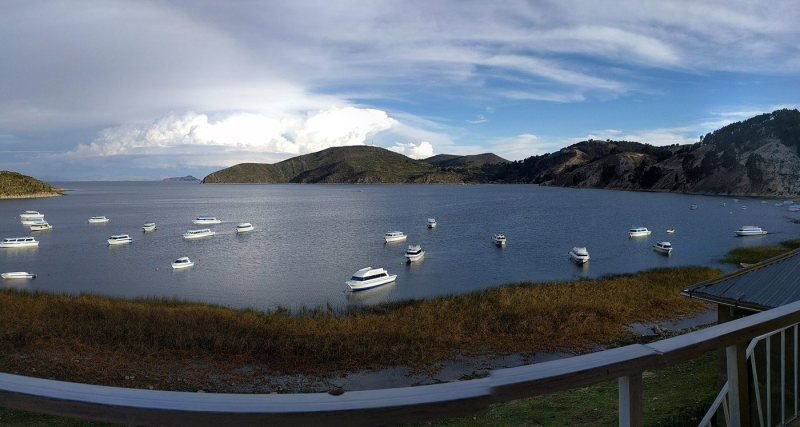
The two land borders between Puno and Bolivia are Kasani, on the lakeshore road to Copacabana, and Desaguadero, on the direct road to La Paz. Kasani is the scenic route and the usual choice if you want Copacabana and the Isla del Sol. Desaguadero is the faster way to La Paz and a busier, scruffier border town.
How the crossing works
- Get off the bus at the Peruvian post and get your exit stamp from Peru's migration office.
- Walk across the line, a few minutes on foot at Kasani.
- At the Bolivian post, show your passport, the yellow fever card, your SIGEMIG code and your hotel address, and get your entry stamp.
- Get back on the same bus or into your onward transport.
The process usually takes 30 minutes to an hour, longer when several buses arrive together. Change a small amount of money before you cross, as there are few reliable places at the border itself.
Travel times from Puno and Cusco
From Puno, the road via Kasani and Copacabana reaches La Paz in about 8 hours including the border and the boat across the Strait of Tiquina, where the bus goes over on a barge and passengers in a small launch. The direct road via Desaguadero is shorter, roughly 5 to 6 hours. From Cusco there is no shortcut: the road passes through Puno, so plan a night on the lake or an overnight bus of 12 hours or more. Flights between Cusco and La Paz have operated on and off over the years, so check the airlines for your dates.
Money in Bolivia
Bolivia's currency is the boliviano (Bs). Bolivia is still a cash economy outside the big hotels and restaurants, so plan to pay most things in cash, in small notes. ATMs exist in La Paz, Copacabana and Uyuni, but they run out of cash and have low limits, and they are absent on the salt flat route.
- Bring US dollars in clean, undamaged bills, which exchange offices accept readily. Torn or marked notes are often refused.
- Change money at an exchange office (casa de cambio) or a bank, never with people on the street.
- Carry cash in bolivianos for park fees, bathrooms, snacks and tips on the Uyuni circuit.
- Expect credit cards in upscale hotels and restaurants in La Paz and rarely anywhere else.
The exchange rate has moved a lot. Bolivia let the boliviano float in June 2026 after years of dollar shortages, and the old gap between the official and street rates has largely closed (as of September 2026, per press reports). Check the rate the week you travel.
SIM cards and staying connected
Bolivia has three mobile networks: Entel, Tigo and Viva. A local prepaid SIM is cheap and works well in La Paz, Copacabana and Uyuni town. Buy it at the operator's own store with your passport, since registration is required. Entel, the state company, has the widest coverage in rural areas. On the 3-day Uyuni circuit, expect no signal for long stretches whatever SIM you have. An eSIM bought before the trip saves the store visit, but check that it covers Bolivia, as some regional Latin America plans leave it out.
Bolivia as part of a Peru trip
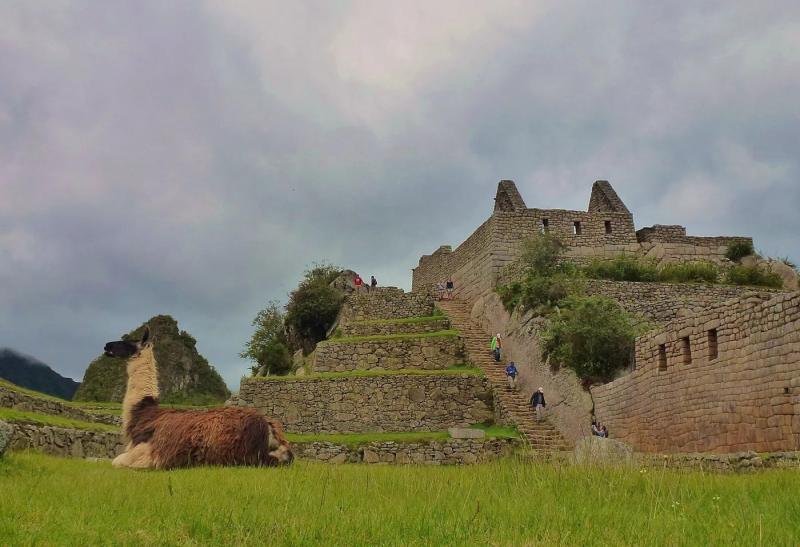
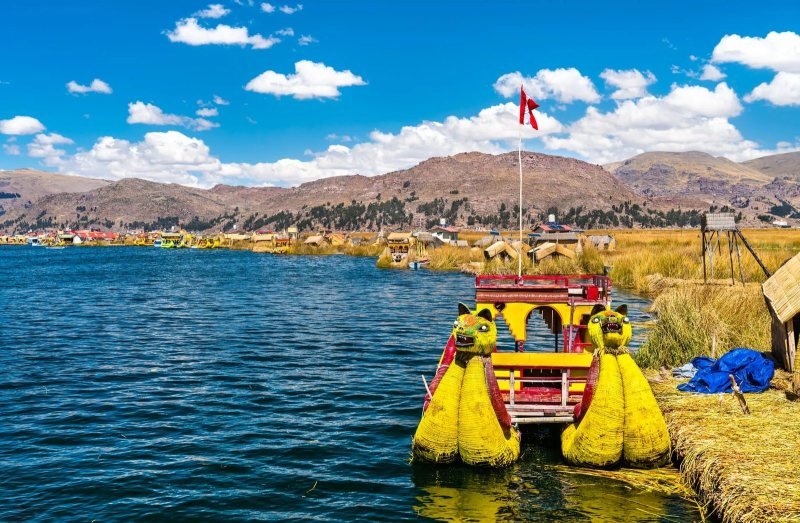
For most Americans, Bolivia works best as the second half of a Peru trip: Cusco and Machu Picchu first, then Lake Titicaca, the crossing at Kasani, La Paz and the Uyuni salt flats. Our Peru and Bolivia tours follow that order in 10 to 15 days, with the border crossing, transfers and Bolivian guides arranged. If the salt flat is the reason you are going, read our Uyuni salt flats guide to choose between the mirror season and the dry season, and our Lake Titicaca facts for the shore you cross on the way.
| Fact | Value |
|---|---|
| Tourist visa for US citizens | not required since December 1, 2025 |
| Passport | valid 6 months from entry |
| Address of stay | required at entry |
| Yellow fever certificate | required for arriving travelers aged 1 and older (as of October 2026) |
| Online pre-registration | SIGEMIG, before arrival |
| Advisory | check travel.state.gov before booking |
| Currency | boliviano (Bs), floating since June 2026 |
| La Paz altitude | about 3,640 m (11,940 ft) |
| Borders from Puno | Kasani (Copacabana) and Desaguadero (direct to La Paz) |
Sources
- U.S. Embassy La Paz, Message to U.S. Citizens: Visitor Visas No Longer Required (December 3, 2025)
- U.S. State Department, Bolivia travel advisory
- CDC, Bolivia traveler health page
- CDC Yellow Book, high-altitude travel and altitude illness
- Government of Canada, Bolivia travel advice (updated August 31, 2026)
Questions people ask
Do US citizens need a visa for Bolivia?
No. Since December 1, 2025, US citizens can enter Bolivia for tourism without a visa, per the U.S. Embassy in La Paz. You need a passport valid six months from entry, the address of your stay and a yellow fever vaccination certificate. Pre-register online on SIGEMIG before you arrive.
Is Bolivia safe for tourists?
Bolivia is safe enough for prepared travelers, and most visits go smoothly. The real risks are road blockades during protests, petty theft and taxi crime in La Paz, and altitude. Read the State Department advisory before booking, use hotel-booked taxis, avoid demonstrations and keep a spare day in your plan.
How do you cross from Puno to Bolivia?
By bus or tour, through Kasani near Copacabana or through Desaguadero on the direct road to La Paz. You get an exit stamp in Peru, walk across, and get an entry stamp in Bolivia with your passport, yellow fever card and SIGEMIG code. It usually takes 30 minutes to an hour.
Do I need a yellow fever vaccine for Bolivia?
You need proof of vaccination to enter. The CDC lists a yellow fever certificate as required for all arriving travelers aged 1 and older (as of October 2026), even though the vaccine is not recommended for high areas like La Paz or Uyuni. Get it at least 10 days before entry.
Can I use US dollars in Bolivia?
Bring them, but spend bolivianos. Clean, undamaged US dollar bills change easily at exchange offices and banks, and some tour operators and hotels price in dollars. Day to day, from taxis to park fees, you pay in bolivianos and in cash. Do not count on ATMs outside La Paz.
How long is the trip from Puno to La Paz by road?
About 5 to 6 hours on the direct road through Desaguadero, or about 8 hours on the lakeshore route through Kasani and Copacabana, which includes the border and the boat across the Strait of Tiquina. Add time if several buses reach the border together.
This guide was last reviewed in October 2026. Prices, rules and timetables are quoted with the date we checked them.