


Q'eswachaka: The Last Inca Rope Bridge, Rebuilt Every Year
Q'eswachaka is the last Inca rope bridge still in use, a 92 ft (28 m) span of woven grass over the Apurímac River in Canas province, about 3.5 hours south of Cusco. Four Quechua communities rebuild it by hand every June in three days. UNESCO inscribed the renewal on its Intangible Heritage list in 2013.

In this guide
Short answer: Q'eswachaka is the last Inca rope bridge still in use, a span of about 92 ft (28 m) woven from twisted grass over a gorge of the Apurímac River, in the Quehue district of Canas province, about 3.5 hours south of Cusco by road. Four Quechua communities take the old bridge down and hang a new one every year in the second week of June, in three days of shared work and ceremony. UNESCO inscribed that renewal on its Intangible Cultural Heritage list in 2013. You can cross it on any day outside the renewal, holding the side ropes, and it sways.
Is this the Inca Bridge at Machu Picchu?
No, and the two get mixed up constantly. The Inca Bridge at Machu Picchu (Puente Inka) is a short gap in a cliff path west of the citadel, bridged with logs, which you walk to on route 1-D of the Machu Picchu ticket system and look at from a railing. Q'eswachaka is a hanging bridge of grass rope over a river gorge, 100 mi (160 km) south of Cusco in the opposite direction, and you walk across it. If you want the one at Machu Picchu, read our Machu Picchu circuits guide and look for route 1-D. If you want to stand on a bridge the Incas would recognize, this page is the one.
How Inca rope bridges were built
The Incas ran a road network of about 18,600 mi (30,000 km) across the Andes, the Qhapaq Ñan, on UNESCO's World Heritage list since 2014, and the mountains are cut by canyons. They had no arch and no iron. They crossed with rope. Communities on each side of a gorge twisted grass into cords, cords into ropes and ropes into cables as thick as a thigh, anchored them to stone abutments and hung a walkway between. Each bridge was the responsibility of the nearby villages, who rebuilt it as a labor tax. Spanish chroniclers who crossed the great bridges of the Apurímac wrote about them with fear. Most rotted away or were replaced after the colony ended. Q'eswachaka survived because the communities never stopped.
From grass to cable
The material is a tough highland grass that grows on the hills above the river, called q'oya in the UNESCO record and ichu in other sources. Each family is responsible for a length of thin rope about 230 ft (70 m) long: they cut the grass, soak it, beat it to soften it, and twist it by hand, walking backward along the rope as it grows. On the first day of the renewal the families bring their ropes to the gorge, and the men braid them into the six main cables, four for the floor and two for the handrails, each one the work of dozens of people pulling in a line.
Hanging the new bridge
The old bridge is cut loose and falls into the river. The new cables are carried across and tightened over the stone abutments, where they are tied to beams set into the rock. Then the bridge builders, working from each bank toward the middle, lace the floor cables to the handrails with thinner rope and lay a mat of sticks and grass as the walking surface. The men who tie the middle work hanging over the river with no harness. It is done by the third afternoon. The fourth day is the festival, with music and dancing on the banks, and the bridge opens.
The June renewal
The renewal happens every year in the second week of June, over three working days plus a day of celebration. The communities named in the UNESCO record are Huinchiri, Chaupibanda, Choccayhua and Ccollana Quehue, all Quechua-speaking and all in the district of Quehue. A ceremony leader makes an offering to the Apurímac and to the mountains before the work starts, and the work itself is organized by families and by the master builders who learned the lacing from their fathers. Peru declared the bridge part of its national cultural heritage in 2009, and UNESCO inscribed the knowledge, skills and rituals of the renewal in 2013.
If you want to see the renewal, plan around it. The crossing is closed while the old bridge is down, the site is crowded with visitors and press, and road and parking arrangements change year to year. Ask for the exact dates when you book. Outside those days you get the bridge to yourself for most of the morning.
One dated fact worth knowing: in May 2025 the bridge was cut near its anchors by unknown people and fell, and the communities rebuilt it in early June 2025 as part of the regular renewal (as reported by the Andina news agency, June 10, 2025). The bridge you cross is never more than a year old.
Getting there from Cusco
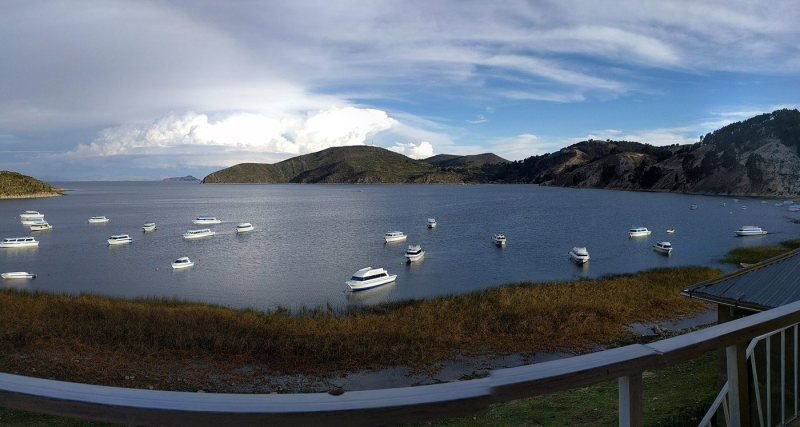
Q'eswachaka is about 3.5 hours each way from Cusco by road, south through Combapata and the highland lakes of Canas province, so the day starts around 4 a.m. and ends around 5 p.m. There is no public transport that makes it practical in a day. The road passes four lakes, Pomacanchi, Acopia, Asnaqocha and Pampamarca, with flamingos and farm villages on the shores, and the usual tour stops at them on the way out while the water is still. At the gorge you walk a short path down to the bridge. The communities charge a small entry fee in cash at the site, and the tour you book should say whether it is included.
The crossing is the point of the day. The floor gives under each step, the whole span sways, and it feels higher than it is. Hold both handrails, go one at a time if the guide asks, and turn back if you want. Many people cross halfway and come back, and the people on the bank cheer either way. The high point of the day is about 12,140 ft (3,700 m), close to Cusco's own altitude, so it works after one night in the city. Our Cusco altitude guide covers what to expect on day two.
Our Q'eswachaka day trip from Cusco runs exactly that route, with a hot breakfast on the way, a guide who explains the braiding at the gorge and lunch on the way back, for US$137 per person. It is a long day on winding roads with little walking, which makes it a good choice for people who want something nobody else in their group has seen, and a poor choice for anyone who gets carsick. Our day trips from Cusco page lists the shorter alternatives.
| Fact | Value | Source |
|---|---|---|
| Definition | a hanging bridge of twisted grass rope, the last Inca rope bridge in use | ich.unesco.org |
| Length | about 92 ft (28 m) | en.wikipedia.org |
| Where | over the Apurímac River, Quehue district, Canas province, Cusco Region | en.wikipedia.org |
| Distance from Cusco | about 3.5 hours each way by road | |
| Builders | the communities of Huinchiri, Chaupibanda, Choccayhua and Ccollana Quehue | ich.unesco.org |
| When | second week of June, three days of work and a festival day | en.unesco.org |
| Heritage status | Cultural Heritage of Peru 2009, UNESCO Intangible Cultural Heritage 2013 | en.wikipedia.org |
| Day trip high point | about 12,140 ft (3,700 m) |
Sources
- UNESCO, Knowledge, skills and rituals related to the annual renewal of the Q'eswachaka bridge (inscribed 2013)
- Q'iswa Chaka, Wikipedia (length, district, second week of June, heritage of Peru 2009)
- Andina, Q'eswachaka bridge can now be visited after ancestral renewal (June 10, 2025)
- UNESCO, Qhapaq Ñan, Andean Road System (World Heritage, 2014)
Questions people ask
How were Inca rope bridges built?
From grass. Families twisted dried highland grass into thin ropes, and the community braided those ropes into thick cables: at Q'eswachaka, four under the floor and two as handrails. The cables were anchored to stone abutments on each bank, laced together with thinner rope and floored with sticks and grass. Villages near each bridge rebuilt it every year as a labor duty, and at Q'eswachaka they still do.
Can tourists cross the Q'eswachaka bridge?
Yes, on any day outside the June renewal, when the old bridge is down. You pay a small entry fee to the community in cash, walk down a short path to the bank and cross holding both handrails. The bridge sways and the grass floor gives under your feet. Go one at a time, take it slowly, and come back whenever you like. Nobody minds.
When is the Q'eswachaka bridge rebuilt each year?
Every June, in the second week. The communities cut the old bridge loose, braid new cables from grass ropes each family has twisted, hang them and lace the floor in three days, and celebrate with music and dancing on the fourth. The crossing is closed while the old bridge is down. If you want to watch, ask for the exact dates the year you travel.
Is this the Inca Bridge at Machu Picchu?
No. The Inca Bridge at Machu Picchu is a log crossing on a cliff path west of the citadel, seen from a railing on route 1-D of the Machu Picchu ticket. Q'eswachaka is a hanging grass bridge over the Apurímac River about 3.5 hours south of Cusco, and you walk across it. They are in opposite directions from the city.
How high is the Q'eswachaka bridge above the river?
Published figures vary, and we have not measured it, so we do not print a number. Standing on it, the river is far enough below that most people look at the handrails rather than down. The span is about 92 ft (28 m) long. The gorge path and the bridge sit around 12,000 ft (3,700 m), so take the short walk down slowly.
Is the Q'eswachaka day trip hard?
No. The walking is a short path down to the bridge and back, and the crossing itself. What makes the day long is the road: about 3.5 hours each way on a winding highland route, with stops at four lakes on the way out. People who get carsick should sit in front and take their usual remedy before the 4 a.m. pickup.
This guide was last reviewed in October 2026. Prices, rules and timetables are quoted with the date we checked them.