




Peru 2-Week Itinerary: The Southern Loop or Peru and Bolivia
Two weeks in Peru fits the southern loop: the coast and Nazca, Arequipa, the Colca Canyon, Lake Titicaca, Cusco and Machu Picchu, climbing slowly from sea level. The other good shape is Peru and Bolivia: Machu Picchu, the lake, La Paz and the Uyuni salt flats. Our packages run both, from US$2,084 and US$3,247.

In this guide
Morning at Cruz del Cóndor, and the canyon below you is still in shadow. People line the stone wall in fleeces and wool hats, talking in low voices. Then the first condor lifts out of the canyon on the rising air, close enough that you can see the white ruff around its neck, and the whole railing goes quiet. On a one-week trip you would never have come this far south.
Short answer: Two weeks in Peru fits the southern loop: the coast and Nazca, Arequipa, the Colca Canyon, Lake Titicaca, Cusco and Machu Picchu, climbing slowly from sea level. The other good shape is Peru and Bolivia: Machu Picchu, the lake, La Paz and the Uyuni salt flats. Our packages run both, from US$2,084 and US$3,247.
Fourteen days changes the kind of trip you take. A week in Peru is a choice between regions. Two weeks is a route, and that route can climb into the Andes a little at a time instead of in one flight. That is the main reason we like the two-week southern loop for travelers who worry about altitude. By the time you reach Cusco you have slept at 2,335 m, 3,635 m and 3,830 m, and Cusco's 3,399 m (11,152 ft) feels like coming down.
Route 1: the southern loop, from the coast to Machu Picchu
The southern loop runs south along the desert coast, inland to Arequipa, up to the Colca Canyon, across the altiplano to Lake Titicaca and north to Cusco and Machu Picchu. Our Complete Peru in 15 days, from US$2,084 per person, follows it, and the table below lists its nights with the altitude of each bed.
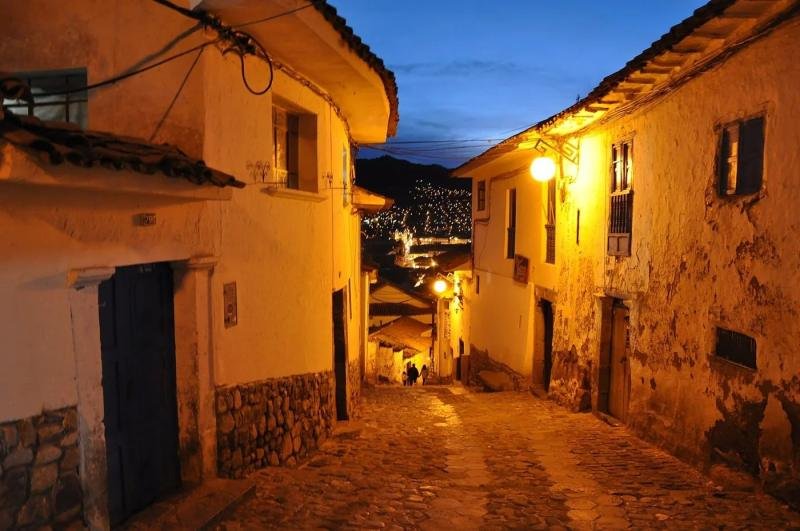
The rhythm is what makes it work. The coast days are warm and low. Arequipa, at 2,335 m (7,660 ft), is the first step up, and its white stone streets are some of the nicest in Peru to wander. The road to the Colca crosses the highest point of the whole trip, near 4,900 m (16,000 ft), where you feel the cold through the van window, then drops to Chivay at about 3,635 m (11,926 ft) for the night. At Cruz del Cóndor, condors ride the morning air over a canyon about 3,270 m (10,730 ft) deep, the depth Wikipedia gives. Then Puno and the lake, and only then Cusco, the Sacred Valley and the citadel.
Night by night on the southern loop
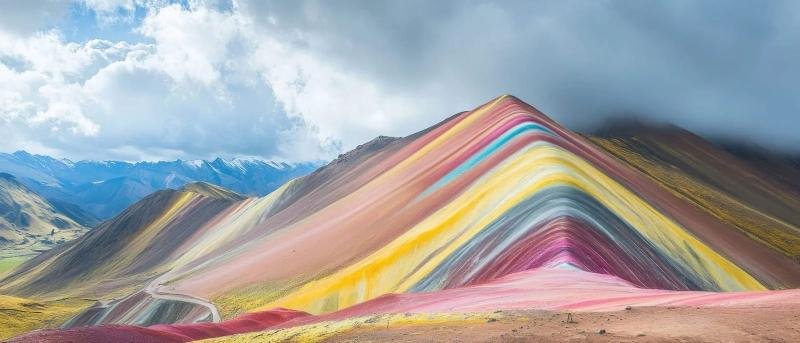
The table shows where you sleep on each night of the 15-day package and how high. Look at how the altitude rises over five nights instead of in one flight, and how the hardest hike, Rainbow Mountain, waits until day 12.
| Night | Where you sleep | Altitude | What you do that day |
|---|---|---|---|
| 1 | Lima | Sea level | Arrival, Miraflores and the historic center |
| 2 | Nazca | Below 610 m (2,000 ft) | Ballestas Islands, Huacachina |
| 3 and 4 | Arequipa | 2,335 m (7,660 ft) | Nazca Lines flight, the road south, the city |
| 5 | Chivay, Colca Canyon | about 3,635 m (11,926 ft) | High pass, then down to the canyon |
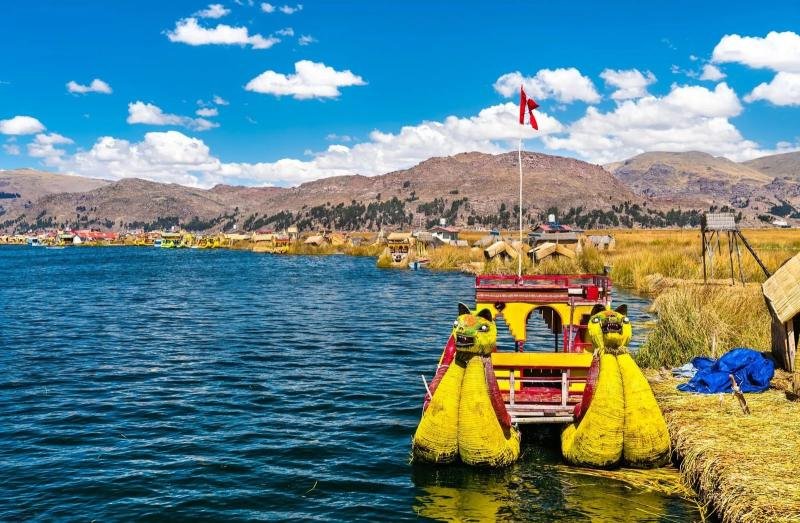
| 6 and 7 | Puno | about 3,830 m (12,570 ft) | Cruz del Cóndor, the drive to Puno, the Uros and Taquile |
| 8 and 9 | Cusco | 3,399 m (11,152 ft) | Sun Route bus from Puno, city tour |
| 10 | Aguas Calientes | 2,040 m (6,690 ft) | Sacred Valley, train |
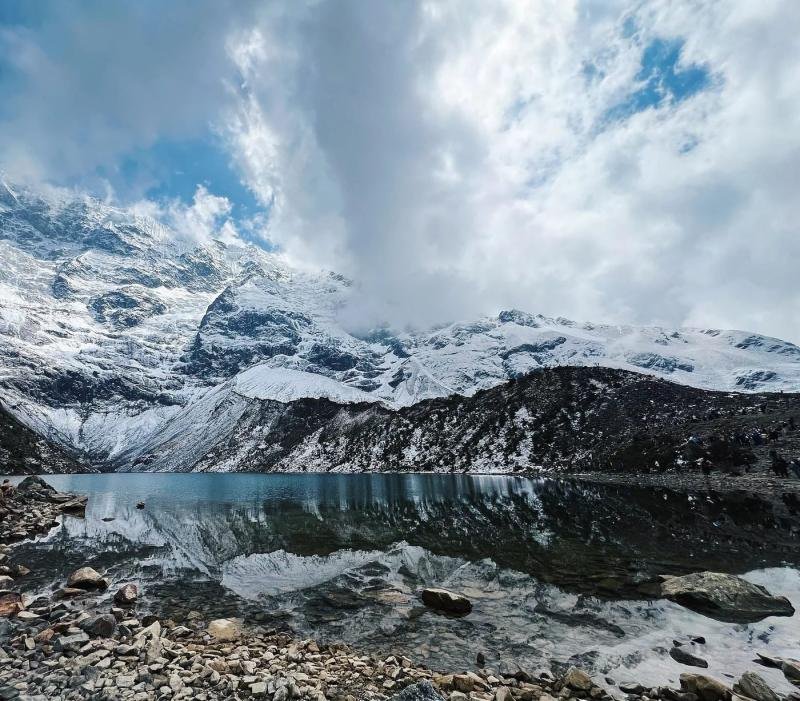
| 11 to 14 | Cusco | 3,399 m (11,152 ft) | Machu Picchu, Rainbow Mountain, Humantay Lake, a half day near Cusco |
| Day 15 | Flight home | ||
Route 2: Peru and Bolivia in two weeks
The Peru and Bolivia route trades Arequipa and the Colca for La Paz and the Uyuni salt flats. It suits travelers who have seen the famous photos of the salt flat and want to stand on it, and who are fine with long road days and simple lodges on the altiplano. Our Peru and Bolivia in 2 weeks, from US$3,247 per person, runs it this way:
- Days 1 to 3: Lima, with a day at the Ballestas Islands and the Huacachina dunes.
- Days 4 to 6: Cusco, the Sacred Valley, a night in Aguas Calientes and Machu Picchu.
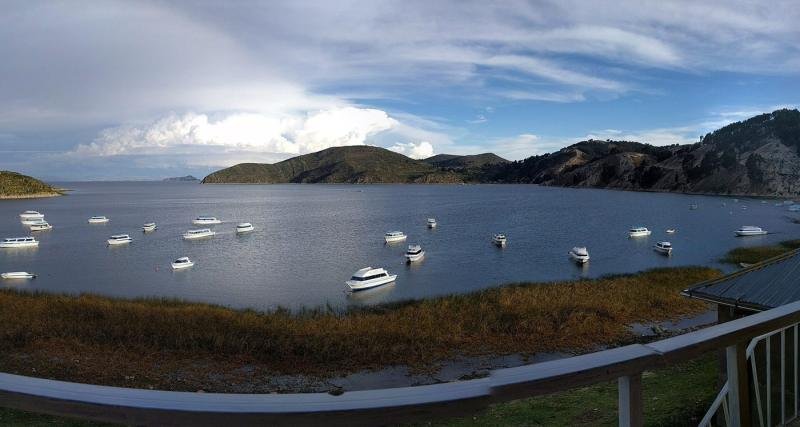
- Days 7 and 8: the Sun Route to Puno over La Raya, then the Uros islands and Taquile.
- Days 9 and 10: the border at Kasani, Copacabana, La Paz and the night bus to Uyuni.
- Days 11 to 13: the Salar de Uyuni, the high lagoons with Laguna Colorada, and a flight back to La Paz.
- Day 14: departure from El Alto airport.
The honest price is altitude and comfort. The lagoon night sits around 4,270 m (14,000 ft) in a basic lodge, and the circuit is cold at any time of year, so you sleep in your hat. Our Uyuni salt flats guide covers the seasons, and the Bolivia guide for US travelers covers the border and the entry rules. A 15-day version with Rainbow Mountain, Peru and Bolivia in 15 days, starts at US$3,057.
Which two weeks to choose
Choose the southern loop if altitude worries you, if you want as much of Peru itself as possible, or if this is your first trip to South America. Choose Peru and Bolivia if you can take long days in stride, you want the salt flat, and you already did well at altitude on another trip. Both include Machu Picchu with a night in Aguas Calientes, and both include Lake Titicaca.
If 14 days feels long but 10 feels short, our 12-day complete tour with Rainbow Mountain and the lake, from US$1,377, sits in between and stays in Peru. Our 10-day Peru itinerary shows the shorter shapes.
Pace: where to put the rest days
Two weeks of tours with no gaps wears you down, and the Andes punish tired bodies. Put one rest day in Arequipa or Cusco, never on the altiplano, and never book a dawn pickup the morning after an overnight bus. If something has to give, drop a day hike before you drop a rest day. The pace that works for most of our American guests is one main activity a day and an early dinner.
What two weeks in Peru costs
Our two-week packages run from US$2,084 (southern loop, 3-star hotels) to US$4,391 (same route, 5-star), per person in a double room. Peru and Bolivia runs from US$3,247 to US$3,778. Add international flights, the domestic legs, most dinners, park fees listed on each package and tips. Our Peru trip cost guide builds the full budget, and the main Peru itinerary guide explains how to plan the route around altitude.
Related tours


Questions people ask
Is 2 weeks in Peru enough?
Yes, for the whole south: the coast, Arequipa, the Colca Canyon, Lake Titicaca, Cusco and Machu Picchu. Two weeks is also the length that lets you climb into the Andes over several nights instead of in one flight. It is too short to add the Amazon and northern Peru as well without rushing.
What is the best 2-week Peru itinerary?
In our opinion, the southern loop: Lima, Paracas and Nazca, Arequipa, the Colca Canyon, Lake Titicaca, then Cusco, the Sacred Valley and Machu Picchu. It climbs gradually, saves the most famous sight for the end, and needs only one domestic flight, on the way out. Our 15-day package runs it from US$2,084 per person.
Can you do Peru and Bolivia in 2 weeks?
Yes. Fourteen days covers Lima, Cusco and Machu Picchu, Lake Titicaca, La Paz and the Uyuni salt flats with the high lagoons. It moves fast, with a night bus to Uyuni and basic lodges on the altiplano. Our Peru and Bolivia in 2 weeks package starts at US$3,247 per person.
How much does a 2-week trip to Peru cost?
Our two-week packages start at US$2,084 per person in 3-star hotels and reach US$4,391 in 5-star hotels, in a double room. International flights, the domestic flights, most dinners and tips are extra. Peru and Bolivia in two weeks starts at US$3,247.
Where should I take a rest day on a 2-week trip?
In Arequipa or Cusco, where the hotels are comfortable and the altitude is moderate for this route. Skip a rest day on the altiplano in Puno or Chivay, where nights are cold and sleep is lighter. Never follow an overnight bus with a dawn pickup.
Sources
- Wikipedia, Cusco (infobox elevation 3,399 m) checked October 2026
- Wikipedia, Puno (infobox elevation 3,830 m) checked October 2026
- CDC Yellow Book, High-Altitude Travel and Altitude Illness checked October 2026
- Our package pages: itineraries and 'from' prices (Essential tier, per person, double room) checked October 2026
- Wikipedia, Colca Canyon (depth about 3,270 m) checked October 2026
- Our guide, Uyuni salt flats checked October 2026
This guide was last reviewed in October 2026. Prices, rules and timetables are quoted with the date we checked them.