


Uyuni Salt Flats: Seasons, Route and What to Expect
The Salar de Uyuni is the largest salt flat on Earth, about 10,582 km² at 3,663 m (12,018 ft) in southwest Bolivia. Go January to March for the mirror effect, or May to November for the white crust and the 3-day route to Laguna Colorada and the geysers.

In this guide
Short answer: The Uyuni salt flats (Salar de Uyuni) are the largest salt flat on Earth, about 10,582 km² (4,086 sq mi) at 3,663 m (12,018 ft) in southwest Bolivia. Go from January to March for the mirror effect after rain, or from May to November for the dry white crust and the full 3-day route to Laguna Colorada and the geysers.
What the Salar de Uyuni actually is
The Salar de Uyuni is the dry bed of a prehistoric lake, a flat crust of salt over brine that covers about 10,582 km² (4,086 sq mi) in Bolivia's Potosí Department. It is so level that the height varies by less than 1 m (3 ft) across the whole surface, which is why satellites use it to calibrate their instruments. Under the crust lies one of the largest lithium deposits in the world.
What that means on the ground: you drive for an hour in a straight line and the horizon does not change. The white is so bright that people who forget sunglasses get headaches by lunch. Distances lie to you. A jeep that looks five minutes away is half an hour off, and the trick photos with dinosaurs and wine bottles work because your eye has no reference to measure depth.
The town of Uyuni, on the southeastern edge, is the base for almost every tour. It is a windy grid of low houses, tour offices and pizzerias, and nobody stays longer than they must.
When to go: mirror season or dry season
Choose January to March if you want the mirror, and May to November if you want the full circuit with the lagoons and geysers. The rainy season runs from December to April. Inside it, the mirror effect forms when a thin layer of still water covers the salt, most often from January to March. The dry months give you the hard white crust with its hexagon pattern, clear skies, very cold nights and a route that is open end to end.
| Months | Season | Mirror effect | Full 3-day route | Night low at the lagoons | Notes |
|---|---|---|---|---|---|
| January to March | wet | most likely | often shortened | near 0°C (32°F) | Incahuasi often unreachable, afternoon storms |
| April | transition | patches | usually reopening | below freezing | varies year to year |
| May to October | dry | no | yes | -15°C (5°F) or lower in June to August | hexagon crust, clearest skies |
| November and December | dry to wet | rare, late December possible | yes | below freezing | first rains late December |
The trade-off is real. In the wettest weeks the jeeps cannot drive deep into the flat, Incahuasi island is out of reach, and some agencies run a shorter route or cancel the crossing to the lagoons. In the dry months there is no reflection at all. April and late November to December sit in between: some years they give you both, some years neither.
The mirror needs rain in the last few days and wind to be low. You can travel in February and catch a dry patch, or in late December and get lucky. Plan two days on the flat in the wet season to double your chances.
The 3-day route: salt flat, lagoons and geysers
The classic Uyuni tour is a 3-day jeep circuit of about 1,000 km (620 mi) that starts in Uyuni, crosses the salt flat on day one and drives south through the Eduardo Avaroa reserve to Laguna Colorada and the Sol de Mañana geysers. Four to six travelers share a 4x4 with a driver who also cooks and fixes the car. Most of the time is spent driving.
Day 1: the salt flat
Leave Uyuni in the morning. The first stop is the train cemetery, about 3 km (2 mi) outside town, where rusted locomotives from the mining era sit in the sand. Next comes Colchani, the village of the salt workers' cooperative, where you see salt being dried and bagged. Then the jeep drives onto the white: the old salt hotel and the flag monument near the edge, an hour of photos in the empty center, and, in the dry season, Incahuasi island, a rocky hill covered in giant cacti that rises from the salt. Sunset on the flat, then a night in a salt hotel on the southern edge.
Day 2: the high lagoons
The road climbs south past volcanoes and a string of small lagoons where flamingos feed in the shallows. The Siloli desert has the wind-carved rock the guides call the Árbol de Piedra (stone tree). The day ends at Laguna Colorada, a red lake at 4,278 m (14,035 ft) whose color comes from algae and microorganisms, with thousands of flamingos on it. Three species live in these lagoons: Andean, James's and Chilean flamingos. Night in a basic lodge near the lagoon, the coldest night of the trip.
Day 3: geysers and Laguna Verde
Wake before dawn and drive to the Sol de Mañana geothermal field at about 4,850 m (15,912 ft), where steam vents and mud pools hiss in the first light. After breakfast, an outdoor hot spring at Polques, then Laguna Verde under the Licancabur volcano, 5,920 m (19,423 ft) on the Chile border. From here you either drive back to Uyuni, a long afternoon, or cross into Chile at Hito Cajón and go down to San Pedro de Atacama.
The Eduardo Avaroa reserve
Days two and three are spent inside the Reserva Nacional de Fauna Andina Eduardo Avaroa, a protected area created in 1973 that covers about 7,147 km² (2,760 sq mi) at 4,200 to 5,400 m (13,800 to 17,700 ft). It is part of the Los Lípez Ramsar wetland. There is an entry fee paid in cash in bolivianos at the ranger post. The amount changes, so ask your operator, and carry local cash.
Altitude and cold
The Uyuni route is a high-altitude trip: you sleep at about 3,650 m (12,000 ft) on the first night and about 4,300 m (14,000 ft) on the second, and you reach about 4,850 m (15,912 ft) at the geysers. Come to Uyuni after several days at altitude in Cusco, Puno or La Paz, never straight from sea level.
The CDC advises that above 3,000 m (9,850 ft) your sleeping altitude should rise by no more than 500 m (1,600 ft) a day. The jump from the salt flat to Laguna Colorada is close to that limit, which is why people who arrive already adjusted feel fine and people who flew in from Lima the day before do not. Headache, poor sleep and loss of appetite are common on the second night. Confusion, breathlessness at rest or a wet cough are reasons to drive down at once. Ask your doctor about acetazolamide before the trip.
The cold surprises everyone. From June to August, nights at the lagoon lodges fall to around -15°C (5°F) or lower, and most lodges have no heating, little hot water and electricity only for a few hours in the evening. Sleep in a hat, thermal layers and a sleeping bag rated for well below freezing. Daytime on the flat is bright and dry, and the sun burns at this altitude in any month. In the wet season the nights are milder, near freezing, and the hazard is lightning in the afternoon storms.
What to pack for Uyuni
- Sunglasses with UV protection, sunscreen and lip balm with SPF.
- A down jacket, thermal base layers, gloves and a warm hat for the nights.
- A sleeping bag rated for well below freezing, or rent one in Uyuni.
- Rubber boots or sandals for the mirror season (salt water ruins shoes).
- Cash in bolivianos for park fees, bathrooms and snacks.
- A headlamp, a power bank and two liters of water per day.
Salt hotels
Salt hotels are lodges built from blocks cut out of the salt crust, with walls, beds and sometimes furniture made of salt. They stand on the edge of the flat or in the villages around it, not on the salt itself. The first hotel built on the flat was dismantled in 2002 because of waste problems, and its successor stands on the shore. Expect anything from a simple dorm with shared bathrooms to a comfortable hotel with heating. Ask your operator which one you get, because the name "salt hotel" covers both.
How to get to the Uyuni salt flats
The usual way to reach Uyuni is from La Paz: a flight of about an hour, or a night bus of about 9 to 10 hours over roughly 540 km (335 mi). From Puno in Peru, you first cross Lake Titicaca's southern shore into Bolivia and spend a night in La Paz. A third route comes from San Pedro de Atacama in Chile, doing the 3-day circuit in reverse.
From La Paz by air or bus
Flights between La Paz (El Alto) and Uyuni save a night and are worth it if you are short on time, but schedules change by season, so book early. The night buses leave in the evening and arrive around dawn. Choose a company with fully reclining seats and a blanket, because the altiplano at night is cold inside the bus too.
From Puno and Cusco
From Puno, the road runs along the lake to the Bolivian border at Kasani, near Copacabana, or at Desaguadero, and reaches La Paz the same day. From there you take the night bus or the morning flight to Uyuni. Doing Cusco, Puno and La Paz before Uyuni also gives you the altitude adjustment the salt flat needs. Our Lake Titicaca guide explains the shore crossing.
Entry rules for US citizens
US citizens need no tourist visa for Bolivia since December 1, 2025, according to the U.S. Embassy in La Paz. You need a passport valid for at least six months on arrival and the address where you will stay. Bolivia also requires proof of yellow fever vaccination from all arriving travelers aged 1 year and older, according to the CDC (as of October 2026).
That last rule confuses people, because the CDC does not recommend the vaccine for Uyuni, La Paz or anywhere above 2,300 m (7,550 ft). The requirement is about entry, not about the risk where you are going. See a travel clinic early, since the vaccine certificate becomes valid 10 days after the shot. Bolivia also asks visitors to pre-register online on its migration system (SIGEMIG) before arrival. Our guide to Bolivia for US travelers covers the border, money and safety in detail.
Uyuni as part of a Peru trip
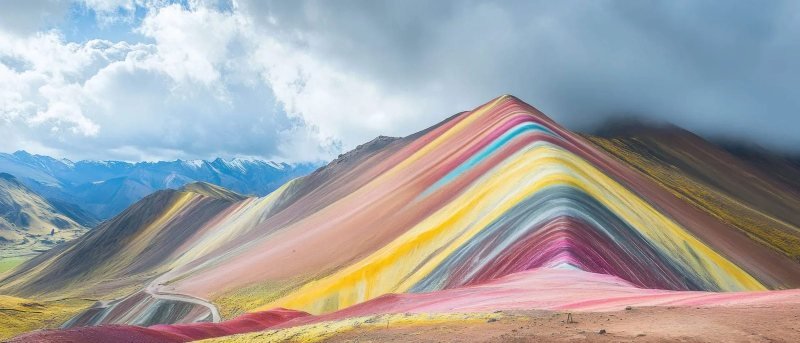
The salt flat fits at the end of a Peru trip that climbs from Cusco to Lake Titicaca and La Paz. All our Peru and Bolivia tours with Uyuni follow that order. Two of them include the whole 3-day circuit: the 12-day trip with the full Uyuni circuit, from US$2,047 per person, and the 15 days with Laguna Colorada and Rainbow Mountain, from US$3,057 per person. Both end with a flight from Uyuni to La Paz. The 10 and 11 day versions spend one day on the salt flat only.
| Fact | Value | Source |
|---|---|---|
| Area | about 10,582 km² (4,086 sq mi) | en.wikipedia.org |
| Altitude of the salt flat | 3,663 m (12,018 ft) | en.wikipedia.org |
| Location | Potosí Department, southwest Bolivia | en.wikipedia.org |
| Laguna Colorada | 4,278 m (14,035 ft), about 60 km² | en.wikipedia.org |
| Sol de Mañana geysers | about 4,850 m (15,912 ft) | |
| Eduardo Avaroa reserve | created 1973, about 7,147 km², 4,200 to 5,400 m | en.wikipedia.org |
| Rainy season | December to April (mirror most often January to March) | |
| Dry season | May to November | |
| US citizens | no tourist visa since December 1, 2025, passport valid 6 months | |
| Yellow fever certificate | required for arriving travelers aged 1 and older (as of October 2026) |
Sources
- Salar de Uyuni, Wikipedia (area, elevation, flatness, Palacio de Sal history)
- Eduardo Avaroa Andean Fauna National Reserve, Wikipedia
- U.S. Embassy La Paz, visitor visas no longer required
- CDC, Bolivia traveler health page
- CDC Yellow Book, high-altitude travel and altitude illness
- Government of Canada, Bolivia travel advice (SIGEMIG pre-registration)
Questions people ask
When is the mirror effect at the Uyuni salt flats?
The mirror effect appears in the rainy season, most often from January to March, when a thin layer of still water lies on the salt. It needs recent rain and little wind, so it comes and goes day by day. Plan two days on the flat in those months to improve your odds.
How do you get from La Paz to Uyuni?
Fly or take the night bus. The flight from La Paz (El Alto) takes about an hour. The night bus covers roughly 540 km (335 mi) in about 9 to 10 hours, leaving in the evening and arriving around dawn. The flight saves a night of poor sleep, which matters before an altitude trip.
How cold is it at night in Uyuni?
From June to August, nights at the lagoon lodges drop to around -15°C (5°F) or lower, and rooms are rarely heated. In the wet season nights are near freezing. Bring thermal layers, a warm hat and a sleeping bag rated well below freezing, or rent one in Uyuni.
How high are the Uyuni salt flats?
The salt flat lies at 3,663 m (12,018 ft). The 3-day route climbs higher: Laguna Colorada sits at 4,278 m (14,035 ft) and the Sol de Mañana geysers at about 4,850 m (15,912 ft). Arrive after several days at altitude in Peru or La Paz, not straight from sea level.
Is the 3-day Uyuni tour worth it, or is one day enough?
One day shows you the salt flat itself. The 3-day tour adds the red and green lagoons, the flamingos, the geysers and the desert near Chile, and those are the parts most people remember. In the dry season, do the three days. In the mirror season, one or two days on the flat is the better plan.
Do US citizens need a visa for Bolivia?
No. Bolivia stopped requiring a tourist visa from US citizens on December 1, 2025, per the U.S. Embassy in La Paz. Bring a passport valid six months on arrival, the address of your stay and a yellow fever vaccination certificate, which Bolivia requires from travelers aged 1 and older.
This guide was last reviewed in October 2026. Prices, rules and timetables are quoted with the date we checked them.