




Arequipa, Peru: Things to Do in the White City
Arequipa is Peru's second-largest city, at 7,661 ft (2,335 m) in the south, ringed by the volcanoes El Misti, Chachani and Pichu Pichu. Its historic center of white volcanic sillar is a UNESCO World Heritage Site since 2000. Give it two days for the city and two more for the Colca Canyon.

In this guide
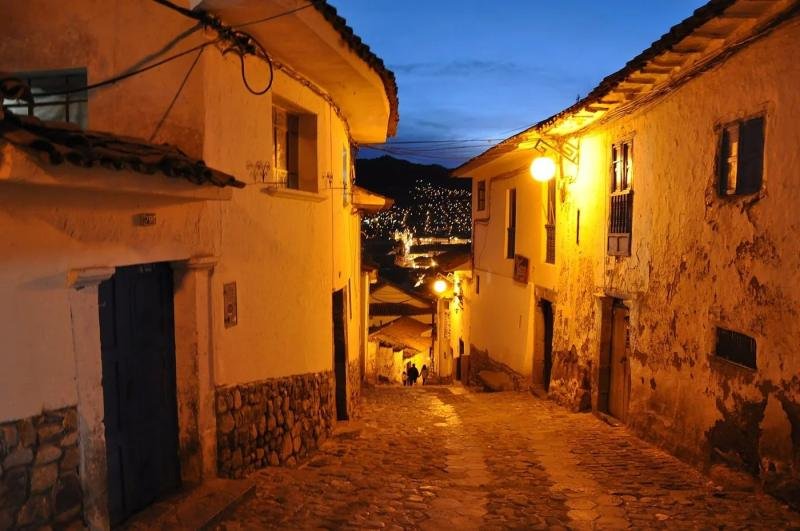
Walk up Calle Santa Catalina in the morning and look north at the end of the street. A perfect snow-dusted cone fills the gap between the rooftops, so close it looks painted on the sky. That is El Misti. The walls on both sides of you are white too, built from a soft volcanic stone the locals call sillar, and in the hard Andean light the whole street glows.
Short answer: Arequipa is Peru's second-largest city, in the south of the country at 7,661 ft (2,335 m), ringed by the volcanoes El Misti, Chachani and Pichu Pichu. Its historic center, built of white volcanic sillar, is a UNESCO World Heritage Site since 2000. Give it two days for the city and two more for the Colca Canyon.
Most US travelers skip Arequipa because it is not on the Lima, Cusco, Machu Picchu line. We think that is a mistake. It is the best place in Peru to break the climb to the high Andes, and the Santa Catalina Monastery alone is worth the detour. Here is what to do, how long to stay and where it fits in a route.
Arequipa at a Glance
Arequipa is the capital of the Arequipa region, founded by the Spanish on August 15, 1540, in a valley of the Chili River below three volcanoes. About 1.2 million people live in the metro area, according to the INEI projection cited by Wikipedia, which makes it second only to Lima.
| Item | Detail |
|---|---|
| Altitude | 7,661 ft (2,335 m), city of Arequipa (regional health directorate) |
| Population | About 1.2 million, second city of Peru (INEI projection for 2025) |
| Founded | August 15, 1540 |
| UNESCO | Historical Centre of the City of Arequipa, inscribed 2000, 332 hectares (820 acres) |
| Volcanoes | El Misti 19,101 ft (5,822 m), about 7.5 miles (12 km) from the city, plus Chachani and Pichu Pichu |
| Santa Catalina Monastery | Founded 1579, about 20,000 sq m (215,000 sq ft), open to visitors since 1970 |
| Colca Canyon | About 100 miles (160 km) northwest, 10,730 ft (3,270 m) deep |
| Flight from Lima | About 1 hour 15 minutes (PromPerú) |
| Time to give it | 2 nights in the city plus 1 night in Colca |
Why Arequipa Is Called the White City
Arequipa is called the White City (la Ciudad Blanca) because its colonial churches and mansions are built of sillar, a white or pale pink volcanic tuff quarried from the slopes around the city. The stone is light and easy to carve, which is why the portals of the old houses are covered in Baroque detail.
The stone also tells the story of the earthquakes. The city was badly damaged in 1582, again after the eruption of the Huaynaputina volcano in 1600, and worst of all in the earthquake of 1784. Each time it was rebuilt in sillar, with thick walls and low vaults. In 2000 UNESCO inscribed 332 hectares (820 acres) of the center as the Historical Centre of the City of Arequipa.
Things to Do in Arequipa
The best things to do in Arequipa sit within a 15-minute walk of the Plaza de Armas: the Santa Catalina Monastery, the cathedral, the Juanita mummy at the Museo Santuarios Andinos and the viewpoint at Yanahuara. Two full days covers them at an easy pace, with an afternoon in the countryside.
Santa Catalina Monastery
The Monastery of Santa Catalina de Siena is a walled convent of the Dominican order founded in 1579, covering about 20,000 square meters (215,000 sq ft) in the middle of the city. For almost four centuries it was closed to outsiders. It opened to visitors in 1970, and nuns still live in the northern part of the complex.
Inside, it feels like a small town. Narrow lanes painted deep red and cobalt blue run between cells, kitchens, cloisters and a laundry of split clay jars. In the 18th century more than 300 women lived here, nuns and the servants of the wealthier ones, each in her own cell built by her family. Look at the walls: the white blocks are tuff from Chachani, the pink ones from El Misti.
The monastery opens daily from 9:00 a.m. to 5:00 p.m., and until 8:00 p.m. on Tuesdays and Wednesdays (official site, checked October 2026). The late opening is the visit we recommend. The lanes empty out, the lamps come on and the red walls turn almost purple. The guided tour takes about an hour, and we give it two because everyone slows down in the lanes.
Plaza de Armas and the cathedral
The Plaza de Armas is the square where Arequipa meets, framed on three sides by two-story arcades of sillar and on the fourth by the long white front of the cathedral. Come back at sunset, when the cathedral towers catch the last light and El Misti turns pink behind them. Sit in the arcades with a coffee and watch the square fill.
Juanita at the Museo Santuarios Andinos
The Museo Santuarios Andinos of the Universidad Católica de Santa María shows Juanita, an Inca girl offered on the summit of Ampato, at 20,630 ft (6,288 m), in the 15th century. Anthropologist Johan Reinhard and Peruvian climber Miguel Zárate found her body in 1995, after melting ice on the summit exposed it. A study presented in 2023 put her age at 14 or 15.
The visit is short and guided. It is a burial, so treat it as one: the museum explains the Inca mountain offerings, called capacocha, and what they meant to the people who made them. Read our despacho ceremony guide for how offerings to the mountains continue in the Andes today.
Yanahuara viewpoint
Yanahuara is a district of white sillar lanes just across the Chili River, a 20-minute walk from the plaza. Its arched viewpoint frames El Misti behind the city, the photo Peru's tourism board calls postcard-perfect. Go in the late afternoon, when the volcano is lit from the west.
The countryside around the city
A half day in the countryside south of the center shows the farms and mills that fed colonial Arequipa. Our countryside tour stops at the Sachaca viewpoint for El Misti, Chachani and Pichu Pichu in one frame, the Founder's Mansion and the Sabandía mill, built of sillar in 1785. Between stops you see the green terraced fields of the Chili valley against the brown desert hills.
Rocoto relleno at a picantería
Arequipa is the home of rocoto relleno, a red rocoto pepper stuffed with spiced beef, raisins and olives and baked with cheese. Eat it at lunch in a picantería, the traditional local restaurant, and ask how hot today's rocotos are before you take the first bite. Our Peruvian food guide covers the dish and the rest of the menu.
El Misti Volcano
El Misti is the active stratovolcano that stands about 7.5 miles (12 km) from Arequipa, rising to 19,101 ft (5,822 m). Its last well-documented eruption was between 1440 and 1470. INGEMMET, Peru's geological institute, has monitored it since 2005 from the Volcanological Observatory in Arequipa.
You can climb it, but it is a serious high-altitude ascent. Most climbers start from the Aguada Blanca dam, where crossing requires a permit, and camp around 15,090 ft (4,600 m) or push to the summit in one long day. Climbers report loose ground, volcanic gases at the crater and no drinking water on the mountain. We do not sell the climb. If you want it, go with a licensed local mountain guide, and only after several days at altitude.
The Colca Canyon From Arequipa
The Colca Canyon is the main trip out of Arequipa, about 100 miles (160 km) northwest of the city and 10,730 ft (3,270 m) deep. The road climbs past vicuñas in the Salinas y Aguada Blanca National Reserve and crosses the Patapampa pass at about 16,110 ft (4,910 m) before dropping to the town of Chivay at 11,926 ft (3,635 m).
Do not do Colca as a day trip from Arequipa. It means a 3 a.m. start, the pass in the dark and most of the day in a van. Sleep in Chivay and see the condors at the Cruz del Cóndor viewpoint the next morning. Our Colca Canyon guide covers the depth, the condors and the villages.
Arequipa Altitude and Why It Helps
Arequipa sits at 7,661 ft (2,335 m), about 3,490 ft (1,064 m) lower than Cusco at 11,152 ft (3,399 m) and about 4,900 ft (1,495 m) lower than Puno at 12,570 ft (3,830 m). Our guides find that most travelers feel little or nothing of the altitude in the city itself.
That makes Arequipa a natural first stop on the way up. The CDC advises avoiding going directly to a sleeping altitude above 9,000 ft (2,750 m) in one day, and above 9,800 ft (3,000 m) raising your sleeping altitude by no more than 1,600 ft (500 m) a night. A flight from Lima straight to Cusco breaks that advice on day one. A few nights in Arequipa first does not.
Be honest with yourself about Colca, though. The drive from Arequipa to Chivay climbs about 4,270 ft (1,300 m) of sleeping altitude in one day and crosses a pass above 16,000 ft. Drink water, eat light and walk slowly that day. Ask your doctor before the trip about medication. Our guides to Cusco altitude and Lake Titicaca altitude explain the symptoms and what to do.
How to Fit Arequipa Between Lima, Cusco and Puno
Put Arequipa between Lima and Puno, then go on to Cusco. The route climbs in steps, from sea level to 7,661 ft (2,335 m), then 11,926 ft (3,635 m) in Chivay, then 12,570 ft (3,830 m) in Puno, and it ends at Machu Picchu, lower again at 7,970 ft (2,430 m). Your body gets the slow climb the CDC recommends without wasting a day.
Getting there and away
- From Lima: about 1 hour 15 minutes by air, or about 16 hours by road (PromPerú).
- From Nazca: about 9 hours by bus, the leg our 15-day itinerary uses after the Nazca Lines flight.
- To Puno: about 6 hours by bus direct, or a full day by road through the Colca Canyon with a night in Chivay.
- To Cusco: by air, or by road through Puno. The direct overnight bus saves a hotel night and costs you the next day.
How many days to give Arequipa
Give Arequipa at least two nights and the Colca Canyon one, so four days from arrival in Arequipa to arrival in Puno. With three nights in the city you add the Misti viewpoints at a slower pace or a second museum. One night is not enough: you arrive tired, see the plaza in the dark and leave before the monastery opens.
Our Complete Peru in 15 days, from US$2,084 per person, follows this order: Lima, Paracas and Nazca, two nights in Arequipa, a night in Chivay, then Puno, Lake Titicaca, Cusco and Machu Picchu. If you have less time, our 2-week Peru itinerary shows where Arequipa fits and what to drop, and we can build the route around your dates through our custom trips form. From Arequipa, the next stop is Puno: read our list of things to do in Puno.
Best Time to Visit Arequipa
Arequipa is a good destination all year. The climate is a sunny high desert, with daytime highs of about 71 to 76°F (21 to 25°C) in every month and nights of about 41 to 48°F (5 to 9°C). The weather station records only about 18 days a year with more than 1 mm of rain, and the cloudiest months are January and February.
The month that matters more is the one for the rest of your trip. Plan Arequipa around the dry season in Cusco and Machu Picchu, May to September, and you get clear skies for El Misti and for the condors in Colca. Pack sunscreen and a warm layer: the sun is strong at noon, and the evenings in the plaza are cold.
Related tours


Questions people ask
Is Arequipa worth visiting?
Yes, if your trip includes Puno or Lake Titicaca. Arequipa has the Santa Catalina Monastery, a UNESCO-listed center of white volcanic stone, El Misti on the skyline and the Colca Canyon a few hours away. At 7,661 ft (2,335 m) it is also the gentlest place to start the climb to the high Andes.
How many days do you need in Arequipa?
Two nights in the city and one in the Colca Canyon. That gives you a full day for Santa Catalina, the plaza, the Juanita mummy and Yanahuara, a half day in the countryside, and an unhurried night in Chivay before the condors. With one night you miss most of it.
What is the altitude of Arequipa?
The city of Arequipa sits at 7,661 ft (2,335 m) above sea level. That is about 3,490 ft (1,064 m) lower than Cusco and about 4,900 ft (1,495 m) lower than Puno, so most travelers feel little or no altitude in the city. The Colca road climbs much higher, to a pass at about 16,110 ft (4,910 m).
Should I go to Arequipa before or after Cusco?
Before. Fly from Lima to Arequipa, continue to the Colca Canyon and Puno, then reach Cusco by road or air. Each stop is higher than the last, which follows the CDC advice to raise your sleeping altitude gradually, and you finish at Machu Picchu, lower than Cusco.
How do you get from Arequipa to Puno?
By road. The direct bus takes about 6 hours. The better option is a full day through the Colca Canyon, with a night in Chivay and the Cruz del Cóndor viewpoint the next morning, then the drive across the altiplano to Puno. Our 15-day itinerary does exactly that.
Can you climb El Misti from Arequipa?
Yes, with a licensed mountain guide and good acclimatization. The usual route starts at the Aguada Blanca dam, where crossing needs a permit, with a camp around 15,090 ft (4,600 m) or a long one-day push to the 19,101 ft (5,822 m) summit. Expect loose ground, gases near the crater and no water.
Sources
- Gerencia Regional de Salud Arequipa, ficha del distrito de Arequipa (altitude 2,335 m, founding 1540) checked October 2026
- UNESCO World Heritage Centre, Historical Centre of the City of Arequipa
- Wikipedia, Arequipa (population, founding, sillar, earthquakes, UNESCO 332 ha, climate box) checked October 2026
- Monasterio de Santa Catalina, official site (founded 1579, 20,000 m2, opening hours) checked October 2026
- Wikipedia, Santa Catalina Monastery (Dominican order, opened 1970, 300 women in the 18th century, tuff from Chachani and Misti) checked October 2026
- Wikipedia, El Misti (height, distance, last eruption, monitoring, climbing routes) checked October 2026
- Wikipedia, Mummy Juanita (discovery 1995, Reinhard and Zárate, Museo Santuarios Andinos) checked October 2026
- Andina, 3D reconstruction of Juanita's face (age 14 to 15, October 2023) checked October 2026
- PromPerú, Peru.travel, Arequipa (flight and road time from Lima, Yanahuara viewpoint) checked October 2026
- Wikipedia, Colca Canyon (depth, distance from Arequipa) checked October 2026
- CDC Yellow Book, high-altitude travel and altitude illness checked October 2026
- How to Peru, Arequipa to Puno by bus (about 6 hours, secondary) checked October 2026
This guide was last reviewed in October 2026. Prices, rules and timetables are quoted with the date we checked them.