


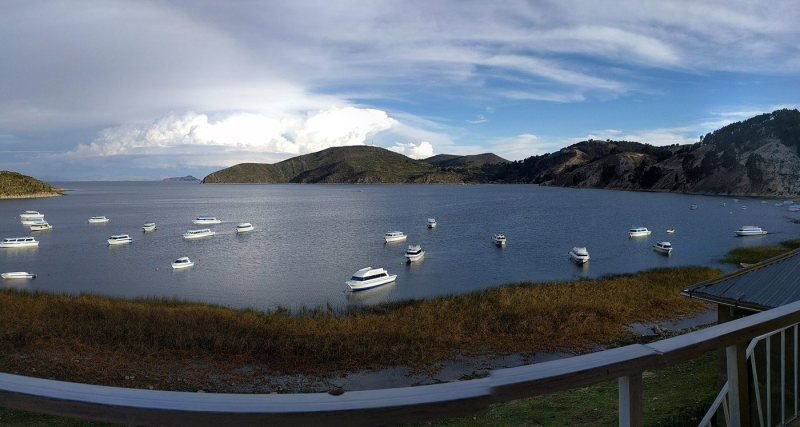
Taquile and Amantani: Island Life on Lake Titicaca
Taquile and Amantaní are two Quechua-speaking islands about three hours by boat from Puno. Taquile is the day visit: a stone path up to a village at 12,960 ft (3,950 m), lunch cooked by families and textiles on UNESCO's heritage list. Amantaní is the overnight: a bed in a family's house and a sunset climb to the Pachatata hilltop.

Short answer: Taquile and Amantaní are two Quechua-speaking islands on the Peruvian side of Lake Titicaca, about three hours by boat from Puno. Taquile is the day visit, with a stone path up to a village at 12,960 ft (3,950 m), lunch cooked by island families and a textile tradition on UNESCO's heritage list. Amantaní is the overnight, with a bed in a family's house, dinner at their table and a sunset climb to the Pachatata hilltop at about 13,550 ft (4,130 m). Do Taquile if you have a day, Amantaní if you have a night.
Taquile
Taquile is a steep island of terraces and stone paths about 28 mi (45 km) from Puno, 2.2 sq mi (5.7 km²) in size, with about 2,200 people. There are no cars and no hotels in the usual sense. The boat docks at the bottom of a stairway, and the village square sits about 30 to 40 minutes above it at 12,960 ft (3,950 m), the only real effort of the day. Take it slowly. The island's highest point is 13,290 ft (4,050 m).
The reason to come is the textiles. UNESCO proclaimed Taquile and its textile art a masterpiece of intangible heritage in 2005 and inscribed it on its Representative List in 2008. Men knit the chullo, the earflap hat, from boyhood. Women spin, dye the wool with plants and minerals and weave the belts on four-stake ground looms that are older than the Incas. The calendar belt, a wide woven band that records the farming and ritual year, is the piece to look at closely. Everybody of every age takes part, as the UNESCO listing puts it.
Your guide will decode the hats. On Taquile a red chullo means a married man and a red and white one a single man, and the way the tip hangs is read as a mood. Treat the details as what islanders tell visitors, since they vary from guide to guide. What does not vary is the quality: a good chullo takes weeks, and the price in the community shop reflects that.
How Taquile runs its own tourism
Taquile opened to visitors in the 1970s and, after outside boat owners took over the trade, the community took it back. Today the island runs its tourism collectively: families pool money to own boats, the restaurants rotate the lunches between households, and the craft shop on the square sells each piece with its maker's name. About 40,000 visitors come a year, so your lunch of quinoa soup and lake trout is a planned part of the island's economy, not a favor. Pay in soles and do not bargain.
Amantaní homestays
Amantaní is the larger, rounder island beside Taquile, 3.6 sq mi (9.3 km²) with about 3,560 people (2017 census), farmed in terraces of potatoes, quinoa and broad beans. Two hills rise above the fields, each with a walled temple on top: Pachatata, Father Earth, and Pachamama, Mother Earth. Islanders climb to them once a year, on the feast around January 20, and visitors climb Pachatata for the sunset at about 13,550 ft (4,130 m). There are no cars and little electricity.
The homestay is the point of the island. The island's communities organize it: families who want to host must keep a guest room ready, and they take turns, so the group that arrives on your boat is split between households by rotation rather than by choice. You eat what the family eats, usually soup, potatoes, a fried egg or trout and muña tea. In the evening the community often holds a dance in the hall, and your host lends you a poncho or a skirt for it.
What a homestay is really like: an adobe room with a real bed and thick blankets, a basic bathroom that is often shared, water from a tap in the yard, and a night that drops below freezing from May to September. Bring a headlamp, a warm hat to sleep in and a small gift for the house, such as fruit, rice or school supplies rather than candy. A homestay is worth it if you can sleep on a hard bed, eat simply and enjoy a conversation in slow Spanish with the children. It is not worth it if you need a hot shower and a quiet room to yourself.
How to behave as a guest
Ask before taking any photo, and accept a no. Keep your shoes off the beds and your trash in your bag. Pay for the homestay through the boat operator or the agency so the community's rotation gets its share, and tip the family directly in cash when you leave. The ceremonies on Amantaní and at Llachón on the mainland are led by community members and are joined only at the community's invitation. Our guide to Andean offerings explains what happens at one.
Getting there from Puno
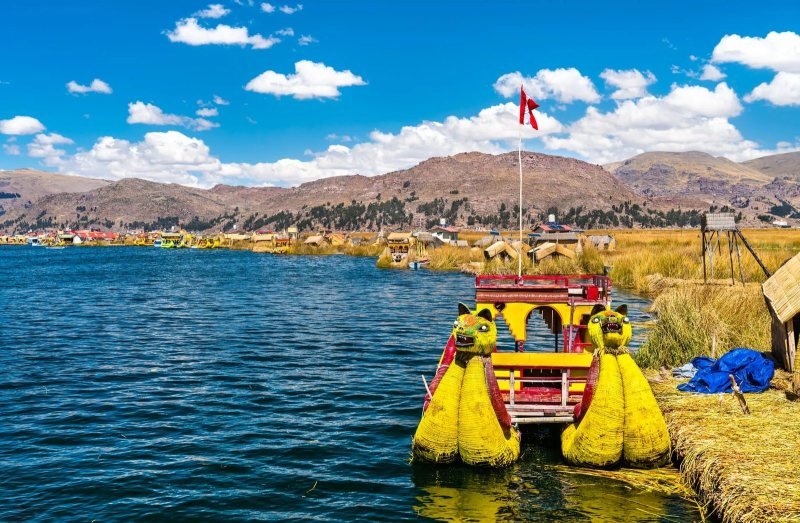
Both islands are reached by boat from the Puno port, with the Uros reed islands as a 30-minute first stop. The regular tourist boat takes about two and a half to three hours more to Taquile or Amantaní, and the two islands are about an hour apart. A day trip means Uros and Taquile, leaving around 7:30 a.m. and back around 5:30 p.m. An overnight means Uros, Amantaní, a night with a family, then Taquile the next morning and back to Puno by late afternoon.
Most of each day is on the water, and that is the mistake people make: they pack for a lake and find a high plateau. The sun at 12,507 ft (3,812 m) burns in minutes, the wind on the boat roof is cold and the lake gets choppy after lunch. Bring sunscreen and a windproof layer together, cash in small bills, and your passport. See our Uros floating islands guide for the first stop and the Lake Titicaca facts guide for the lake itself.
On our trips
The 15-day Peru trip with a Taquile day puts the Uros and Taquile boat day on day 7, between the Colca Canyon and the bus to Cusco. For the night with a family, Cusco to Lake Titicaca in 5 days spends day 4 at Llachón and on Amantaní, with the Pachatata climb and the homestay, and stops at the Uros on day 5. The Lake Titicaca tours page lists every trip that spends a day or a night on the lake.
| Fact | Value | Source |
|---|---|---|
| Taquile distance from Puno | about 28 mi (45 km), 2.5 to 3 hours by regular tourist boat | en.wikipedia.org |
| Taquile size and people | 2.2 sq mi (5.72 km²), about 2,200 people | en.wikipedia.org |
| Taquile village altitude | 12,960 ft (3,950 m), highest point 13,290 ft (4,050 m) | en.wikipedia.org |
| Taquile textiles, UNESCO listing | UNESCO intangible heritage, proclaimed 2005, inscribed 2008 | ich.unesco.org |
| Taquile visitors | about 40,000 a year | en.wikipedia.org |
| Amantaní size and people | 3.6 sq mi (9.28 km²), 3,557 people (2017 census) | en.wikipedia.org |
| Pachatata hilltop | about 13,550 ft (4,130 m) | |
| Amantaní feast | around January 20, third Thursday of January | en.wikipedia.org |
| Language on both islands | Quechua, with Spanish | en.wikipedia.org |
| Lake surface | 12,507 ft (3,812 m) | en.wikipedia.org |
Sources
- UNESCO, Taquile and its textile art (2005 proclamation, 2008 inscription, looms, chullo, calendar belt, community tourism)
- Taquile Island, Wikipedia (area, population, altitudes, distance, knitting, visitor numbers, 1970s tourism)
- Amantaní, Wikipedia (area, population, temples, feast, homestays, electricity)
- Lake Titicaca, Wikipedia (altitude)
Questions people ask
Is an Amantaní homestay worth the night?
Yes, if you want a night in a farming family's house, simple food and a sunset from Pachatata, and you can handle a hard bed, a shared bathroom and a freezing night in the dry season. No, if a hot shower and a quiet room matter more. Families host by rotation, so your money reaches the whole community.
What is special about Taquile weaving?
UNESCO lists Taquile's textile art as intangible heritage (proclaimed 2005, inscribed 2008). Men knit the chullo hats from boyhood, women spin, dye and weave the belts on ground looms older than the Incas, and the calendar belt records the island's farming and ritual year. Each piece in the island shop carries the name of the person who made it.
Can you see Taquile and Amantaní in one visit?
Not well. Each island is about three hours from Puno, so a day trip covers the Uros and Taquile only. Seeing both islands means a night on Amantaní: Uros and Amantaní on day one, Taquile on the morning of day two, back in Puno by late afternoon.
How hard is the climb on Taquile?
Slow rather than steep: stone steps from the dock to the village square at 12,960 ft (3,950 m), 30 to 40 minutes at a careful pace. Anyone who has spent two nights in Cusco or Puno manages it with breaks. The climb to Pachatata on Amantaní is similar and ends at about 13,550 ft (4,130 m).
Do people on Taquile and Amantaní speak Aymara?
No, both islands speak Quechua, with Spanish as a second language. Aymara is spoken on the southern shore of the lake, from Chucuito to the Bolivian border, and by the Uros families. Our guide to the Aymara of Lake Titicaca explains who lives where.
What should I bring for a night on Amantaní?
A warm hat and layers to sleep in, a headlamp, toilet paper, hand sanitizer, water, sunscreen for the boat, cash in small soles bills for the homestay tip and crafts, and a present for the family, fruit or rice or school supplies. Leave the big suitcase at your Puno hotel.
This guide was last reviewed in October 2026. Prices, rules and timetables are quoted with the date we checked them.