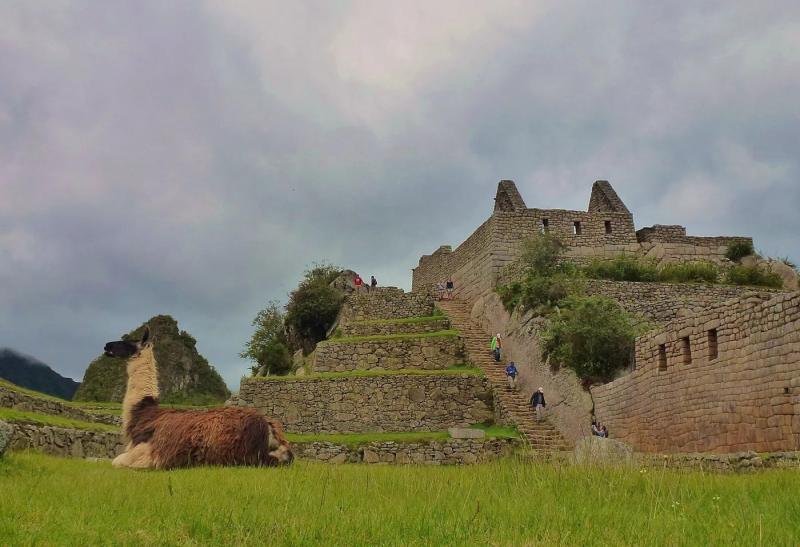
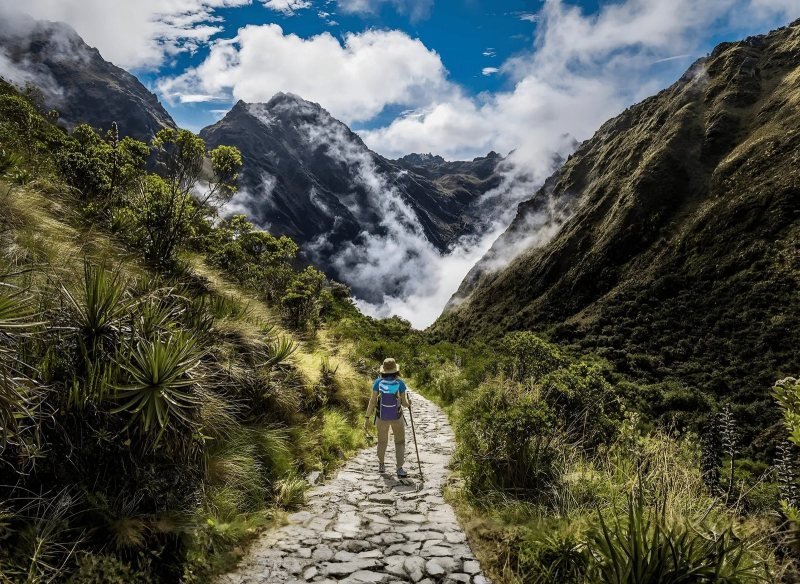
The Inca stone road into Machu Picchu: 43 km (26 mi) in 4 days from km 82, over Dead Woman's Pass at 4,215 m (13,829 ft), on a permit limited to 500 people a day.
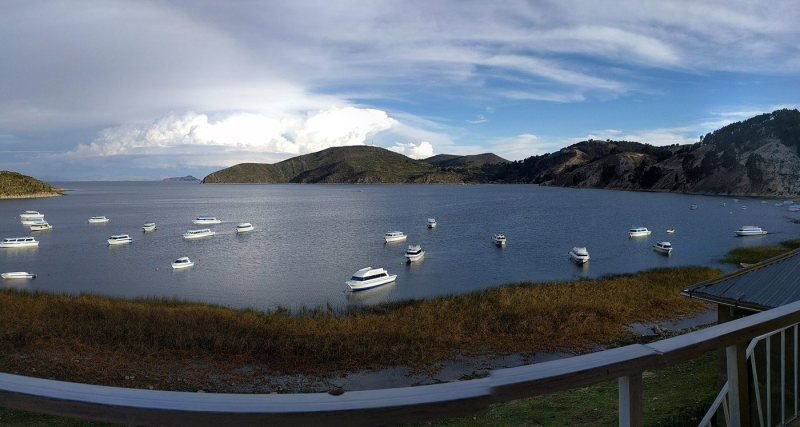
The Bolivian side of Lake Titicaca (Copacabana, Isla del Sol), La Paz and the Uyuni salt flats, reached by road from Puno in our Peru and Bolivia tours.
Peru and Bolivia in 10 Days, from Machu Picchu to Uyuni
4.9 Tripadvisor, Viajes Cusco Perú (sister agency), 78 reviews Lima, Cusco, Sacred Valley, Machu Picchu, Puno, Lake Titicaca, La Paz, Salar de Uyuni Daily departures
10 days, 9 nights7 hotel nights, 2 night buses
Two countriesBorder at Kasani on day 7
14,222 ft high pointLa Raya, on the night bus
Machu Picchu Circuit 2Guided visit on day 5
No visa for BoliviaUS passports, since December 2025
The trip in one paragraph
This is the fastest way we know to stand on Machu Picchu and on the Uyuni salt flat in one trip. Book it if you have ten days and want the headline sights of both countries. Skip it if night buses wear you out: this route uses two of them to save days. The 13-day Machu Picchu and Uyuni trip goes by day and adds the southern lagoons.
The line you travel
Two nights in Lima, a day in Cusco, the Sacred Valley and a night in Aguas Calientes, Machu Picchu, then the night bus to Puno. A boat day on Lake Titicaca, the road along the lake into Bolivia and La Paz, a city day and the night bus to Uyuni. Day 9 is the salt flat and Incahuasi island, and day 10 you fly out of Uyuni.
What you trade for speed
Uyuni is a single day, so you see the salt flat but not the red and green lagoons further south. Cusco gets one afternoon. The two night buses replace two hotel nights. If those trade-offs bother you, add two days and take the 12-day trip, which has the full three-day Uyuni circuit.
Two wonders in ten daysMachu Picchu on day 5 and the Uyuni salt flat on day 9.
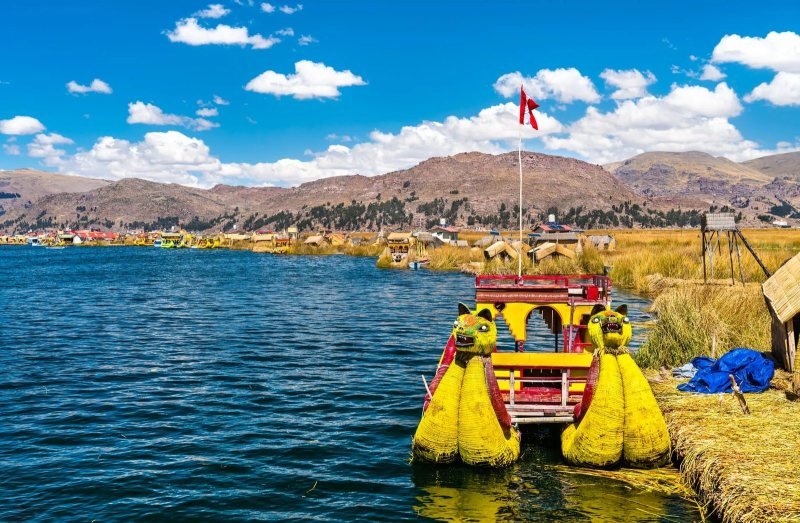
Lake Titicaca by boatThe Uros reed islands and lunch on Taquile.
Along the lake into BoliviaKasani border, Copacabana and the Tiquina strait on the road to La Paz.
Ends at UyuniNo backtracking: you fly out of Uyuni at the end.
Choose your comfort level
The tier sets the hotels, everything else stays the same: Essential (3-star) from US$1,817, Comfort Plus (4-star premium) US$2,280, Signature (5-star) US$3,080. Per person in a double room, flights not included. The two night buses are the same in every tier. Solo travelers pay a single supplement.
Pick your arrival date
Pick the day you land in Lima. The trip ends on day 10 at Uyuni airport.
Send the free quote form with your dates and passport details. We confirm Machu Picchu tickets, trains, buses and hotels in both countries. For June to August, book 45 days ahead.
Day by day
Open a day to see the hours, the altitude and where you sleep. Times are the ones our guides actually keep.
Day1
Lima airport, hotel in Miraflores
Night in Lima, near sea level
Hotel in Lima No meals included Airport transfer
Your flight time
Pickup at Jorge Chávez airport
A driver with your name on a sign meets you outside customs and takes you to your hotel. Most flights from the US land late at night, so this day is for sleeping.
Free time
First ceviche
If you land in daylight, walk the Miraflores clifftop and eat ceviche for lunch, which is when Limeños eat it. Nothing else is scheduled.
Day2
Miraflores, Historic Center of Lima, San Francisco
Night in Lima, near sea level
Hotel in Lima Breakfast at the hotel City tour about 4 hours
08:50
Miraflores clifftop
Pickup after breakfast. First stop is the Miraflores clifftop, Parque del Amor and Larcomar, where paragliders launch over the Costa Verde on clear days.
Late morning
The colonial center
Across town to the Historic Center (UNESCO, 1988): Plaza Mayor, the Cathedral and the San Francisco convent, with its catacombs of stacked bones under the church floor. Afternoon free for lunch in Barranco or Miraflores.
Day3
Lima to Cusco flight, Qorikancha, Sacsayhuamán
Night in Cusco, 11,150 ft (3,400 m)
Hotel in Cusco Flight not included City tour from 13:00 Up to about 12,470 ft
Morning
Flight to Cusco
Transfer to Lima airport for a morning flight to Cusco, about 1 hour 20 minutes. You land at 11,150 ft (3,400 m). Walk slowly, drink water and coca tea, and eat a light lunch.
13:00
Cusco city tour
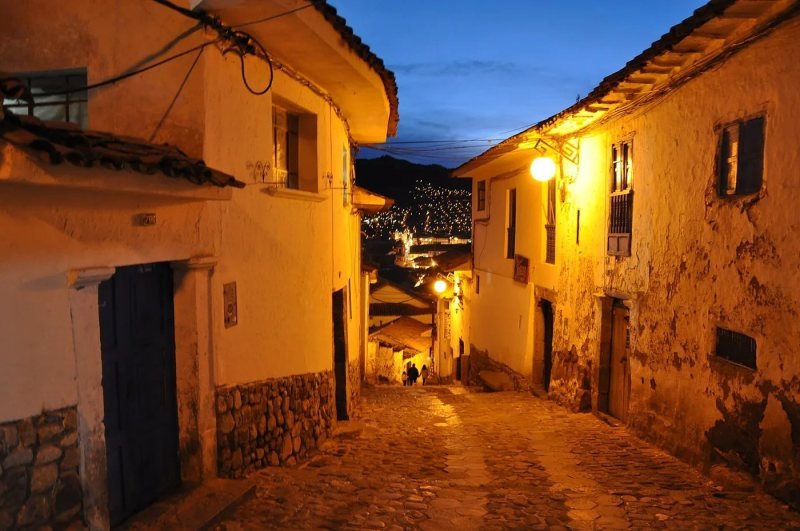
Qorikancha, the Inca sun temple with a Dominican convent built over its walls. Then the van climbs to Sacsayhuamán, whose zigzag walls use stones heavier than a loaded truck, and on to Q'enqo, Puka Pukara and Tambomachay. Back near the Plaza de Armas around 18:30.
Hotel in Aguas Calientes Buffet lunch Expedition train Up to 12,340 ft at Chinchero
06:20
Pickup in Cusco
Pickup between 06:20 and 06:50. Pack a small overnight bag for Aguas Calientes and leave the big suitcase at the Cusco hotel, because the train has a luggage limit.
Morning
Chinchero, Moray and Maras
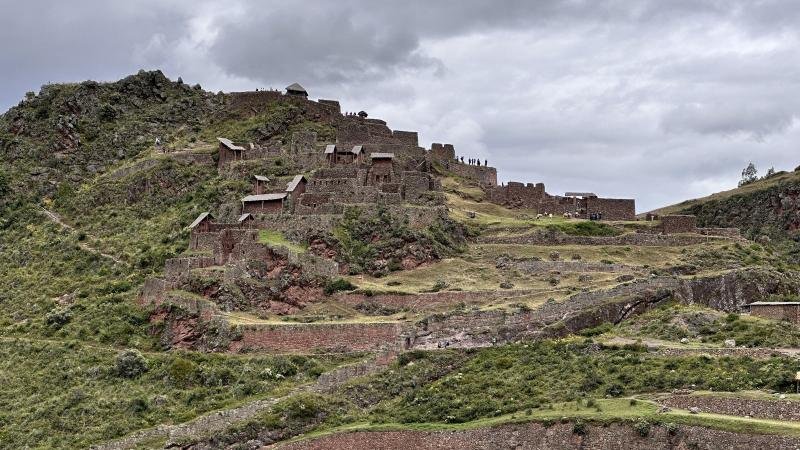
Chinchero, at 12,340 ft (3,762 m), has a colonial church on Inca walls and a weaving cooperative that shows natural dyes. Moray is a set of circular terraces sunk into the ground. At Maras, thousands of salt ponds step down the hillside, white against red earth.
Midday
Buffet lunch in the valley
Lunch at a buffet restaurant in the valley, with trout, quinoa and Andean potatoes.
Afternoon
Ollantaytambo and the train
A guided visit to the Ollantaytambo terraces, then the PeruRail Expedition train to Aguas Calientes along the Urubamba river, about 1 hour 40 minutes. The air gets warm and damp as you drop into cloud forest.
Night bus to Puno Machu Picchu Circuit 2 Breakfast at the hotel About 2.5 hours on foot
Early morning
Bus up to Machu Picchu
Consettur bus up the switchbacks, about 30 minutes. Your entry time is printed on the ticket, under your passport name.
Morning
Guided visit, Circuit 2
About 2 hours 30 minutes with a licensed guide on Circuit 2, the route with the classic upper view and the main temples. Circuits are one way with no re-entry, so use the restroom at the gate.
Afternoon
Vistadome train and transfer
Lunch on your own in Aguas Calientes, then the PeruRail Vistadome back to Ollantaytambo, with roof windows and a snack. A van drives you up to Cusco, about 1 hour 45 minutes.
Night
Night bus to Puno
Dinner on your own in Cusco, then the tourist-class night bus to Puno, about 7 hours across the La Raya pass while you sleep. Keep a warm layer and your passport in your day bag.
Day6
Puno, Uros floating islands, Taquile
Night in Puno, 12,556 ft (3,827 m)
Hotel in Puno Lunch on Taquile Full day by boat Up to about 13,000 ft on Taquile
05:00
Arrival in Puno
The night bus reaches Puno around dawn. We meet you at the terminal and give you time for breakfast and a wash before the boat.
07:30
Boat to the Uros islands
Transfer to the port and a boat across Puno bay to the Uros, islands built of layered totora reed that families renew every few weeks. A family shows how the islands are anchored and sells its own embroidery.
Late morning
Taquile
About two and a half more hours by boat to Taquile, whose textile art is on the UNESCO list. The main village sits at 12,960 ft (3,950 m), so walk up from the dock slowly. Lunch with the community, trout or quinoa soup.
Afternoon
Back to Puno
Boat back to Puno in the late afternoon. The wind picks up on the lake after lunch, so a windproof layer matters more than a warm one.
Day7
Puno, Kasani border, Copacabana, Tiquina, La Paz
Night in La Paz, about 11,975 ft (3,650 m)
Hotel in La Paz Breakfast at the hotel Border crossing About 9 to 10 hours
06:30
Along the lake to the border
Departure from Puno at 06:30 along the southern shore, past Chucuito, Juli and the adobe villages of the Aymara shore.
Morning
Leaving Peru, entering Bolivia
At the border you walk through two offices: the Peruvian exit stamp, then Bolivian immigration a few hundred yards on. Keep your passport, the hotel address in La Paz and your yellow fever card in one pocket.
Afternoon
Tiquina strait, then the city
On the Bolivian side the road follows the lake to the Tiquina strait, where passengers cross in small launches while the bus goes over on a wooden barge. You reach La Paz around 16:00 and drop down into the bowl of the city from El Alto.
Day8
La Paz, Valley of the Moon, cable car, night bus to Uyuni
Night on the bus to Uyuni
Overnight bus Breakfast at the hotel Cable car fare not included Departure in the evening
08:00
Killi Killi viewpoint and the center
City tour from 08:00. The Killi Killi viewpoint shows the whole bowl of La Paz with Illimani behind it. Then Plaza Murillo and the colonial streets.
Afternoon
Valley of the Moon
The Valley of the Moon is a maze of clay spires carved by rain, 30 minutes south of the center. The paths are short and dusty.
Afternoon
Mi Teleférico
A ride on the Mi Teleférico cable car over the city. The fare is Bs 3 for the first line and Bs 2 per transfer, paid by you.
Evening
Overnight bus to Uyuni
Transfer to the terminal for the tourist-class night bus to Uyuni, with reclining seats and blankets. It gets cold after midnight, so keep a fleece and a hat in your day bag, not in the luggage hold.
Day9
Uyuni, Colchani, Salar de Uyuni, Incahuasi island
Night in a hotel near the salt flat, about 12,000 ft
Hotel near the salt flat 4x4 with driver Lunch on the salt flat Salt flat at 11,995 ft
06:00
Arrival in Uyuni
The bus reaches Uyuni around 06:00. We meet you, give you breakfast and load the 4x4.
Morning
Colchani and the salt flat
In Colchani the salt cooperative dries, grinds and bags salt by hand. Then out onto the Salar de Uyuni, about 4,086 square miles (10,582 square kilometers) of salt at 11,995 ft (3,656 m). The white is so bright that sunglasses are not optional.
Afternoon
Incahuasi island
Incahuasi is the rocky summit of an old volcano covered in giant cactus, in the middle of the salt. A short, steep path circles it. When the flat is flooded in the rainy season, drivers cannot reach the island and the route changes.
Evening
Night at the edge of the salt
Night in a hotel near the salt flat. Lodges here are simple and cold after dark, and the stars are the reason to step outside.
Day10
Uyuni, Uyuni airport
End of the trip
Breakfast Airport transfer Flight not included
Morning
Last hours on the altiplano
Free morning near Uyuni. The train cemetery at the edge of town, where rusted steam engines sit in the desert, is a short ride away if you want one more photo.
Agreed time
Transfer to Uyuni airport
Transfer to the Uyuni airport for your flight to La Paz or Santa Cruz and the connection home.
Where you go
A straight line south and east: Lima to Cusco by air, down the Urubamba to Machu Picchu, across the altiplano to Lake Titicaca and La Paz, then south to Uyuni.
Interactive map loads from OpenStreetMap when the page is online. Route: Lima · Cusco · Ollantaytambo · Aguas Calientes · Machu Picchu · La Raya · Puno · Uros · Taquile · Kasani · Copacabana · La Paz · Colchani · Incahuasi island · Uyuni.
Stops on the itinerary Machu PicchuDashed line: road and rail route
What is included
Included
Machu Picchu entrance, Circuit 2Bought under your passport name. Also the Cusco and Sacred Valley entries, the Titicaca boat day and the salt flat 4x4 day.
7 hotel nights2 in Lima, 1 in Cusco, 1 in Aguas Calientes, 1 in Puno, 1 in La Paz and 1 near the salt flat, double room, category by tier. Two more nights are on tourist-class buses.
Meals9 breakfasts and 3 lunches, as listed in the itinerary.
PeruRail train, round tripExpedition from Ollantaytambo to Aguas Calientes, Vistadome back.
Buses and transfersConsettur bus at Machu Picchu, the night buses Cusco to Puno and La Paz to Uyuni, and every transfer on the itinerary.
Border crossingTransfer from Puno to La Paz with help at the Kasani border post.
Licensed guidesEnglish-speaking guides on every tour, a pre-departure briefing, a first aid kit with oxygen and phone support day and night.
Not included
FlightsInternational flights, the Lima to Cusco flight and the Uyuni to La Paz flight. We tell you which ones to book so they match the pickups.
Huayna Picchu or Machu Picchu MountainAbout US$75 per person extra, if permits remain for your date.
Mi Teleférico faresMi Teleférico fare, Bs 3 for the first line and Bs 2 per transfer.
Meals not listedMost dinners, lunch in Aguas Calientes and lunch in La Paz.
TipsFor guides, drivers and boat crews, optional.
Travel insuranceWith medical evacuation cover, which matters on the altiplano.
DisruptionsCosts from blockades, strikes, weather or flight changes outside our control.
Good to know
AltitudeThe CDC treats anything above 8,000 ft (2,500 m) as high elevation and advises against sleeping above 9,000 ft (2,750 m) the first night if you can avoid it. Read how to adjust to Cusco's altitude and ask your doctor about acetazolamide before you fly.
Train bag limit, 8 kilosPeruRail allows one backpack up to 8 kg (17.6 lb) or one carry-on up to 12 kg (26.5 lb). Your big suitcase waits at the Cusco hotel.
Entering Bolivia (as of October 2026)Since December 1, 2025, US citizens do not need a visa for a tourist visit to Bolivia, per the U.S. Embassy in La Paz. Bring a passport valid six months, and be ready to give your hotel address. Check Bolivia visa rules for US citizens before you fly, because entry rules change.
Yellow fever cardThe CDC lists proof of yellow fever vaccination as an entry requirement for Bolivia for travelers 1 year and older, even though it does not recommend the vaccine for La Paz, the lake or Uyuni. Carry the paper yellow card. See a travel clinic at least 4 weeks before you go.
Cash in BoliviaCarry clean US dollar bills and change some into bolivianos in La Paz. The boliviano floats against the dollar since June 2026, so rates move, and cards often fail in Uyuni.
Protests and roadblocksIn May and June 2026, blockades closed Bolivian highways for weeks before they were cleared on June 23. Check the State Department advisory for Bolivia before you book and again before you travel. If roads close, we tell you the options, usually a flight, quoted at the time.
Altitude planLima at sea level, then Cusco at 11,150 ft for one night and down to Aguas Calientes at 6,690 ft. After that you never sleep below 11,900 ft: Puno 12,556 ft, La Paz 11,975 ft, the salt flat 11,995 ft. The night bus to Puno crosses La Raya at 14,222 ft while you sleep. Read how to adjust to Cusco's altitude.
Travelers on this itinerary
Sacred Lake Titikaka is new; these are public Tripadvisor reviews of Viajes Cusco Perú, the family agency that operates every package on this site.
4.9
78 reviews Viajes Cusco Perú, Sep 2026
4.7
83 reviews Google Maps
Reviews shown: Viajes Cusco Perú travelers (sample of public Tripadvisor reviews, read Sep 30, 2026).
C
Claudia I.Sep 2026, with friends
Dream Come True
"Incredible experience!! Beautiful landscape and beautiful people. We were lucky to be guided by Vladimir, who with his lovely personality and amazing knowledge made this trip a great learning experience."
Translated from Spanish by Tripadvisor
E
Erika C.Jul 2026, solo traveler from Argentina
I recommend them, people!
"All the tours I did (Machu, Humantay Lake, Rainbow Mountain, Sacred Valley) were spectacular!!! From picking me up at the hotel (always punctual and attentive, notifying about everything!) to the guides I had who were also excellent."
Excerpt. Translated from Spanish by Tripadvisor
M
Martin Rogelio I.Jul 2026, Sullana, Peru, with family
Professionalism, trust, and human quality
"I came to this agency by recommendation and, after traveling with them on two occasions, I can say that it was an excellent decision. I must highlight the professionalism of the guides, who made every tour very interesting and safe."
Excerpt. Translated from Spanish by Tripadvisor
Still have questions?
Everything we get asked about this package before people book.
Do US citizens need a visa for Bolivia?
No, not for a tourist visit. Bolivia dropped the visa requirement for US citizens on December 1, 2025, per the U.S. Embassy in La Paz (checked October 2026). You need a passport valid at least six months, the address of your first hotel, and the paper yellow fever card, which the CDC lists as an entry requirement. Peru needs no visa either.
Is the overnight bus to Uyuni safe?
It is the standard way in, and the tourist-class buses we book run every night with reclining seats and blankets. The real problems are cold after midnight and road blockades during protests, which shut Bolivian highways for weeks in May and June 2026. We check the road the day before. If it is closed, the fallback is a flight from La Paz to Uyuni at your cost.
When should I go to see the Uyuni salt flats?
Choose by the photo you want. For the mirror, go from January to March, when rain leaves a thin film of water on the salt (the rainy season runs December to April). For the full lagoon circuit and dry tracks, go May to November: white salt hexagons, clear skies and very cold nights. On this 10-day trip you see only the salt flat, so either season works. Our guide to the Uyuni salt flats by season has the month by month detail.
How do we cross from Peru into Bolivia?
By road on day 7, at the Kasani border post near Copacabana, with our transfer on both sides. You get the Peruvian exit stamp, walk a few hundred yards and get the Bolivian entry stamp. Have your passport, your La Paz hotel address and your yellow fever card ready. On a normal day the crossing takes under an hour.
Is 10 days enough for Peru and Bolivia?
For the two big sights, yes: Machu Picchu and the Uyuni salt flat, plus Lake Titicaca and La Paz. It is not enough for the southern lagoons or a relaxed Cusco. Ten days means two night buses and one day at Uyuni. With 12 or 13 days you get the full Uyuni circuit.
How do I get home from Uyuni?
Uyuni has a small airport with flights to La Paz, and from La Paz you connect home. The flight is not included. We tell you which one fits the end of day 10 before you buy it.
How much does the 10-day Peru and Bolivia tour cost?
From US$1,817 per person in a double room with 3-star hotels. Comfort Plus with 4-star premium hotels is US$2,280 and Signature with 5-star hotels is US$3,080. Flights are extra.
Eleven days from Lima: Machu Picchu, Lake Titicaca, La Paz, the Uyuni salt flat and a day south to Laguna Colorada, ending in La Paz. From US$1,647 per person.
Twelve days: Machu Picchu, Lake Titicaca, La Paz and the full three-day Uyuni circuit with the salt flat, the lagoons and the geysers at dawn. From US$2,047 per person.