



Uros Floating Islands: How They Are Built and How to Visit
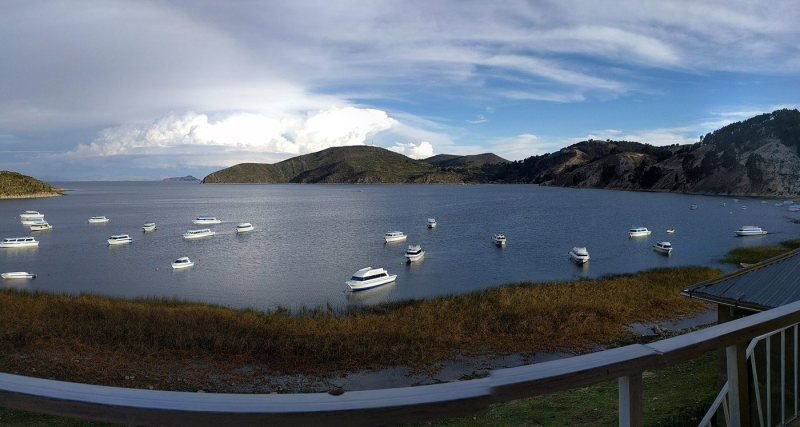
The Uros floating islands are reed platforms in the bay of Puno, Peru, about 30 minutes by boat from the port. Families build them from blocks of totora root tied together and covered with cut reeds, anchored to poles in the lake bed. A visit takes about an hour and is included in most Lake Titicaca boat days.

In this guide
Short answer: The Uros floating islands are platforms of totora reed in the bay of Puno, on the Peruvian side of Lake Titicaca, about 30 minutes by boat from the port. Families build each island from blocks of reed root tied together, covered with layers of cut reed and anchored to poles driven into the lake bed. A visit lasts about an hour, costs a few soles in cash on top of the boat, and comes before Taquile on most boat days.
How the islands are made
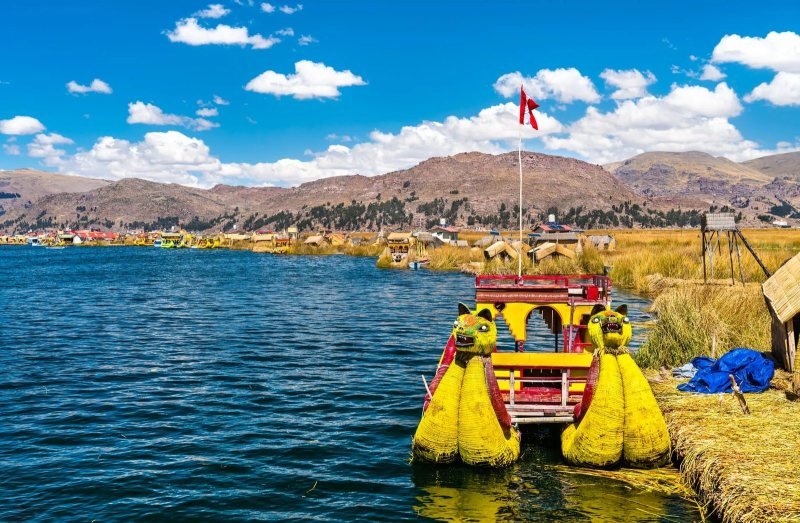
An Uros island is built from the totora reed that grows in the shallow bay of Puno, inside the Reserva Nacional del Titicaca. The base is not reed stalks but reed roots. Where totora grows thick, the roots mat together into floating blocks about a foot (30 cm) thick. Families cut those blocks, each roughly 13 by 33 ft (4 by 10 m), tie them together with rope, and lay cut reeds on top in crossed layers until the surface is dry enough to walk on.
The island then needs feeding for the rest of its life. The bottom layers rot in the water, so new reeds go on top every two weeks in the rainy season and every two or three months in the dry season. An island lasts about 25 years before the family builds a replacement beside it. Ropes tied to eucalyptus poles driven into the lake bed hold the island in place, and the family can move it by pulling the poles.
Walking on it is the part people remember. The surface gives under your feet like a wet mattress, your shoes sink an inch and spring back, and the whole island rocks a little when a boat docks. Houses, the cooking fire on a bed of stones, the lookout tower and the reed boats all stand on the same mat. Reed is also food: the white base of a fresh stalk is peeled and eaten, and your host will hand you one.
Who lives on the islands
The families call themselves Uros (or Uru). Their own language has all but disappeared, with two speakers counted on the islands in 2004, and everybody speaks Aymara and Spanish today. The islands sit close to Puno because many families moved nearer the shore after a storm in 1986, and the count changes as families split or merge. Published figures run from about 60 to more than 100 islands, with roughly 1,200 people living on them (as of October 2026, Wikipedia). Our Lake Titicaca facts guide covers the lake they float on.
A visit, honestly
The Uros are touristy, and you should go anyway. Tourism is the main income of the islands, and the whole visit is built around showing it to you: the boat docks at one island, the family president explains the construction with a cutaway model, you look inside a house, and the women lay out embroidered textiles and reed mobiles for sale. A ride to a neighboring island on a two-headed reed boat is offered for a small cash fee that stays with the family.
Two things make the difference between a visit that feels like a show and one that does not. The first is time: most boats to Taquile give the Uros about an hour, which is enough. The second is money: buy something small from the person who made it, pay the reed boat fee without haggling, and tip the family if you took their photo. The island receives the group, so the income is shared by that family, and boats rotate between islands so each one gets visitors.
What people get wrong is the clothing. The lake sits at 12,507 ft (3,812 m), the sun on the water burns in under an hour and the boat roof is cold and windy even at noon. Bring sunscreen, a hat and a windproof layer at the same time. Cash in small soles bills matters too, because nothing on the islands takes a card.
How much it costs
The boat from the Puno port and the island entry are paid in soles. Travel reports put the public boat at about S/10 round trip, the island entry at about S/5 and the reed boat ride at S/5 to S/15 per person (as of October 2026, unofficial figures). On our trips the boat, the guide and the island entry are included, and only the reed boat ride and purchases are paid on the spot.
Staying overnight
A few families run guest rooms on their islands, with reed walls, a real bed and a composting toilet, and you can sleep on the lake if you want the silence after the boats leave. We do not include it in our trips. Our overnight on Lake Titicaca is with a family on Amantaní, a farming island three hours out, where the homestay is run by the whole community. Read our guide to Taquile and Amantaní if you want a night on the water rather than an hour.
If you do book an Uros lodge on your own, expect a cold night from May to September, when Puno drops below freezing, and no electricity beyond a solar lamp.
Which trips include the Uros
Every boat day from Puno starts at the Uros. The Uros and Taquile boat day from Puno gives the islands about an hour before the crossing to Taquile. On a longer trip, Complete Peru in 15 days puts the same boat day on day 7, after Arequipa and the Colca Canyon, and the Peru and Bolivia routes spend their lake day the same way before crossing at Kasani. Compare all of them on the Lake Titicaca tours page. For the road there, see how to get from Cusco to Lake Titicaca.
| Fact | Value | Source |
|---|---|---|
| Where | Bay of Puno, Peru, inside the Reserva Nacional del Titicaca | gob.pe |
| Boat from the Puno port | about 30 minutes | |
| Altitude | 12,507 ft (3,812 m), lake surface | en.wikipedia.org |
| Number of islands | about 60 to more than 100, changes as families split (as of October 2026) | en.wikipedia.org |
| Population on the islands | about 1,200 (2011 figure) | en.wikipedia.org |
| Root block size | about 13 by 33 ft (4 by 10 m) | en.wikipedia.org |
| Reeds added | every two weeks to three months, depending on the season | en.wikipedia.org |
| Island lifespan | about 25 years | en.wikipedia.org |
| Language | Aymara and Spanish (the Uru language is nearly extinct) | en.wikipedia.org |
| Time on the islands | about 1 hour on a Taquile boat day | |
| Fees paid in cash (unofficial) | public boat about S/10, entry about S/5, reed boat S/5 to S/15 (as of October 2026) | talesfromthelens.com |
Sources
Questions people ask
Are the Uros islands touristy?
Yes. The families live mostly from visitors, and the stop is organized around them, with a construction demonstration, a look inside a house and textiles for sale. It still earns its hour. Go with the right expectations, buy something from its maker and pair the stop with Taquile or Amantaní for the rest of the day.
How are the Uros islands built?
From totora reed. Families cut floating blocks of reed root, rope them side by side and pile crossed layers of cut reed on top until it holds a house. Ropes to eucalyptus poles in the lake bed hold the island in place. New reeds go on top every few weeks to months, and an island lasts about 25 years.
Can you sleep on the Uros islands?
Yes. Some island families rent a guest room with reed walls and a real bed. Our trips do not include it. The night on the lake we recommend is with a family on Amantaní, three hours out, where the whole community shares the homestay income. Either way, pack for a night below freezing from May to September.
How far are the Uros islands from Puno?
Half an hour on the boat from the port of Puno, across the bay and through channels cut in the reed beds. Many islands moved closer to the shore after a storm in 1986, which is why the ride is short. The same boat continues about two and a half to three hours to Taquile.
How much does it cost to visit the Uros?
Little, if you go on your own. Visitors report a public boat at about S/10 round trip, the island entry at about S/5 and the optional reed boat ride at S/5 to S/15, all in cash (unofficial figures as of October 2026). On our boat days the boat, guide and entry are included and you pay only the reed boat and what you buy.
What should I bring to the floating islands?
Sunscreen, sunglasses and a hat for the glare off the water, a windproof layer for the boat roof, water, and small bills in soles for the reed boat, crafts and tips. Shoes you do not mind getting damp, because the reed surface is wet after rain. Ask before photographing anyone.
This guide was last reviewed in October 2026. Prices, rules and timetables are quoted with the date we checked them.