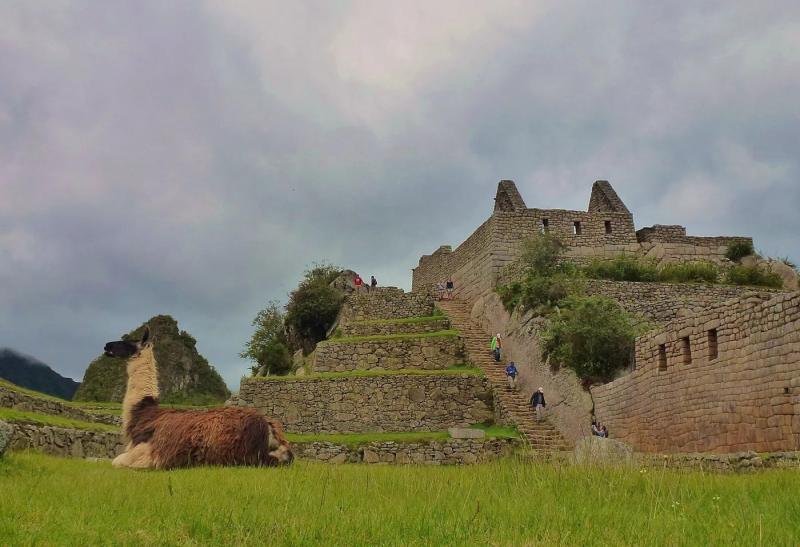
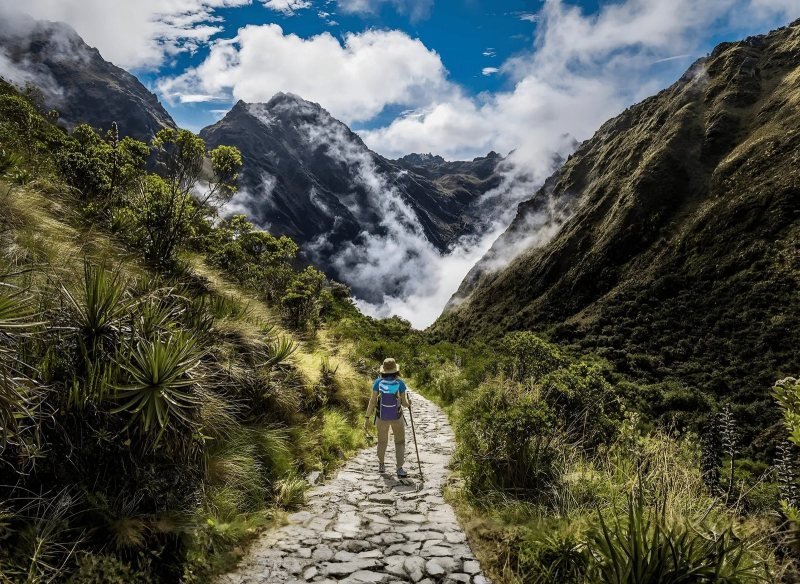
The Inca stone road into Machu Picchu: 43 km (26 mi) in 4 days from km 82, over Dead Woman's Pass at 4,215 m (13,829 ft), on a permit limited to 500 people a day.
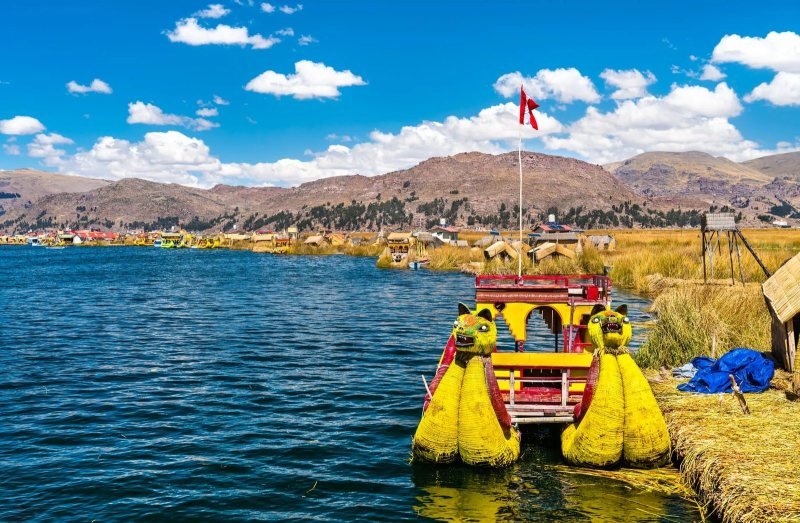
The Bolivian side of Lake Titicaca (Copacabana, Isla del Sol), La Paz and the Uyuni salt flats, reached by road from Puno in our Peru and Bolivia tours.
15,190 ft high pointSalkantay Pass, 4,630 m, day 2
About 45 milesRoughly 72 km over 4 hiking days
No trail permitMachu Picchu entry included
Shared serviceGuide, cook, muleteers and mules
The trip in one paragraph
The Salkantay trek is the route for hikers who want a real mountain pass, glaciers close enough to hear them crack, and an arrival at Machu Picchu without an Inca Trail permit. You go higher than on the Inca Trail, you walk mostly on dirt instead of stone steps, and you sleep one night in a hotel in Aguas Calientes before the citadel. If the ruins along the way matter more to you than the glacier, book the Classic Inca Trail 4 days instead.
Who the Salkantay suits
Fit walkers who can book late, people whose knees hate stairs, and anyone who missed the Inca Trail permits. It does not suit you if cold nights at 12,800 ft (3,900 m) sound miserable, or if you arrive in Cusco the day before. Two or three nights in Cusco first is the minimum we accept.
The day of the pass
Day 2 starts in the dark below Salkantay mountain. You climb about 2,400 ft (730 m) on switchbacks to the Salkantay Pass at 15,190 ft (4,630 m), then lose more than 5,000 ft on the way down into cloud forest. Expect 8 to 9 hours. The pass is cold and windy, the descent is long, and the change from ice to orchids in one afternoon is the reason people choose this trek.
How it ends at Machu Picchu
Days 3 and 4 are warm and green: the Santa Teresa valley, coffee and fruit farms, and a climb to the Inca site of Llactapata, where you see Machu Picchu across the valley for the first time. You reach Aguas Calientes on day 4 and sleep in a hotel. Day 5 is the guided visit and the train back. Read our Salkantay route, altitude and difficulty guide for the full profile.
The Salkantay Pass15,190 ft (4,630 m) at the foot of Salkantay mountain, the highest point on any of our Machu Picchu treks.
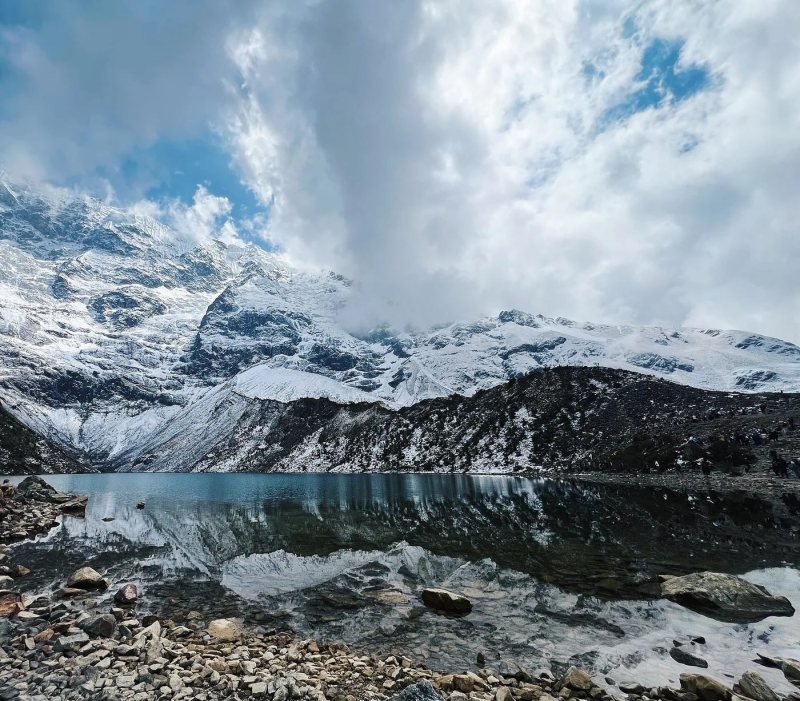
Humantay LakeThe turquoise glacier lake above the first camp at 13,780 ft (4,200 m), reached on foot from Soraypampa.
From ice to cloud forestThe descent from the pass drops into bamboo, orchids and waterfalls, then coffee farms on day 3.
Machu Picchu from LlactapataA side view of the citadel from an Inca site across the valley, the day before you walk into it.
Price
One service level, priced per person on shared service: Full trekking service from US$707. It covers the crew, the camp, the mules, one hotel night in Aguas Calientes, the Machu Picchu ticket and the train. Your Cusco hotel is separate. Single travelers and quotes for your own group go through the free quote form.
Pick your arrival date
Pick the day you leave Cusco. The trek runs all year with no trail permit, but the Machu Picchu ticket on day 5 has to be available.
Send the free quote form with your date and every hiker's passport data exactly as printed, since the Machu Picchu ticket goes in that name. For June to August, ask two to three months ahead. We confirm the ticket, train and hotel before you pay.
Day by day
Open a day to see the hours, the altitude and where you sleep. Times are the ones our guides actually keep.
Day1
Cusco, Mollepata, Soraypampa, Humantay Lake
Camp at Soraypampa, about 12,800 ft (3,900 m), high point Humantay Lake at 13,780 ft (4,200 m)
Camp at Soraypampa About 12 km, 5 to 6 hours Breakfast stop, lunch, dinner Below freezing at night
04:30
Pickup at your Cusco hotel
Pickup between 4:30 and 5:00 a.m. About three hours by road to Mollepata, where you stop for breakfast at your own cost. Leave your suitcase at your Cusco hotel.
Morning
Trail to Soraypampa
The walk follows a valley with Humantay and Salkantay mountains ahead of you. The muleteers load the duffels and pass you on the trail. Camp is at Soraypampa, at about 12,800 ft (3,900 m).
Afternoon
Humantay Lake
About 1.5 hours up a steep path to the lake at 13,780 ft (4,200 m), right under the glacier. Go slowly. This climb is your test for tomorrow, and the guide uses it to judge the group's pace.
Evening
Night at Soraypampa
Hot dinner and an early night. The temperature drops below freezing on clear nights from May to August. Sleep in a hat and keep tomorrow's clothes inside the sleeping bag.
Day2
Soraypampa, Salkantay Pass, Chaullay
Night at Chaullay, about 9,510 ft (2,900 m), high point 15,190 ft (4,630 m)
Camp or basic lodge at Chaullay About 22 km, 8 to 9 hours Gain about 2,400 ft (730 m) Breakfast, lunch and dinner
05:00
Early start
Breakfast in the dark. Wear every layer you have for the first hour, then strip down as the sun reaches the trail.
Morning
Switchbacks to the Salkantay Pass
About 3 to 4 hours of steady climbing to 15,190 ft (4,630 m). The air holds roughly 40 percent less oxygen than at sea level up there, so you breathe hard even at a slow pace. Emergency horses go with the group if someone cannot continue.
Late morning
At the pass
Salkantay's glacier fills the view to the south. Many hikers add a stone to the cairns. Stay twenty minutes at most, the wind cools you fast.
Afternoon
The long descent to Chaullay
More than 5,000 ft (about 1,700 m) of descent on rocky trail. The grass turns to shrubs, then to cloud forest with moss and bamboo. Poles save your knees on this stretch.
Day3
Chaullay, Santa Teresa valley, La Playa, Lucmabamba
Camp at Lucmabamba in coffee country, high point about 9,510 ft (2,900 m)
Camp or eco lodge at Lucmabamba About 16 km, 5 to 6 hours Warm and humid Breakfast, lunch and dinner
Morning
Down the river valley
A gentle downhill along the river, with waterfalls coming off the slopes. Swap your fleece for a T-shirt and put on insect repellent here, not later.
Midday
La Playa and the fruit farms
Bananas, avocados and passion fruit grow along the trail. Lunch is near La Playa.
Afternoon
Lucmabamba
Camp sits among coffee farms. If the family that hosts the site roasts coffee that day, buy a bag, it travels well.
Hotel night in Aguas Calientes, 6,690 ft (2,040 m), high point Llactapata at about 9,190 ft (2,800 m)
Hotel or hostel in Aguas Calientes About 18 km, 6 to 7 hours Breakfast and lunch Machu Picchu view from Llactapata
Morning
Old trail to Llactapata
The last real climb of the trek, through shade on an old Inca path. From the ridge, Llactapata looks straight across the valley at Machu Picchu and Huayna Picchu.
Midday
Down to Hidroeléctrica
A steep descent to the hydroelectric station on the Urubamba River, then lunch.
Afternoon
Along the railway to Aguas Calientes
The last stretch follows the railway along the river into Aguas Calientes (Machu Picchu Pueblo). You check in, take your first hot shower in four days, and eat dinner in town on your own.
Back in Cusco at night (hotel not included), Machu Picchu at 7,970 ft (2,430 m)
Breakfast at the hotel Circuit 2, guided, 2 to 3 hours Train and van to Cusco
Early morning
Bus up to the citadel
About 25 minutes by Consettur bus up the switchbacks to the gate. Bring your passport, it is checked with the ticket.
Your entry slot
Guided visit of Machu Picchu
Two to three hours on Circuit 2, the route with the classic postcard view from the upper terraces and the main temples below. Huayna Picchu or Machu Picchu Mountain are extra and must be booked months ahead.
Afternoon
Train to Ollantaytambo, van to Cusco
About 1 hour 40 minutes on the train, then about two hours by road. You reach Cusco at night.
Where you go
The route crosses the Salkantay Pass from the Mollepata side, follows the Santa Teresa valley down, and climbs to Llactapata before reaching Aguas Calientes.
Interactive map loads from OpenStreetMap when the page is online. Route: Cusco · Mollepata · Soraypampa · Humantay Lake · Salkantay Pass · Chaullay · Lucmabamba · Llactapata · Aguas Calientes · Machu Picchu.
Stops on the itinerary Machu PicchuDashed line: road and rail route
What is included
Included
Machu Picchu entrance, Circuit 2Bought under your passport name for day 5.
Licensed bilingual guideTrained in high mountain trekking and first aid, for all 5 days.
Cook, muleteers and mulesMules carry the camp, the kitchen and your duffel. An emergency horse goes with the group.
3 nights campingTents and sleeping mats at Soraypampa, Chaullay and Lucmabamba.
1 night in Aguas CalientesHostel or tourist-class hotel with breakfast, night of day 4.
Meals on the trekFrom lunch on day 1 to lunch on day 4, plus breakfast at the hotel on day 5.
TransportVan to Mollepata, Consettur bus up and down on day 5, train to Ollantaytambo and van to Cusco.
First aid kit with oxygenCarried by the guide, with a briefing in Cusco before you leave.
Not included
Sleeping bag and polesBring a bag rated to 14°F (minus 10°C), or rent one with poles from us.
Meals not listedBreakfast on day 1 in Mollepata, dinner on day 4, lunch and dinner on day 5.
Huayna Picchu or Machu Picchu MountainExtra ticket, booked months in advance.
Travel insuranceStrongly recommended, with cover for trekking up to 15,500 ft and evacuation.
TipsOptional, for the guide, cook and muleteers, usually given on the last night.
Hotel in CuscoNot part of the trek, before or after.
Good to know
Altitude is the real testYou sleep at 12,800 ft on night 1 and cross 15,190 ft on day 2. The CDC treats 8,000 ft (2,500 m) and up as high elevation. Spend at least two nights in Cusco first and ask your doctor about medication.
Two climates in one trekBelow freezing at Soraypampa, then 75°F (24°C) and humid by day 3. Pack a down jacket and a T-shirt, and expect bugs at Lucmabamba.
FitnessDay 2 is 8 to 9 hours on foot. Train with long hill walks of 5 or 6 hours, and with downhills, since the descent hurts more than the climb.
SeasonMay to September is dry and clear, with the coldest nights in June and July. From December to March rain and snow can close the pass, and the trail is muddy.
What the mules carryYour duffel with sleeping bag and clothes rides on the mules and you see it only at camp. Keep water, rain shell, warm layer, sunscreen and snacks in your daypack.
No trail permit, still book aheadThe Salkantay route needs no Inca Trail permit. The Machu Picchu ticket and the train do sell out from May to August, so send your date early.
Train luggagePeruRail allows one backpack of up to 8 kg (17.6 lb) and 100 cm, or a hand bag of up to 12 kg (26.5 lb) and 115 cm, per its luggage page.
Travelers on this itinerary
Sacred Lake Titikaka is new; these are public Tripadvisor reviews of Viajes Cusco Perú, the family agency that operates every package on this site.
4.9
78 reviews Viajes Cusco Perú, Sep 2026
4.7
83 reviews Google Maps
Reviews shown: Viajes Cusco Perú travelers (sample of public Tripadvisor reviews, read Sep 30, 2026).
C
Claudia I.Sep 2026, with friends
Dream Come True
"Incredible experience!! Beautiful landscape and beautiful people. We were lucky to be guided by Vladimir, who with his lovely personality and amazing knowledge made this trip a great learning experience."
Translated from Spanish by Tripadvisor
E
Erika C.Jul 2026, solo traveler from Argentina
I recommend them, people!
"All the tours I did (Machu, Humantay Lake, Rainbow Mountain, Sacred Valley) were spectacular!!! From picking me up at the hotel (always punctual and attentive, notifying about everything!) to the guides I had who were also excellent."
Excerpt. Translated from Spanish by Tripadvisor
M
Martin Rogelio I.Jul 2026, Sullana, Peru, with family
Professionalism, trust, and human quality
"I came to this agency by recommendation and, after traveling with them on two occasions, I can say that it was an excellent decision. I must highlight the professionalism of the guides, who made every tour very interesting and safe."
Excerpt. Translated from Spanish by Tripadvisor
Still have questions?
Everything we get asked about this package before people book.
How hard is the Salkantay trek?
Demanding, mainly because of altitude. You sleep at 12,800 ft (3,900 m) on night 1 and cross the pass at 15,190 ft (4,630 m) on day 2, an 8 to 9 hour day. The other days are 5 to 7 hours and mostly downhill or flat. Acclimatized, regularly active hikers finish it without trouble.
How cold is the Salkantay pass at night?
You never sleep at the pass. You sleep below it at Soraypampa, about 12,800 ft, where dry-season nights dip below 32°F (0°C). Bring a warm sleeping bag, a hat and gloves. By night 3 at Lucmabamba it is mild.
Is Humantay Lake part of day 1?
Yes. After you reach camp at Soraypampa, you climb about 1.5 hours to Humantay Lake at 13,780 ft (4,200 m) and come back down to sleep. It is steep, and it helps you acclimatize for the pass the next morning.
Can you do the Salkantay trek without a guide?
The route needs no permit, so independent hiking is legal. We do not recommend it for a first trip in Peru. The pass is remote, weather turns fast, and a guide with oxygen and an emergency horse makes the difference on day 2. You also need your Machu Picchu ticket and train sorted.
Salkantay or Inca Trail?
Salkantay if you want a high pass and glaciers, if permits are sold out, or if stone stairs bother your knees. Inca Trail if you want Inca sites along the trail and the walk through the Sun Gate. Salkantay is colder and higher, the Inca Trail is steeper underfoot.
Do you sleep in tents every night?
Three nights are camping or simple lodges on the trail, at Soraypampa, Chaullay and Lucmabamba. The fourth night is a hotel or hostel in Aguas Calientes with a hot shower, the night before your Machu Picchu visit.
When is the best time for the Salkantay trek?
Our pick is May, June or September: dry trail, clear views of the glacier, and fewer groups than July and August. December to March brings rain, mud and sometimes snow on the pass. The trek runs all year, but the views are worth planning around.
Bike down from the Abra Málaga pass, hike through coffee country to the Cocalmayo hot springs, walk the railway to Aguas Calientes and tour Machu Picchu on day 4. No camping above 7,000 ft.
Four days down into the Apurímac canyon and up to Choquequirao, a large Inca site with no road to it, then back out the same way. Guide, cook, pack animals and camping included.
Four days through the Lares valley: hot springs, a night with a weaving family, a 15,420 ft pass between glacier lakes, then the train to Aguas Calientes and a guided Machu Picchu visit.