




Peru in January: Weather, Crowds and Festivals
Yes, with rain gear. January is the wettest month in Cusco: about 20 rain days and 5.7 in (146 mm) of rain, highs near 68°F (20.2°C). Machu Picchu gets 13.4 in (341 mm) but stays open with the low-season cap. Lima is hot and sunny. It is the quietest, lowest-priced month in the Andes.

In this guide
- Peru weather in January, region by region
- Cusco and the Sacred Valley in January
- Machu Picchu in January
- Lake Titicaca in January
- Lima and the coast in January
- Festivals and holidays in January
- Crowds and prices in January
- What to pack for Peru in January
- A 7 to 10 day Peru itinerary for January
- Questions people ask
- Sources
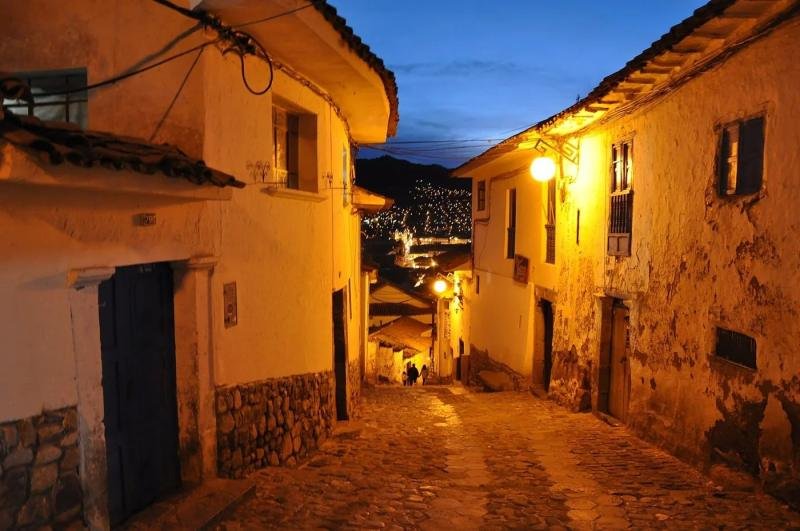
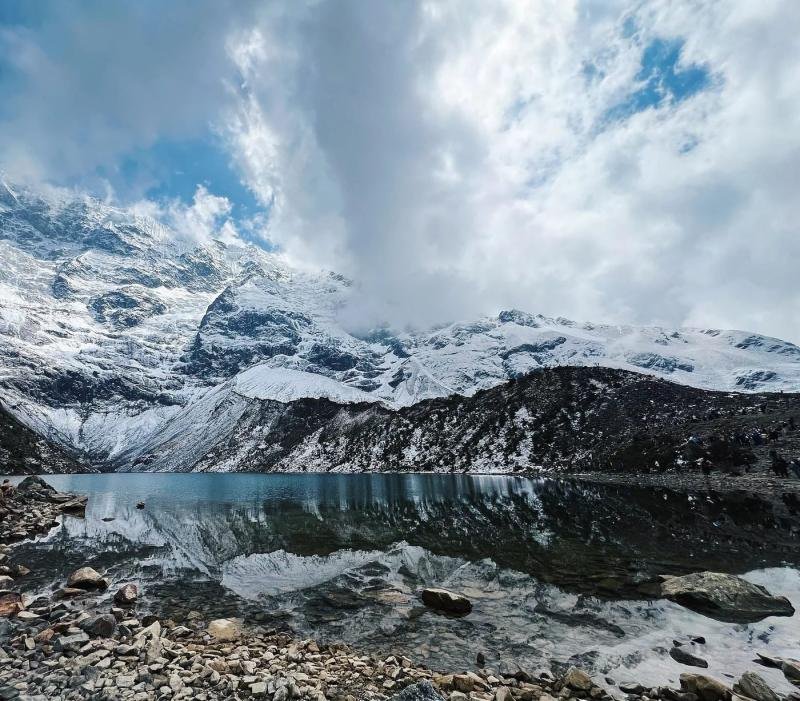
The storm rolls over the mountains a little after lunch. You hear it first on the clay roof tiles of Cusco, then the stones of the Plaza de Armas turn dark and shiny and the women selling knitted hats pull plastic sheets over their tables. An hour later the sky breaks open again, the hills around the city are a green you never see in July, and you spent the morning at Sacsayhuamán with hardly anyone else on the walls.
Short answer: Yes, with rain gear. January is the wettest month in Cusco: about 20 rain days and 5.7 in (146 mm) of rain, highs near 68°F (20.2°C). Machu Picchu gets 13.4 in (341 mm) but stays open with the low-season cap. Lima is hot and sunny. It is the quietest, lowest-priced month in the Andes.
January comes down to how much you mind getting wet. The mountains are green, the citadel has room to breathe, the coast is in full beach summer, and Bolivia's salt flat starts turning into a mirror. Long treks and Rainbow Mountain are the wrong call this month. Below are the numbers by region, what changes on the trains and trails, and a route built from our packages. For the whole year, read the best time to visit Peru, and for the citadel alone our guide to the best time to visit Machu Picchu.
Peru weather in January, region by region
January is the middle of the rainy season in the Andes and the middle of summer on the coast. The SENAMHI 1991 to 2020 climate normals in the table put them side by side.
| Place | High (°F / °C) | Low (°F / °C) | Rain (in / mm) | Rain days | Crowds | What to do |
|---|---|---|---|---|---|---|
| Cusco and the Sacred Valley | 68 / 20.2 | 45 / 7.4 | 5.7 / 146 | about 20 | Low | Green valley in the morning, museums in the rain |
| Machu Picchu | 69 / 20.6 | 53 / 11.8 | 13.4 / 341 | No official count | Low, 4,500 a day (5,600 on 1 January) | Night in Aguas Calientes for a second chance |
| Lake Titicaca (Puno) | 61 / 16 | 43 / 5.9 | 6.2 / 159 | No official count | Low | Boat trips in the calm morning |
| Lima | 78 / 25.6 | 69 / 20.4 | under 0.1 / 0.6 | under 1 (drizzle) | Busy beach season | Beach, food, anniversary events |
| Ica and Huacachina | 89 / 31.9 | 64 / 17.8 | 0.2 / 5 | almost none | Busy on weekends | Dunes at sunrise or sunset |
Cusco and the Sacred Valley in January
Cusco in January averages a high of 68°F (20.2°C) and a low of 45°F (7.4°C), with 5.7 in (146 mm) of rain over about 20 wet days, the most of the year. Most mornings start bright. The storms build over the peaks and arrive after lunch, although some days the drizzle starts at dawn and never quite stops. Nights stay mild, with no frost on the windshields.
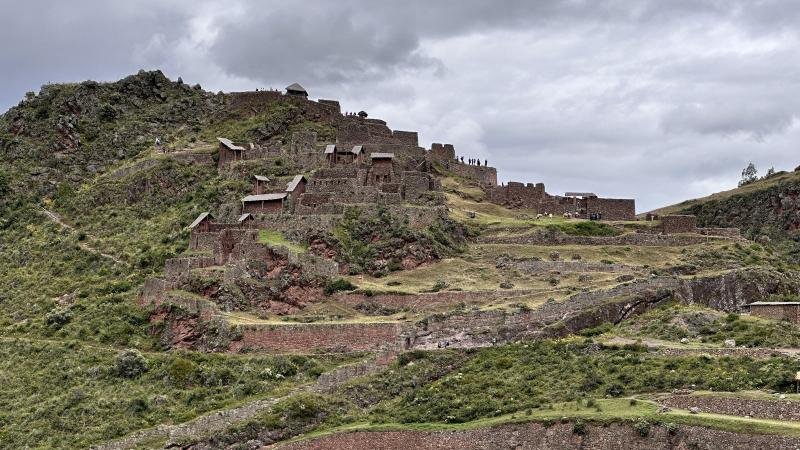
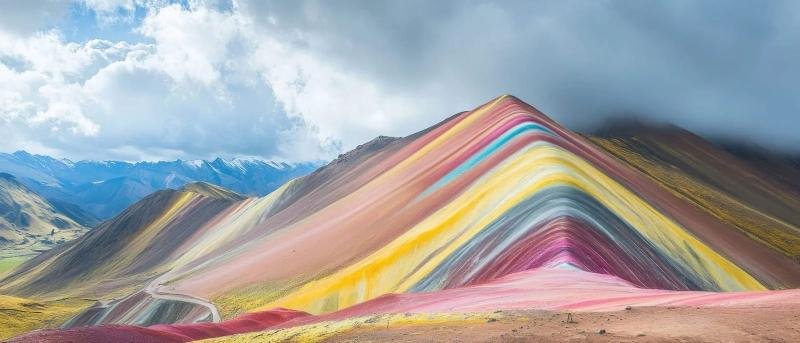
The Sacred Valley is at its greenest. The corn stands tall beside the road, and the Pisac and Ollantaytambo terraces look better in photos than at any other time of year. Our planners set January days early: out of the hotel after breakfast, back under a roof by mid-afternoon. Skip Rainbow Mountain this month unless the forecast is clear, because cloud and wet ground hide the stripes.
Machu Picchu in January
Machu Picchu averages 69°F (20.6°C) by day and 53°F (11.8°C) at night in January, with 13.4 in (341 mm) of rain, the wettest month in the SENAMHI normals. The citadel is open every day. The daily limit is 4,500 visitors, except on 1 January, which counts as high season with 5,600 (as of the 2026 calendar, Ministerio de Cultura).
The ride there changes in January. PeruRail usually closes Poroy station from about January to April and runs a bimodal service: a bus from Cusco down to the valley, then the train from Ollantaytambo. Heavy rain can also bring landslides that hold trains up for a few hours. That is why we always leave a buffer between the citadel and any flight home.
The Inca Trail in January
The Classic Inca Trail is open in January, but it is the hardest month to hike it. Expect rain most days, mud on the stone steps, and the February closure right behind you. For the current year the network closed from 31 January to 28 February (as of January 2026, Andina, citing SERNANP). A late-January start can land inside the closure, so check the dates with us before you buy flights. The Inca Trail permits guide explains how the cap works.
Lake Titicaca in January
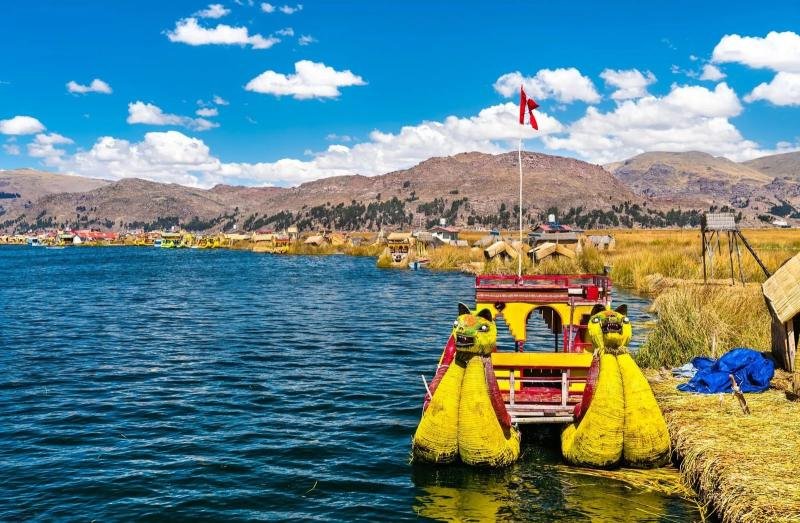
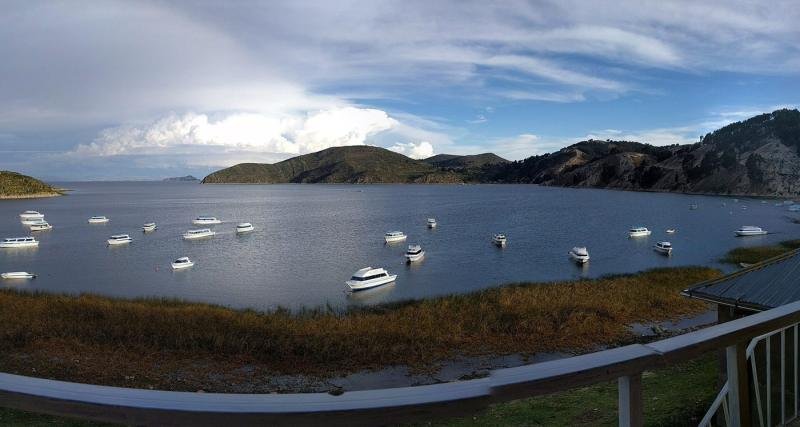
Puno averages a high of 61°F (16°C) and a low of 43°F (5.9°C) in January, with 6.2 in (159 mm) of rain, its wettest month. The lake is often calm and clear in the morning, which is when the boats go out. In the afternoon you can watch the storms march across the water with thunder rolling behind them. Late January is also when Puno starts getting ready for the Virgen de la Candelaria in February, with bands rehearsing in the streets.
Uyuni mirror season
January is when water starts to cover Bolivia's Salar de Uyuni and turn it into a mirror, according to National Geographic. The same rain can flood routes and cut tours short, so the mirror is a reward, never a promise. If that photo is your goal, Peru and Bolivia in 10 days links Machu Picchu, Lake Titicaca and Uyuni. Our Uyuni salt flats guide covers the season in detail.
Lima and the coast in January
Lima in January averages 78°F (25.6°C) by day and 69°F (20.4°C) at night, sunny and humid, with practically no rain. It is beach season, and the malecón fills up on weekends. Ica and Huacachina reach 89°F (31.9°C), so book the dune buggies and sandboarding for early morning or late afternoon, when the sand no longer burns through your shoes. 18 January is the anniversary of the founding of Lima, marked with events in the historic center.
Festivals and holidays in January
New Year's Day, 1 January
1 January is a national holiday and a high-season day at Machu Picchu, with 5,600 visitors allowed. Trains on 1 and 2 January sell out early, so book them first and build the rest of the trip around them.
Lima anniversary, 18 January
Lima was founded by Francisco Pizarro on 18 January 1535. The date is not a national holiday, but the city center holds concerts and parades around it.
Crowds and prices in January
Once the New Year rush is over, the Andes go quiet. Train seats and hotel rooms are easy to find two weeks out, and Cusco hotel rates are among the lowest of the year. The coast runs the other way. Beach hotels in Paracas and south of Lima fill up and charge more on weekends.
What to pack for Peru in January
- A good rain shell, rain trousers and a pack cover.
- Waterproof shoes, or quick-dry shoes plus a spare pair.
- Summer clothes, sunscreen and a hat for Lima and the desert.
- A light fleece for Cusco and Puno evenings.
- Strong insect repellent for Aguas Calientes, where the wet months bring more biting flies.
The full list is in our Peru packing list.
A 7 to 10 day Peru itinerary for January
Our first choice for January is Peru in 7 days. It spends two days on the sunny coast with the Ballestas Islands and the Nazca Lines flight, then heads up to Cusco and Machu Picchu. With 10 days, Peru and Bolivia in 10 days adds Lake Titicaca and the Uyuni mirror. For a shorter trip from Cusco, Machu Picchu by train in 2 days gives you a night in Aguas Calientes and a second try if the first morning is clouded in.
| Package | Days | Why it fits January | From (US$ per person) |
|---|---|---|---|
| Peru in 7 Days: Lima, Nazca, Cusco and Machu Picchu | 7 | Sunny coast first, then Machu Picchu | US$900 |
| Peru and Bolivia in 10 Days, Machu Picchu to Uyuni | 10 | Uyuni mirror season with Machu Picchu | US$1,817 |
| Lima and Machu Picchu in 6 Days | 6 | Shorter coast and Machu Picchu trip | US$880 |
| Machu Picchu by Train, 2 Days | 2 | Two mornings near the citadel | US$597 |
| Nazca Lines, Paracas and Huacachina, 2 Days | 2 | Desert add-on in peak summer | US$307 |
Send your January dates through the Get my free quote form, and a planner on our team in Cusco checks the train schedule for the bimodal season before you pay.
Planning around a different month? Read our guides to Peru in December and Peru in February, or compare every month at once in the best time to visit Peru.
Related tours


Questions people ask
Is January a good time to visit Peru?
It is a good time for the coast and a wet time for the Andes. Cusco gets about 20 rain days and Machu Picchu 13.4 in (341 mm) of rain in January, but most mornings start clear and crowds are the lowest of the year. Lima is hot and sunny. Pick January for value and green mountains, not for treks.
Is Machu Picchu open in January?
Yes, every day. Machu Picchu never closes for a season. The daily limit is 4,500 visitors in January, except 1 January with 5,600 (as of the 2026 calendar). Your train may leave from Ollantaytambo with a bus connection from Cusco, since PeruRail usually closes Poroy station from about January to April.
How bad is the rain in Cusco in January?
January is the wettest month. SENAMHI normals give the Cusco valley 5.7 in (146 mm) of rain, and the airport records about 20 days with 1 mm or more. Most days still have a dry morning. Do the outdoor visits early, keep the afternoons loose and pack a real rain shell, not a poncho from the market.
Is the Inca Trail open in January?
Yes, until the February closure starts. For the current year the trail network closed from 31 January to 28 February (as of January 2026, Andina). January hikes are wet and muddy, so they suit experienced hikers. Confirm the closure dates before you book a late-January start.
Can I see the Uyuni mirror in January?
Often, yes. January is the start of the wet season on the salt flat, when a thin layer of water can turn it into a mirror, according to National Geographic. Heavy rain can also flood access routes and shorten tours, so build a spare day into the Bolivia part of the trip.
Is January rainy season in Peru?
Yes, in the Andes and the Amazon. January is one of the three wettest months in Cusco, Machu Picchu and Puno. The coast is the opposite: Lima and Ica are in a dry, sunny summer. A January trip usually means packing beach clothes and rain gear in the same bag.
Sources
- SENAMHI, Normales climáticas estándares y medias 1991 to 2020 (station spreadsheet, archived copy) checked October 2026
- SENAMHI, normales climáticas por estación checked October 2026
- Wikipedia, Machu Picchu climate table (SENAMHI 1991 to 2020) checked October 2026
- Wikipedia, Lima climate tables (SENAMHI Campo de Marte 1991 to 2020, DWD airport rain days) checked October 2026
- Wikipedia, Cusco climate table (airport rain days, WMO normals via NOAA) checked October 2026
- Andina, Machu Picchu 2026 ticket rates and visitor limits (RM 000285-2025-MC) checked October 2026
- Ministerio de Cultura, Machu Picchu entry hours checked October 2026
- La República, Peru national holidays 2026 (16 holidays) checked October 2026
- PeruRail, Bimodal Service and Poroy station (closed about January to April) checked October 2026
- National Geographic, How to tour Bolivia's Salar de Uyuni checked October 2026
- Wikipedia, Lima (founded 18 January 1535) checked October 2026
- Andina, Inca Trail sections closed to tourists in February (SERNANP) checked October 2026
- Reglamento de Uso Turístico Sostenible de la Red de Caminos Inka, article 10 (closure every February) checked October 2026
This guide was last reviewed in October 2026. Prices, rules and timetables are quoted with the date we checked them.