


Best Time to Visit Peru, Region by Region
The best time to visit Peru is May to September, the dry season in the Andes, when Cusco, Machu Picchu and Lake Titicaca have clear skies and cold nights. Our pick is May or September for dry trails and smaller crowds. The coast is sunniest December to March, the Amazon driest May to October.

In this guide
- Peru month by month, region by region
- The Andes: Cusco, Machu Picchu and the treks
- The coast: Lima, Paracas and Nazca
- Lake Titicaca, Uyuni and Bolivia
- The Amazon: Puerto Maldonado and Iquitos
- Festivals worth planning around
- Crowds, capacity and the Inca Trail closure
- Our pick by type of traveler
- Questions people ask
- Sources
Short answer: For most first trips, go between May and September. That is the dry season in the Andes, so Cusco, Machu Picchu and Lake Titicaca get blue skies and cold nights. Our pick is May or September, when trails are dry and Machu Picchu is calmer than in July. The coast is sunniest from December to March.
Peru does not have one weather. It has three climate zones stacked side by side: a desert coast, the high Andes and the Amazon lowlands. Each runs on its own calendar, and the month that is perfect in Cusco is often gray in Lima and muddy in the jungle. The table below lines them up, with Lake Titicaca and Bolivia's Uyuni salt flat added because so many of our travelers combine them.
Peru month by month, region by region
The quickest way to choose is to read your travel month across the row. The Andes decide most trips, because Machu Picchu, Cusco and the treks sit there, so start with that column and then check whether the coast or the jungle fits the same window. Crowd levels refer to Machu Picchu, the place where crowds change the experience most.
| Month | Andes (Cusco, Machu Picchu) | Coast (Lima, Paracas, Nazca) | Amazon (Puerto Maldonado, Iquitos) | Lake Titicaca (Puno) | Uyuni (Bolivia) | Crowds at Machu Picchu | Note |
|---|---|---|---|---|---|---|---|
| January | Rainy | Sunny summer | Wet, high rivers | Rainy | Mirror season, rain can cancel tours | Low, except 1 January | Poroy closed, bus and train from Cusco |
| February | Wettest month | Sunny, beach season | Wet, high rivers | Rainy | Mirror season | Low | Inca Trail closed, Candelaria in Puno |
| March | Rainy, very green | Sunny | Wet, high rivers | Rain easing | Mirror possible, flat drying | Low | Inca Trail open again |
| April | Showers fading | Sunny, cooling | Rain easing | Drying out | Drying, crust forming | Low, busy around Easter | Green hills, fewer showers |
| May | Dry, clear | Clouds arriving | Drier | Dry, cold nights | Dry, white crust | Medium | Our pick for the Andes |
| June | Dry, cold nights | Gray garúa | Dry | Dry, freezing nights | Dry, very cold nights | High from 19 June | Inti Raymi on 24 June, Corpus Christi |
| July | Dry, cold nights | Gray garúa | Dry | Dry, freezing nights | Dry, very cold nights | Peak | US school holidays |
| August | Dry, cold nights | Gray garúa | Dry | Dry, freezing nights | Dry, very cold nights | Peak | Book trains and permits early |
| September | Dry, first showers | Gray garúa | Dry | Dry | Dry | High | Our pick for the Andes |
| October | Mostly dry, late storms | Gray, clearing | Rain returning | Mostly dry | Dry | High | Quiet shoulder month |
| November | Afternoon showers | Sun returning | Rainy | Showers starting | Dry, clouding over | Low after 2 November | Good value |
| December | Rainy | Sunny summer | Rainy, rivers rising | Rainy | Rain starting, early mirror | Low, high on 30 and 31 December | Holiday prices at Christmas |
The Andes: Cusco, Machu Picchu and the treks
The Andes have a dry season from May to September and a rainy season that Peru's weather service, SENAMHI, places from September to April, with the heaviest rain from December to March. If your trip is built around Machu Picchu, the Sacred Valley or a trek, those two facts decide almost everything.
Dry season, May to September
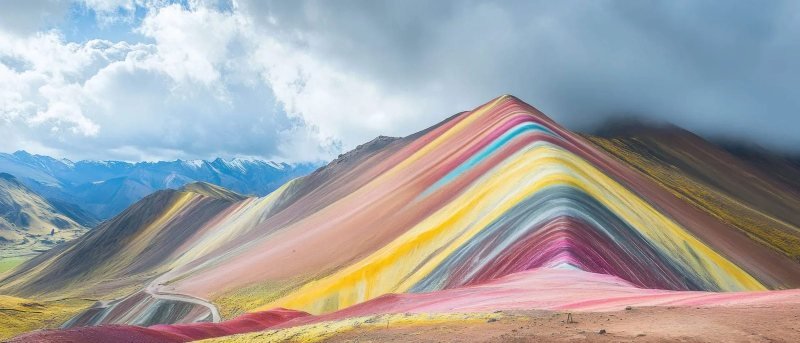
Expect hard blue skies, strong sun at midday and cold nights. In June and July Cusco mornings feel like a ski town: you scrape frost off the hotel courtyard plants, then peel down to a T-shirt by lunch. Trails are firm, the Salkantay pass is usually open, and Rainbow Mountain shows its colors under a clean sky.
The cost is people. June to August is when US school holidays, Inti Raymi and the peak of the trekking season overlap. Trains, Machu Picchu tickets and Inca Trail permits sell out first in those months.
Rainy season, November to March
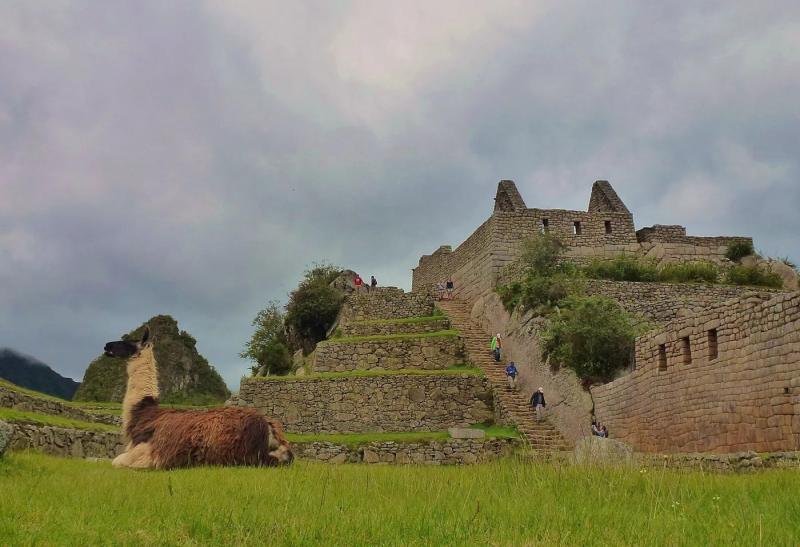
The mistake people make is picturing a monsoon. On most rainy-season days in Cusco the morning is bright and the clouds build after lunch into a hard afternoon shower. Machu Picchu in December or March is green, misty and quieter, and our favorite photos of it were taken when the clouds lifted off Huayna Picchu at 9 a.m.
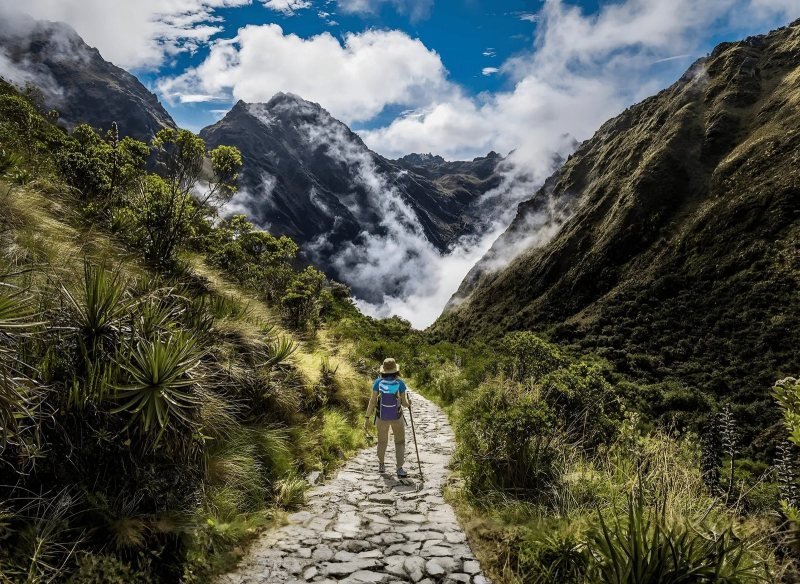
What changes is logistics. PeruRail usually closes Poroy station from January to April and runs its Bimodal Service instead: a bus from Cusco to Ollantaytambo, then the train. Mountain passes on treks like Salkantay can get snow or close in the wettest weeks, and trails turn to mud. Pack a real rain shell and shoes that dry overnight.
Shoulder months, April and October
April and October are our quiet favorites for travelers who hate lines. April has the green hills of the rainy season with fewer showers each week. October still feels like dry season most days, with the first afternoon storms arriving toward the end of the month. For a deeper look at the citadel alone, read our guide to the best time to visit Machu Picchu.
The coast: Lima, Paracas and Nazca
The Peruvian coast is a desert, and it is sunniest from December to March, the southern summer. From about June to October Lima sits under a low gray ceiling and a fine drizzle locals call garúa. It almost never rains properly, but the sky can stay the color of wet cement for weeks.
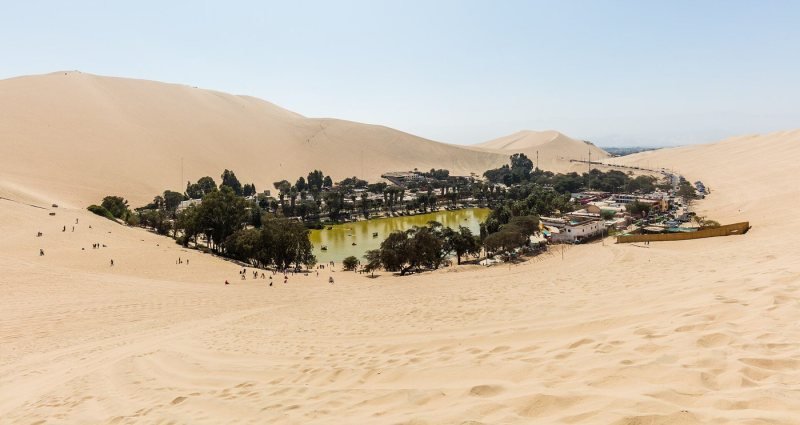
The mistake we see every year: travelers plan a July beach day in Lima and find sweaters and fog. Lima in winter is still worth a day for food and museums. If you want sun on the coast in June or July, head south. Paracas, the Ballestas Islands and the Ica desert around Huacachina sit inland of most of that fog and usually stay drier and brighter than the capital.
December to March is beach season, with Lima's malecón crowded on weekends and hotels in Paracas fuller and pricier. That is also the wettest time in the Andes, so a Peru trip in January often means sunshine on the coast and rain shells in Cusco.
Lake Titicaca, Uyuni and Bolivia
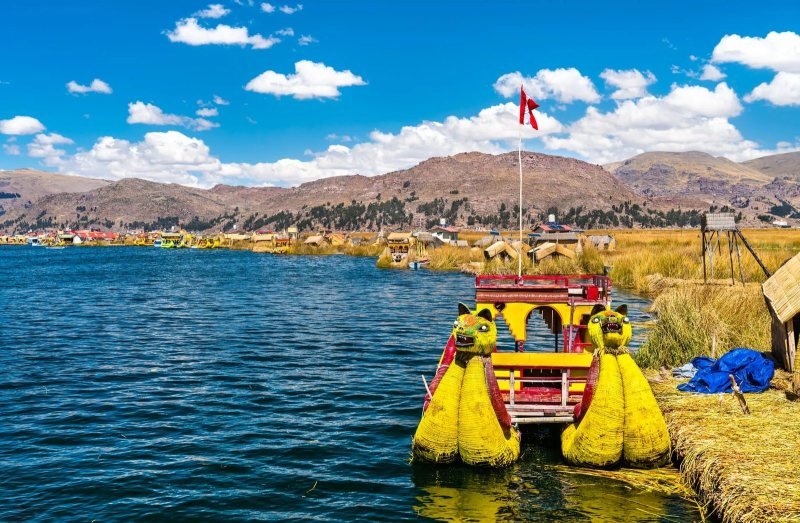
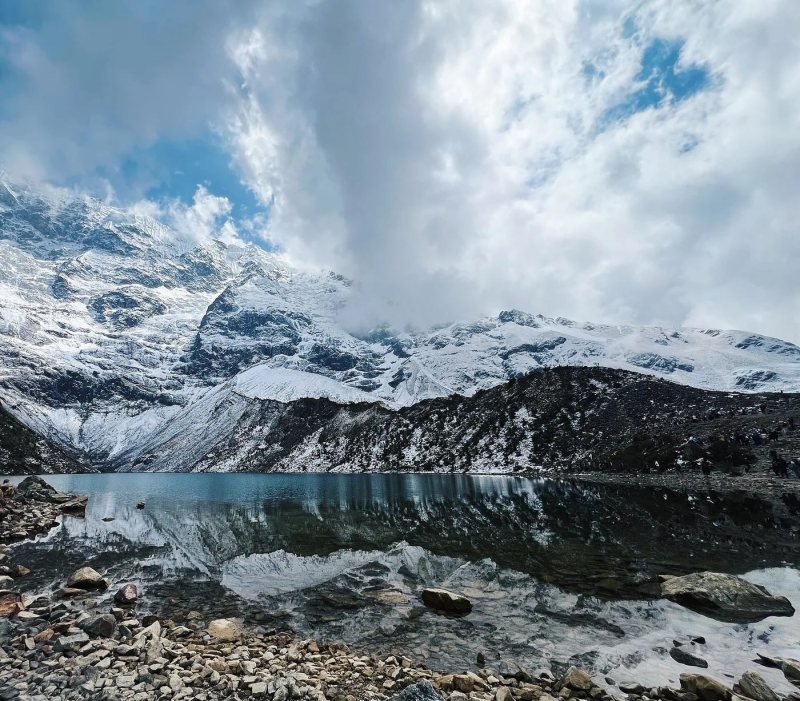
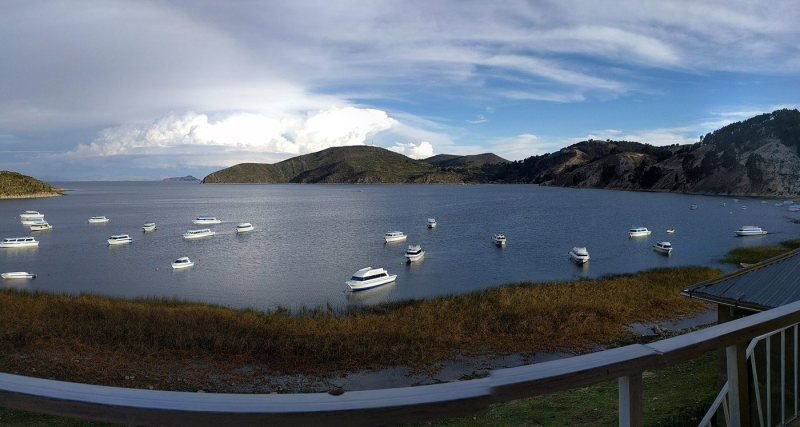
Lake Titicaca follows the Andean pattern: rain from December to March, dry and sunny from May to October. The difference is altitude. The lake surface sits at 3,812 m (12,507 ft) and Puno at about 3,830 m (12,560 ft), higher than Cusco, so nights in June and July drop below freezing and the boat to the Uros islands is cold until the sun gets up.
Daylight on the lake in the dry season is brilliant and the water turns a deep blue. Bring sunscreen and a warm hat for the same boat ride. In February the city of Puno fills for the Festividad de la Virgen de la Candelaria, which changes the whole feel of a Titicaca visit (see festivals below).
Uyuni salt flat: mirror or white crust
The Salar de Uyuni gives you two different trips depending on the month. In the rainy season, mainly January and February, a thin layer of water covers the flat and turns it into a mirror of the sky. Heavy rain in December and January can also flood routes and cancel tours, according to National Geographic and Uyuni tour sources. From May to November the flat is dry: a hard white crust in hexagon patterns, clear skies and very cold nights.
Entry for Americans is simpler than it used to be. As reported when the rule changed, US citizens no longer need a tourist visa for Bolivia since 1 December 2025 (as of October 2026). Check the State Department's Bolivia page before you fly, since entry rules can change. Our Peru and Bolivia tours with Uyuni run in both seasons, and we tell you before booking which version of the flat your dates will show.
The Amazon: Puerto Maldonado and Iquitos
The Peruvian Amazon is wetter from about November or December to April and drier from May to October. It is a rainforest, so expect rain in any month. The difference is how much and how high the rivers run.
In the high-water months, boats reach deeper into flooded forest and the lodges feel lush. In the drier months, trails are easier to walk, rivers drop and wildlife gathers near the remaining water, which many guides prefer for spotting animals. If you want to pair the jungle with Machu Picchu, June to August lines up the dry season in both regions.
Festivals worth planning around
Peru's big festivals are religious and community events first and tourist events second. Plan around them if you want to see them, and plan around them if you do not, because they fill hotels for days.
Inti Raymi, June 24, Cusco
Inti Raymi is the Inca festival of the sun, staged every June 24 by Cusco's municipal festival company, EMUFEC, at the Qorikancha, the Plaza de Armas and the esplanade of Sacsayhuamán. Grandstand seats at Sacsayhuamán sell out weeks ahead, as La República reported for the 2025 edition. Cusco hotels raise prices for the whole week, and Machu Picchu is at its busiest. You can watch the procession and the plaza scene without a seat.
Corpus Christi, Cusco
Corpus Christi falls about 60 days after Easter, so it moves between late May and June. The saints of Cusco's parishes are carried into the cathedral and the plaza for a week of processions, and families sell chiri uchu, a cold dish made only for this feast.
Qoyllur Rit'i, Ocongate
Qoyllur Rit'i is a Quechua and Catholic pilgrimage to the Sinakara sanctuary near Ocongate, above 4,600 m (15,090 ft), held in the days before Trinity Sunday in late May or June. Tens of thousands of pilgrims walk up with dance groups. UNESCO inscribed it on its Representative List of the Intangible Cultural Heritage of Humanity (2011). It is a serious pilgrimage at extreme altitude with no tourist facilities. Go only with someone who knows the communities and the cold.
Virgen de la Candelaria, Puno, February
The Festividad de la Virgen de la Candelaria fills Puno through the first half of February with Quechua and Aymara dance groups, brass bands and costumes that take months to make. UNESCO added it to the same intangible heritage list (2014), and the United Nations described around 40,000 dancers and musicians taking part. February is rainy on the altiplano, so the parades go on under showers and hotels book out early.
Crowds, capacity and the Inca Trail closure
Machu Picchu caps daily entries, and the cap is higher in high season. As of the 2026 calendar, the Ministerio de Cultura set 5,600 visitors a day in high season and 4,500 in low season, with high season on 1 January, 2 to 5 April, 19 June to 2 November, and 30 and 31 December (RM 000285-2025-MC, reported by Andina and Infobae). The higher cap does not make July feel empty. It means more people on the same paths.
The Inca Trail network closes every February for maintenance and to let the vegetation recover, under its official regulation and the yearly notice from the Dirección Desconcentrada de Cultura de Cusco. Machu Picchu itself stays open in February, so a train trip still works. If the Classic Inca Trail is the reason for your trip, read how Inca Trail permits sell out by month before you pick dates, because May to August permits go first.
Our pick by type of traveler
- First trip to Peru, one to two weeks: May or September. Dry Andes, lighter crowds, cold but not brutal nights.
- Families tied to school holidays: late June to mid August. It is busy, so book trains, tickets and hotels four to six months out.
- Photographers: April or early May for green terraces with mostly clear mornings, or the dry season for Rainbow Mountain.
- Quiet and lower prices: November or March, with afternoon rain gear.
- Andes plus Amazon: June to August, or May and September if you want fewer people.
- Andes plus the Uyuni mirror: January to March, accepting wet days at Machu Picchu.
That last pairing is the one real trade-off on a Peru and Bolivia trip. The mirror needs water on the flat, and that water arrives in the same months as the heaviest Andean rain. Our advice: if the mirror is the photo you came for, travel in January to March and treat Machu Picchu clouds as part of the view. If the hiking matters more, travel in the dry season and enjoy the white crust instead.
When you have a month in mind, compare our Peru vacation packages by length, or start with the route we sell most to first-timers, 10 days from Lima to Lake Titicaca. If you are still sketching the route, our Peru itinerary guide shows how many days each region needs.
Questions people ask
When is the rainy season in Peru?
In the Andean regions you will visit (Cusco, the Sacred Valley, Titicaca), the wet season runs from about September to April, according to Peru's weather service SENAMHI, and the heaviest rain falls from December to March. The coast is a desert with almost no rain. The Amazon is wettest from roughly November or December to April.
What is the best month for Machu Picchu and the Amazon together?
July is the safest single month, with June and August close behind. Both the Andes and the Amazon are in their dry season then, so trails are firm and jungle rivers are lower. The cost is crowds at Machu Picchu. If you can travel in May or September, you keep most of the dry weather with fewer people.
Is December a good time to visit Peru?
Yes, if you accept afternoon rain in the Andes. December is green and quieter at Machu Picchu until the holiday rush on 30 and 31 December, and the coast enters its sunny summer. Expect showers most afternoons in Cusco, mud on treks and higher hotel prices over the Christmas and New Year holidays.
Is July too crowded to visit Peru?
July is the busiest month, but not too crowded if you book early and plan your Machu Picchu entry well. Reserve trains and tickets months ahead, take an early or mid-afternoon entry slot, and reserve dinner at popular Cusco restaurants a few days ahead. Travelers who dislike lines are happier in May or September.
When is Inti Raymi?
Inti Raymi is held every June 24 in Cusco. The main staging is in the afternoon at Sacsayhuamán, after morning scenes at the Qorikancha and the Plaza de Armas. Grandstand seats sell out weeks ahead, and Cusco hotels fill for the whole week, so book rooms several months before if you want to be there.
Can you see the Uyuni mirror and Machu Picchu on the same trip?
Yes, but only in the wet months, roughly January to March. That is when water covers the salt flat and also when Machu Picchu gets the most rain, and Inca Trail permits are not available in February. The citadel stays open and the train runs, so the pairing works if you can live with clouds.
Sources
- SENAMHI, rainy season outlook for the Andes (September to April, peak December to March) checked October 2026
- SENAMHI, Climas del Perú (climate classification) checked October 2026
- National Geographic, How to tour Bolivia's Salar de Uyuni checked October 2026
- Salar de Uyuni, best time to visit checked October 2026
- DDC Cusco, closure of the Inca Trail network in February checked October 2026
- Reglamento de Uso Turístico Sostenible de la Red de Caminos Inka del SHM, article 10 checked October 2026
- Andina, Machu Picchu 2026 ticket sales, capacity and seasons checked October 2026
- PeruRail, Bimodal Service checked October 2026
- UNESCO, Pilgrimage to the sanctuary of the Lord of Qoyllurit'i (2011) checked October 2026
- UNESCO, Festivity of Virgen de la Candelaria of Puno (2014) checked October 2026
- UN News, Candelaria de Puno inscribed on the intangible heritage list (2014) checked October 2026
- La República, Inti Raymi tickets almost sold out (June 2025) checked October 2026
- US State Department, Bolivia international travel information checked October 2026
- Bolivia Bella, Bolivia eliminates tourist visa for US citizens (1 December 2025) checked October 2026
This guide was last reviewed in October 2026. Prices, rules and timetables are quoted with the date we checked them.