





Community Tourism in Peru: How a Homestay Night Really Works
Community tourism in Peru means sleeping in a family's house in a village that runs its own visits, most often on Lake Titicaca. On Amantaní, above the lake's 12,507 ft (3,812 m), families host in turn, serve dinner and breakfast and welcome a small gift. Nights fall near freezing from June to August.

In this guide
- What is community tourism in Peru?
- How does the host family rotation work?
- What does a host family expect from a guest?
- Can you take photos of your host family?
- What are the bathroom, water and cold like?
- What will you eat, and can the family handle a special diet?
- What does a night with a family feel like, hour by hour?
- Amantaní, Llachón or Taquile: which community suits your trip?
- Is a homestay good for families with kids?
- Is community tourism ethical, and who gets the money?
- Which of our trips include a night in a community?
- Sources
- Questions people ask
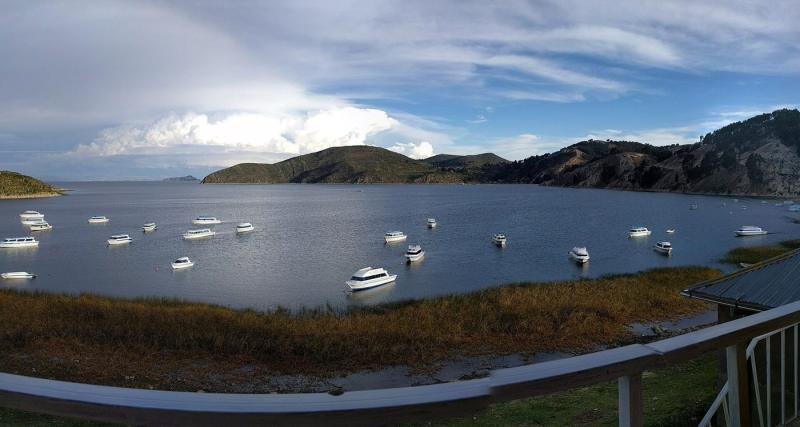
The boat noses into the stone dock on Amantaní, and a woman in a dark shawl and a wide embroidered skirt steps forward when the guide calls a name. You did not pick her house, and she did not pick you. The community did, by turn. Twenty minutes later you are sitting on a low bench in her courtyard, out of breath above the lake, holding a cup of muña tea while a child of the house studies your boots.
Short answer: Community tourism, turismo rural comunitario in Peru, means a village-run visit where you eat and sleep with a farming family. Near Puno it means Amantaní, Llachón or Taquile: a simple room, dinner and breakfast at the family table, and nights around 31°F (minus 0.5°C) in June and July. Our trips include one night on Amantaní, from US$917.
Other pages tell you a homestay is authentic and life-changing. This one covers the practical side: who decides which house you get, what the family expects of you, what to bring as a gift, how the bathroom works at night, what you will eat, and where your money goes. Then a night on Amantaní, hour by hour, the way our trips run it.
| Question | Answer |
|---|---|
| Official name in Peru | Turismo rural comunitario (TRC), turismo comunitario in MINCETUR's 2019 guidelines |
| Homestay communities near Puno | Amantaní island, Llachón on the Capachica peninsula, Taquile island |
| Altitude | Lake 12,507 ft (3,812 m), Pachatata hilltop 13,550 ft (4,130 m) |
| Amantaní | 3.58 sq mi (9.28 km²), about 3,557 people (2017 census), Quechua-speaking, no cars |
| Llachón | About 46 mi (74 km) northeast of Puno, per MINCETUR |
| Night low in Puno, June and July | 31°F (minus 0.8 to minus 0.5°C), SENAMHI normals 1991 to 2020 |
| Meals with the family | Dinner and breakfast |
| Our trips with a homestay night | 4 packages, 5 to 12 days, from US$917 per person, double room |
What is community tourism in Peru?
Community tourism in Peru is tourism in rural areas planned and run by the organized local population for the benefit of the whole community, in the definition of Peru's tourism ministry, MINCETUR. The official term was turismo rural comunitario, often shortened to TRC. MINCETUR set national guidelines for it in 2007 and replaced them in 2019 with guidelines for turismo comunitario.
The ministry's community tourism strategy worked with 66 enterprises in 72 communities across 11 regions, Puno and Cusco among them, and reported that host families raised their income by more than 20 percent in the first year, according to the state news agency Andina in November 2019. In a 2024 statement quoted by Gestión, MINCETUR named Llachón, on the Capachica peninsula, as a place where visitors can live and sleep with local families.
A TRC label tells you that a community has organized itself to receive visitors. It does not tell you which family you will sleep with, and we have not found a public register that lists host houses one by one. Ask any operator which community association you will stay with, then look it up.
How does the host family rotation work?
On Amantaní, the families who host keep a guest room to a standard agreed with the tour operators, and the community spreads arrivals among them, so your house is assigned when you land rather than chosen in advance. The point is fairness: the income from visitors goes around the island instead of piling up in the houses nearest the dock.
In practice it means three things. You cannot request the family from a blog post you read. Couples and families sleep in the same house, while a larger group is split across neighboring houses. And the family you meet may be hosting for the first time that season or the fiftieth, which is part of the deal. Our guide knows the hosts and checks the room before you settle in.
What does a host family expect from a guest?
A host family expects you to arrive with the guide, eat what is served at the times they eat, join in when invited and go to bed early. Most hosts are farmers who get up before dawn, and a guest who stays out late or skips dinner without a word throws off the household. Spanish helps, a few words of Quechua win smiles, and sign language and patience do the rest.
Gifts that are actually useful
Bring a small gift for the household and hand it to the host mother when you arrive, not to the children at the door. Useful gifts are staples the island has to ship in by boat: a bag of rice, cooking oil, fruit, or school supplies such as notebooks and pencils for the family's children. Skip candy, which does the children's teeth no favors on an island far from a dentist.
Children in the house
Children are often the best part of the night. They will show you the animals, test your Spanish and laugh at your trouble breathing on the path. Play with them, read with them, let them try your headlamp. Do not give them money or sweets directly, and do not take them anywhere outside the family's sight.
Money
Pay the homestay through the operator so the rotation gets its share. On our trips the night, dinner and breakfast are already in your price. Carry small soles notes for a tip to the family, for crafts the family shows you, and for the reed boat ride at the Uros the next day. Our guide to money and tipping in Peru covers how much cash to carry.
Can you take photos of your host family?
Yes, if you ask first every time and accept a no without arguing. Ask the parents, not the children, before photographing a child. Many families are happy to pose in the courtyard or at the stove, and fewer want a lens in their faces while they work. In ceremonies, the leader decides, and the guide passes on the answer.
Think about what happens after the photo, too. Do not post children's faces with the name of their island and their house. If a family enjoys the pictures, ask our guide to help you send prints on a later trip, which is the gift hosts remember longest.
What are the bathroom, water and cold like?
Expect an adobe room with a real bed and heavy wool blankets, a toilet that is often shared and sometimes across the courtyard, and little or no hot water. Electricity is limited on Amantaní, where the old island generator no longer runs, so your headlamp does most of the work. The night is the hard part.
Puno's average low is 31°F (minus 0.8 to minus 0.5°C) in June and July and 43°F (5.9°C) in January, per SENAMHI's 1991 to 2020 normals, and adobe rooms have no heating. Sleep in a hat, thermal layers and socks, and keep the next day's clothes inside the blankets with you. A walk to the toilet at 3 a.m. under that sky is cold, and it is also the moment most guests talk about later.
Bring this in a small daypack and leave the suitcase at your Puno hotel or with our staff:
- Headlamp with spare batteries
- Warm hat, gloves, fleece and a thermal base layer for sleeping
- Toilet paper, wet wipes and hand sanitizer
- Refillable water bottle and purification tablets
- Sunscreen and sunglasses for the boat
- Any medicine you take, plus snacks
Altitude matters more than comfort. You sleep above the lake's 12,507 ft (3,812 m), higher than Cusco, so arrive with at least two nights in Cusco or Puno behind you. Our guide on Lake Titicaca altitude has the CDC advice, and the Peru packing list covers the rest.
What will you eat, and can the family handle a special diet?
You eat what the family eats: a soup of quinoa or potato, boiled potatoes and broad beans, a fried egg or lake trout, and a hot cup of muña, a wild mint the islands use for tea. Breakfast is simple, often bread or pancakes with tea. Portions are generous, and leaving food can embarrass your host, so ask for a small plate rather than refusing one.
Vegetarians are easy if we know when you book. Vegans are harder, since eggs and cheese are the family's main protein, so bring something to add. Gluten-free works with potatoes and quinoa, and severe allergies should be written on your booking so the guide can brief the host in Spanish. Drink bottled or treated water, not from the yard tap.
What does a night with a family feel like, hour by hour?
A night on Amantaní on our trips runs from a 5 a.m. pickup in Puno to the boat back the next morning. The times below are the ones our itineraries keep, with sunset and sunrise worked out for Puno through the year.
- 05:00. On the trips with the night bus, our staff meet you at the Puno terminal. Breakfast in town, then the boat leaves the port.
- Mid-morning. Ceremony at Llachón, on the Capachica shore: a water blessing and an offering to the earth and the lake, about an hour, the guide translating.
- Around midday. The short crossing to Amantaní. Your host meets you at the dock and walks you up to the house with your daypack. Lunch is not included that day, so carry snacks.
- Afternoon. Rest, help in the field or the kitchen if you are invited, or just sit in the courtyard and watch the light change on the lake.
- About 4 p.m. The climb to Pachatata, about 45 minutes, to 13,550 ft (4,130 m). Slow steps, frequent stops.
- Sunset. A thanksgiving offering led by a local leader as the sun goes down, from about 5:15 p.m. in June to about 6:15 p.m. in January.
- After dark. Down by headlamp and dinner with the family. On many evenings the community holds a dance in its hall and your hosts lend you a poncho or a skirt.
- Night. Bed early, hat on. The stars over the lake on a dry-season night are the reason to step outside once.
- Sunrise. From about 5:05 a.m. in December to about 6:05 a.m. in June. Breakfast with the family, then goodbye at the dock.
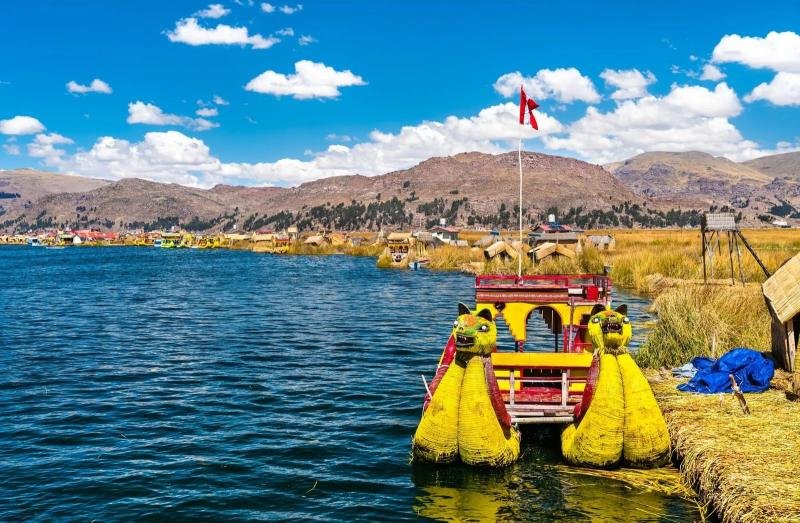
- Morning. The boat back stops at the Uros reed islands, where a community gathering with music, dance and traditional dress gives thanks for water, before you return to Puno.
Amantaní, Llachón or Taquile: which community suits your trip?
Amantaní is the island for a night with a family, Llachón is the mainland village you can reach by road on the Capachica peninsula, and Taquile is the island for a day of weaving and lunch with island families. They are all Quechua-speaking communities on the Peruvian side of the lake, and they feel different.
| Amantaní | Llachón | Taquile | |
|---|---|---|---|
| Where | Island in the open lake | Village on the Capachica peninsula, mainland | Island in the open lake |
| From Puno | About 3 hours by tourist boat | About 46 mi (74 km) by road, or by boat | About 28 mi (45 km), 2.5 to 3 hours by tourist boat |
| People | About 3,557 (2017 census) | Not published for the village | About 2,200 |
| Language | Quechua and Spanish | Quechua and Spanish | Quechua and Spanish |
| What a visit looks like | Night with a family, Pachatata climb, evening dance | Village life on the shore, kayaking, homestays, per MINCETUR | Weaving, the village square, lunch cooked by island families |
| Known for | Hilltop temples of Pachatata and Pachamama | Shoreline and fields of the peninsula | Textile art on UNESCO's list since 2008 |
| Best for | A first homestay | Travelers who prefer a road to a boat | One day in Puno |
| On our trips | The homestay night | The water ceremony, no overnight | Day boat tour with lunch, no overnight |
Our pick for a first visit is Amantaní, because the island is organized around overnight guests and the Pachatata sunset gives the evening a center. Llachón suits people who get seasick or want to keep a car within reach. Taquile is the right choice when you have one day in Puno and want textiles more than a night out. For the islands themselves, read Taquile and Amantaní.
Is a homestay good for families with kids?
Yes, for children who can handle cold nights, a long boat day and the altitude. Kids usually bond with the host children faster than adults do, and a night on a farm with no cars is something they remember. Wait if your child is very young or has not yet spent two nights above 11,000 ft. Our Peru with kids guide covers altitude and pacing.
Is community tourism ethical, and who gets the money?
Community tourism is fair when the community decides how visitors are received and is paid a fixed amount that does not depend on a tourist's mood. It goes wrong when outside operators take the boats and the margins, when too many visitors arrive at once, or when a few families near the dock host everyone. UNESCO's listing for Taquile names tourism pressure as a risk to the island's weaving tradition.
Here is how our trips work, and what we cannot tell you. The homestay night and both ceremonies are paid to the families and the ceremony leaders as part of your price, separate from our guide's wage, and nobody asks you for money during a ceremony. We do not publish the amount each family receives, because it is agreed with the community and changes. If that matters to you, ask us before you book and we will tell you what we can.
Which of our trips include a night in a community?
Four packages of 5 to 12 days include a night with a family on Amantaní, the ceremony at Llachón and a stop at the Uros, from US$917 per person in a double room. The two longest add a full day with a farming community in the Sacred Valley. We do not sell a homestay on its own.
| Trip | Days | Homestay night | Other community time | From (US$) |
|---|---|---|---|---|
| Cusco to Lake Titicaca in 5 days | 5 | Day 4, Amantaní | Llachón ceremony, Uros | 917 |
| Aymara ceremony, Lima, Cusco and Puno, 8 days | 8 | Day 6, Amantaní | Llachón ceremony, Uros, free day in Puno | 1,097 |
| Ceremony trip from Lima, 10 days | 10 | Day 8, Amantaní | Farming day with a Sacred Valley community (field work, huatia earth oven, adobe workshop), Llachón, Uros | 1,347 |
| Ceremony trip complete, 12 days | 12 | Day 10, Amantaní | Same farming day, the Huasao wetland recovered by its community, Llachón, Uros | 1,377 |
| Uros and Taquile boat day from Puno | 1 | None | Lunch with Taquile families, community entry fees included | 127 |
The night on Amantaní is in a family home on every tier, and the tiers change only the hotels in Cusco and Aguas Calientes. If you only have a day in Puno, the Uros and Taquile boat tour gives you lunch with Taquile families and the community craft shop, without the night. Compare the four homestay trips on our page of Lake Titicaca trips with a homestay and a ceremony.
Updated October 2026. Package prices and itineraries read from our package pages on 20 October 2026.
If the ceremony is what draws you, read our guide to spiritual tours in Peru.
Sources
- Andina, families in community tourism raise income by more than 20 percent (MINCETUR strategy, November 2019)
- Gestión, MINCETUR on Llachón (August 2024)
- RM 402-2019-MINCETUR, guidelines for community tourism (LEAP database)
- Amantaní, Wikipedia
- Taquile Island, Wikipedia
- UNESCO, Taquile and its textile art
- Puno climate, SENAMHI normals 1991 to 2020, via Wikipedia
Related tours


Questions people ask
What is community tourism in Peru?
Community tourism, or turismo rural comunitario, is Peru's name for visits that a rural community plans and runs itself, with families hosting travelers in their homes. MINCETUR has published national guidelines for it since 2007. Around Lake Titicaca, Amantaní, Llachón and Taquile receive most visitors.
How does an Amantaní homestay work?
You land by boat from Puno and a member of the host family leads you up to the house. The community spreads visitors among host families in turn. You get a simple room, dinner and breakfast with the family, a sunset climb to Pachatata and, on many evenings, a community dance.
Is Amantaní island worth the overnight stay?
Yes, if you can sleep in a cold room with a shared toilet and want an evening with a farming family more than a hot shower. The night gives you the Pachatata sunset, a family dinner and a sky full of stars. With only one day in Puno, take the Uros and Taquile boat tour instead.
What gifts should I bring to a homestay in Peru?
Bring useful staples: rice, cooking oil, fruit, or notebooks and pencils for the children. Hand it over on arrival, to the adult who receives you. Skip candy and do not hand money or sweets to children. One bag of staples per party is plenty.
Is there a bathroom and hot water in an Amantaní homestay?
Expect a basic toilet shared with the family and little or no hot water. Rooms have no heating and electricity is limited. Bring a headlamp, toilet paper, wet wipes and warm layers to sleep in, and expect nights around freezing from June to August.
Can I visit Llachón and sleep there?
Llachón families host visitors overnight, per MINCETUR, and the village is reachable by road about 74 km (46 mi) from Puno. On our trips Llachón is the morning stop for the water ceremony, and the night is spent on Amantaní.
Can vegetarians do a homestay on Lake Titicaca?
Yes, if you say so at booking time, so our guide can warn the family. Quinoa, potatoes, broad beans and eggs are the base of island cooking. Vegans should bring extra food, and anyone with a severe allergy should write it on the booking.
Is a homestay safe for solo travelers?
Yes. Host families on Amantaní receive visitors through the community and the tour operator, and our guide knows where each traveler sleeps. The risks are cold, altitude and an uneven path in the dark, so carry a headlamp and walk slowly at night.
How much does a homestay cost on Lake Titicaca?
We do not sell the homestay on its own. On our trips the night on Amantaní, with dinner, breakfast and the community payments, is part of packages from US$917 for 5 days, US$1,097 for 8, US$1,347 for 10 and US$1,377 for 12, per person in a double room.
Do people on Amantaní speak English?
Very few. Families speak Quechua at home and Spanish with visitors. Our guide translates when you arrive and at the ceremonies, and a phrasebook with a few Spanish and Quechua words makes dinner much easier.
This guide was last reviewed in October 2026. Prices, rules and timetables are quoted with the date we checked them.