





Lares Trek vs Inca Trail: Andean Villages or Inca Ruins
Choose the Classic Inca Trail for Inca ruins every day and the walk into Machu Picchu through the Sun Gate, if you can book a permit months ahead. Choose the Lares Trek for Quechua weaving villages, hot springs and one hard pass at about 4,700 m, with no permit. Both take 4 days and cost about the same with us.

In this guide
On the first afternoon of the Lares Trek you sink into the hot springs with steam rising off the water and cold mountain air on your shoulders. By evening you are in Sondor, watching a woman spin alpaca wool on a hand spindle while a pot boils on the fire. On the Inca Trail at that same hour, you would be settling into camp at the foot of the long climb to Dead Woman's Pass.
Short answer: Choose the Classic Inca Trail for Inca ruins every day and the walk into Machu Picchu through the Sun Gate, if you can book a permit months ahead. Choose the Lares Trek for Quechua weaving villages, hot springs and one hard pass at about 4,700 m, with no permit. Both take 4 days and cost about the same with us.
The two treks answer different questions. The Inca Trail asks how the Incas reached Machu Picchu, and it answers with stone stairs, mountain temples and the Sun Gate at dawn. Lares asks how people in the Andes live today, and it answers with alpaca herds, a night with a weaving family and a glacier pass between two lakes. We run both, at US$787 and US$797, so price will not settle it for you. This page will.
The two treks in one paragraph each
The Classic Inca Trail is about 43 km (26 mi) of Inca road from KM 82 to Machu Picchu over 4 days and 3 nights of camping. It crosses Dead Woman's Pass at 4,215 m (13,830 ft) on day 2, passes the sites of Runkurakay, Sayacmarca, Phuyupatamarca and Wiñay Wayna, and walks you into Machu Picchu through the Sun Gate. It needs a permit issued in your name, sold in limited numbers, and it closes every February.
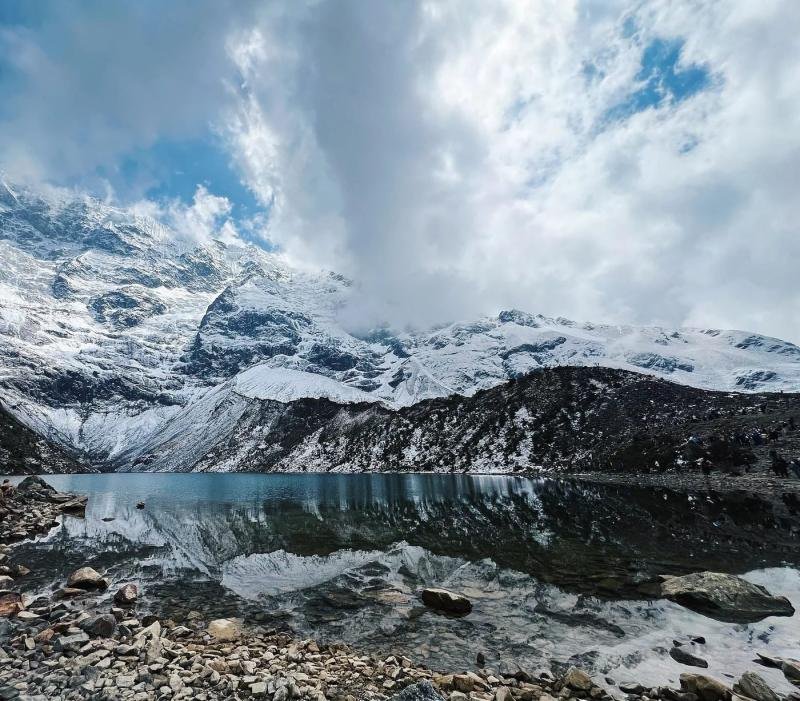
The Lares Trek is a 4-day route through the Lares valley, north of the Sacred Valley, with 2 nights of camping and 1 hotel night in Aguas Calientes. Day 1 starts with the Lares hot springs and ends with a weaving family at Sondor. Day 2 crosses the Huacahuasi Pass at about 4,700 m (15,420 ft), past the lakes Auroray Cocha and Yurac Cocha. Day 3 walks down to Ollantaytambo for the train. Day 4 is Machu Picchu with a guide. No trail permit is needed.
Lares and the Inca Trail side by side
The table compares the numbers that decide most bookings. Read the permit and season rows first, because they tell you if the Inca Trail is even possible on your dates.
| Lares Trek, 4 days | Classic Inca Trail, 4 days | |
|---|---|---|
| Our price, from | US$787 | US$797 |
| Nights | 2 camping, 1 hotel in Aguas Calientes | 3 camping |
| Distance | Not published by the agency, walking times only | About 43 km (26 mi) |
| Highest point | Huacahuasi Pass, about 4,700 m (15,420 ft) | Dead Woman's Pass, 4,215 m (13,830 ft) |
| Hardest part | One long climb and descent on day 2 | Stone stairs on days 2 and 3 |
| Permit | None for the trail | Required, in your name, capped at 500 a day with staff |
| Closed | Open all year | Every February |
| What you see | Weaving villages, hot springs, glacier lakes | Inca sites every day, the Sun Gate |
| Arrival at Machu Picchu | Train to Aguas Calientes, bus up on day 4 | On foot through the Sun Gate on day 4 |
| Who carries the load | Mules, up to 6 kg (13 lb) per person | Porters |
Which one is harder?
The Inca Trail is harder overall, and Lares has the harder single moment. The Inca Trail gives you two long days of steep stone steps: up to Dead Woman's Pass on day 2, then over the second pass and down what feels like endless stairs on day 3, which is hard on knees. Lares packs its effort into one big day. You climb for about two hours to a pass roughly 500 m (1,600 ft) higher than Dead Woman's Pass, then descend a long way on dirt paths. The other days on Lares are short.
If your knees complain on stairs, Lares is kinder. If your lungs complain at altitude, the Inca Trail stays lower. On either trek, spend two to three nights in Cusco or the Sacred Valley before you start. The CDC Yellow Book places the start of altitude illness risk at sleeping altitudes of 2,450 m (8,000 ft), and both treks sleep above that on most nights. Ask your doctor about altitude medication before the trip.
What you see on each
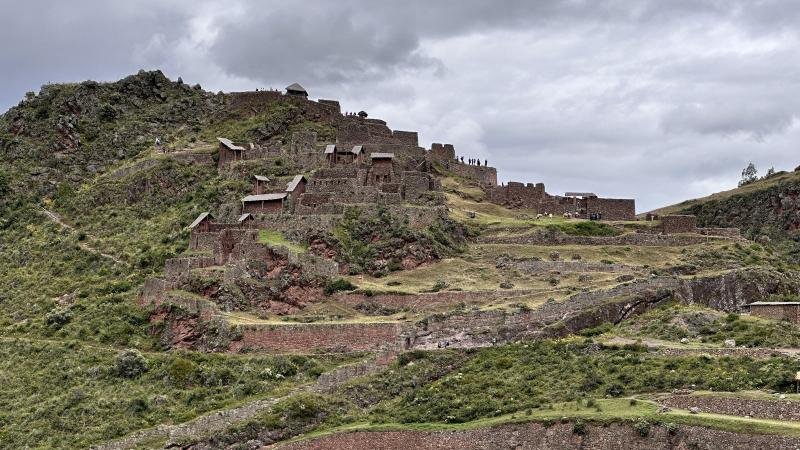
On the Inca Trail you see Inca architecture every day, in cloud forest and on ridges that day visitors to Machu Picchu never reach, and you arrive at the citadel the way its builders did. You share the trail with other groups, since every permit holder walks the same route.
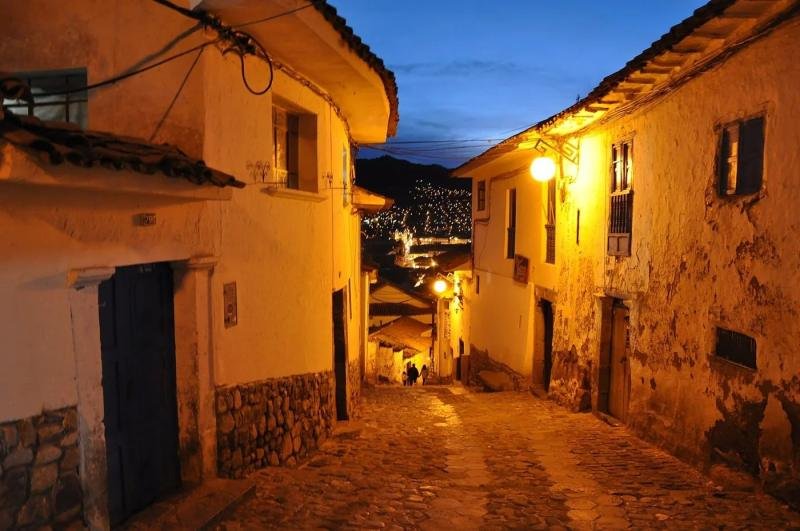
On Lares you see the Andes as people live in them: stone corrals, women spinning wool as they walk, potato fields at the edge of the possible, two glacier lakes below the pass and a queuña forest on the way down. Ask before you photograph anyone, and if you want to support the families, buy textiles directly from them. You reach Machu Picchu by train and bus on day 4, like a day visitor.
Permits, booking and season
For many travelers the permit decides everything. Inca Trail permits are capped at 500 a day including guides, cooks and porters, sold through licensed operators, and the dry-season dates go months ahead. We organize the trip, and the trekking itself is run by a partner operator authorized by SERNANP, which holds the licenses. Our Inca Trail permits guide explains how and when to book.
Lares needs no trail permit, only the Machu Picchu ticket for day 4, so outside June to August you can book it a few weeks out. It also runs in February, when the Inca Trail is closed, though December to March brings daily rain and mud on the Lares paths.
Our recommendation
Book the Classic Inca Trail, 4 days, from US$797, if you can plan four months or more ahead, you want ruins and the Sun Gate, and you are willing to train on stairs. Book the Lares Trek, 4 days, from US$787, if the permits are gone, you travel in February, you would rather meet people than count ruins, or you like the idea of a hot spring before the hard day.
Still torn between them? Our Salkantay vs Inca Trail comparison adds a third option with big mountains and no permit, and the treks from Cusco compared puts all of them in one table.
Related tours


Questions people ask
Is the Lares Trek better than the Inca Trail?
Neither is better, they are different. The Inca Trail wins for Inca ruins and the Sun Gate arrival at Machu Picchu. Lares wins for village life, weaving and quieter paths, and it needs no permit. If the Inca Trail permits are sold out for your dates, Lares is the alternative we suggest most often to travelers interested in people.
Is the Lares Trek harder than the Inca Trail?
Lares has one harder day, with a pass at about 4,700 m (15,420 ft), higher than Dead Woman's Pass at 4,215 m. The Inca Trail is harder overall, with two days of steep stone stairs that wear out your knees. Lares days 1 and 3 are short. Fit hikers who acclimatize two or three nights in Cusco finish both.
Do you need a permit for the Lares Trek?
No. Lares needs no trail permit, only a Machu Picchu entrance ticket for the visit on day 4, and our package includes it. That is why you can book Lares a few weeks ahead outside high season, while Inca Trail permits are capped at 500 a day and sell out months ahead in the dry season.
Does the Lares Trek end at Machu Picchu?
Yes, by train. On day 3 you walk down to Ollantaytambo and ride the train to Aguas Calientes, then visit Machu Picchu with a guide on day 4, entering through the main gate. You do not walk in through the Sun Gate the way Inca Trail hikers do.
Can I do the Lares Trek in February?
Yes. Lares stays open in February, when the Classic Inca Trail closes for maintenance. Expect rain most days and muddy paths from December to March, and colder, clearer days from May to September. Machu Picchu is open in February, so day 4 goes ahead as planned.
Sources
- CDC Yellow Book, High-Altitude Travel and Altitude Illness checked October 2026
- Our package, Lares Trek 4 days (itinerary, pass height, mules, price) checked October 2026
- Our package, Classic Inca Trail 4 days (itinerary, distance, price) checked October 2026
- Reglamento de Uso Turístico Sostenible de la Red de Caminos Inka del Santuario Histórico de Machupicchu (permit cap) checked October 2026
- Dirección Desconcentrada de Cultura Cusco, February closure of the Inca road network checked October 2026
This guide was last reviewed in October 2026. Prices, rules and timetables are quoted with the date we checked them.