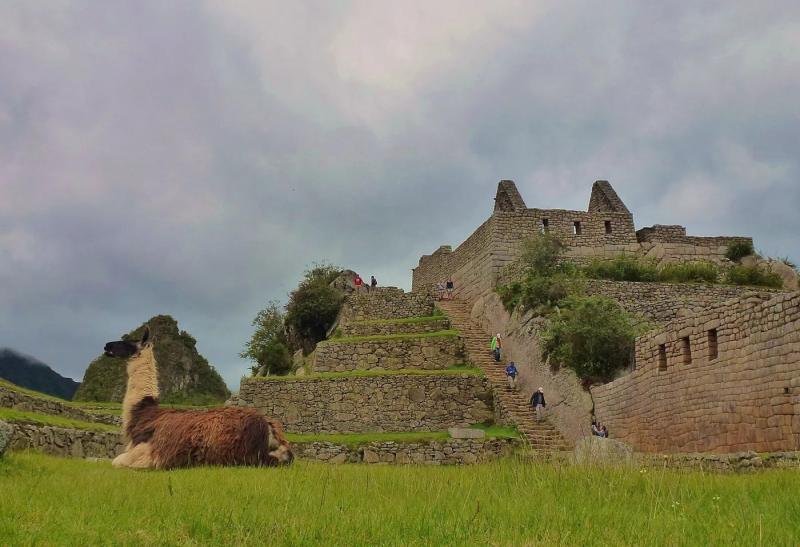
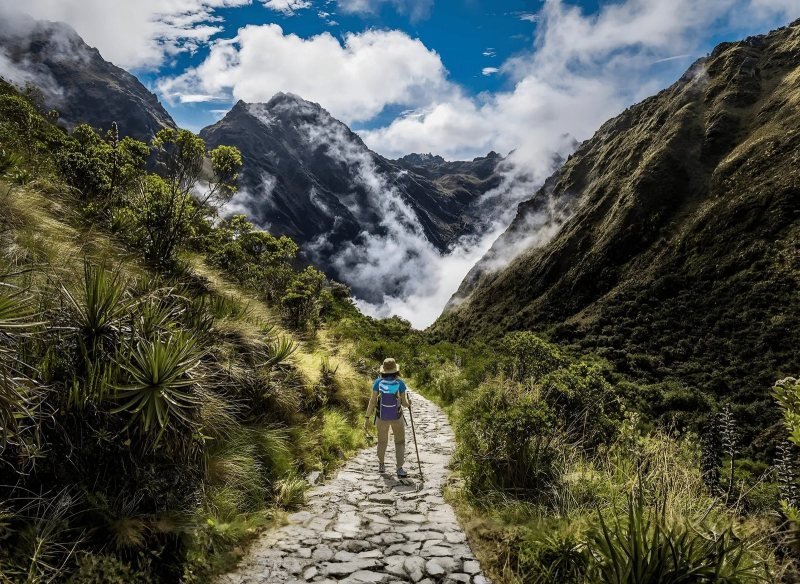
The Inca stone road into Machu Picchu: 43 km (26 mi) in 4 days from km 82, over Dead Woman's Pass at 4,215 m (13,829 ft), on a permit limited to 500 people a day.
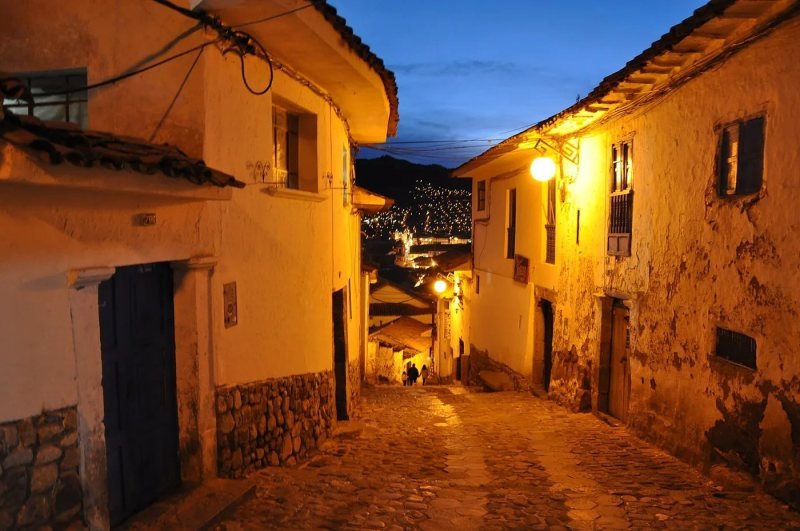
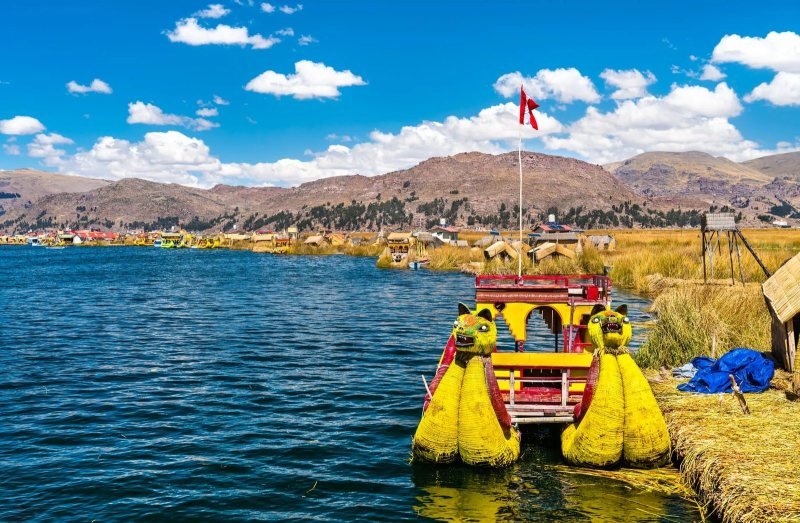
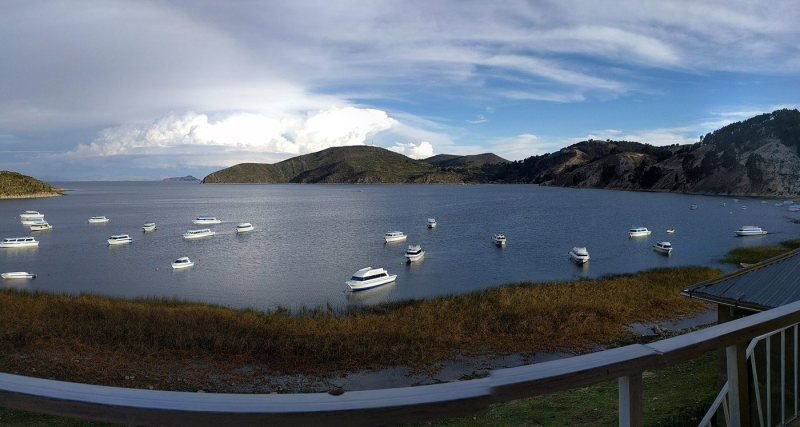
The Bolivian side of Lake Titicaca (Copacabana, Isla del Sol), La Paz and the Uyuni salt flats, reached by road from Puno in our Peru and Bolivia tours.
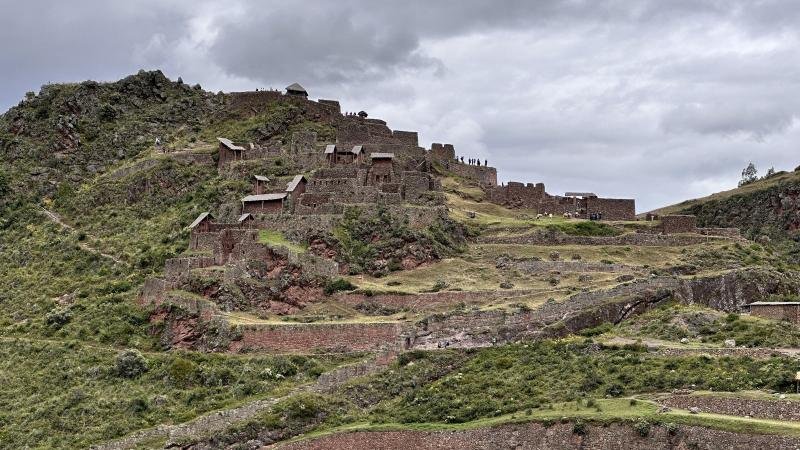
Choquequirao is an Inca site on a ridge above the Apurímac River, with terraces, plazas and temples spread over the mountainside, and no road or train to reach it. You walk in and you walk out. This trek is for experienced hikers who want an Inca site almost to themselves and accept a hard physical price for it. It does not end at Machu Picchu. If you want both a trek and Machu Picchu, book the Salkantay trek 5 days instead.
Why it is harder than the altitude suggests
The highest point is only about 10,010 ft (3,050 m), lower than Cusco. The difficulty is the canyon. On day 1 you descend about 4,640 ft (1,415 m) to camp near the river. On day 2 you cross the Apurímac and climb more than 5,000 ft (about 1,550 m) up to the site, in heat and with little shade. On day 4 you climb back out of the canyon to the trailhead. Those two climbs are the hardest walking days on any of our treks.
What the climbs earn
Most of an afternoon and a morning inside Choquequirao with your guide, and a campsite close to the ruins. You see the terraces, the main plaza, the water channels and, on the lower slope, the terraces decorated with white stone llamas. On a weekday outside July and August you share the site with a handful of other hikers.
Choquequirao with few peopleA guided visit over two days of an Inca site that is reached only on foot, with a camp near the ruins.
Llama terracesTerrace walls on the lower slope decorated with llama figures in white stone, built into the masonry.
The Apurímac canyonYou descend to the river and climb the far side, with the canyon walls and snow peaks above you.
Pack animals carry the campTents, kitchen and your duffel go on horses or mules with their handlers. You hike with a daypack.
Price
One service level, priced per person on shared service: Standard from US$767. It covers the guide, cook, pack animals, camping, meals on the trail, the site entrance and transport from Cusco. There is no hotel in this trek. Single travelers and quotes for your own group go through the free quote form.
Pick your arrival date
Pick the day you leave Cusco. The trek runs all year and needs no permit beyond the site entrance, which we buy for you.
Send the free quote form with your date and every hiker's passport data. Two to four weeks ahead is usually enough, even in July. Tell us about knee problems or any medical condition, since the trail is far from roads.
Day by day
Open a day to see the hours, the altitude and where you sleep. Times are the ones our guides actually keep.
Day1
Cusco, Cachora, Capuliyoc, Chiquisca
Camp at Chiquisca, about 4,920 ft (1,500 m), high point about 9,560 ft (2,915 m) at Capuliyoc
Camp near the Apurímac About 14 km, 6 to 7 hours Descent about 4,640 ft (1,415 m) Lunch and dinner
04:30
Pickup at your Cusco hotel
Pickup between 4:30 and 5:00 a.m. About four hours by road west of Cusco, through the town of Cachora, to the trailhead at Capuliyoc.
Late morning
Capuliyoc viewpoint
Your first look at the canyon, with the Apurímac River far below and, on a clear day, the snow peaks on the far side. The trail starts here.
Afternoon
Down into the canyon
A long, dusty descent on switchbacks. It gets hotter with every hour you go down. Walk with poles, protect your knees, and refill water at every stop the guide calls.
Late afternoon
Camp at Chiquisca
Camp at about 4,920 ft (1,500 m). Warm nights and early dinner, because day 2 starts climbing before the sun hits the slope.
Day2
Chiquisca, Apurímac River, Marampata, Choquequirao
Camp near the site, high point about 10,010 ft (3,050 m)
Camp near Choquequirao About 16 km, 7 to 8 hours Gain over 5,000 ft (about 1,550 m) Breakfast, lunch and dinner
05:30
Early start to the river
Down to the bridge over the Apurímac, then the climb begins. Starting early keeps you in shade for the first hours.
Morning
The long climb
Switchbacks up the far side of the canyon for most of the day. It is steady, steep and hot. Go slower than you want to, eat at every break, and drink before you feel thirsty.
Afternoon
First visit to Choquequirao
The site sits at about 10,010 ft (3,050 m). Your guide starts with the main plaza and the upper sector while the light is warm.
Evening
Camp near the ruins
Dinner under a sky with no city light. Nights are cool at this height, so pull on a fleece.
Day3
Choquequirao, Apurímac canyon
Second camp in the canyon, high point about 10,010 ft (3,050 m)
Second camp in the canyon Morning inside the site About 16 km, 6 to 7 hours Breakfast, lunch and dinner
Morning
Choquequirao in depth
The agricultural, residential and ceremonial sectors, the water channels, and the terraces with the white stone llamas, which take a steep side trail to see. Ask your guide to take you there, most groups skip them.
Afternoon
Back down toward the river
You retrace the route down into the canyon to the second campsite. Your quads feel this one more than the climb.
Day4
Apurímac canyon, Capuliyoc, Cachora, Cusco
Back in Cusco 6:00 to 7:00 p.m. (hotel not included), high point about 9,560 ft (2,915 m)
About 16 km, 6 to 7 hours The climb out of the canyon Breakfast and lunch Van back to Cusco
Early morning
Climb out to Capuliyoc
The last and hardest climb of the trek, back up the switchbacks you came down on day 1. Start in the dark if your guide suggests it. The sun on this slope is fierce by 10 a.m.
Midday
Lunch near Cachora
Lunch after the climb, then the van.
Afternoon
Back to Cusco
About four hours by road. You reach Cusco between 6:00 and 7:00 p.m.
Where you go
An in-and-out route from the trailhead above Cachora, down to the Apurímac River and up the far side to Choquequirao.
Interactive map loads from OpenStreetMap when the page is online. Route: Cusco · Cachora · Capuliyoc · Chiquisca · Apurímac River bridge · Choquequirao.
Stops on the itinerary Machu PicchuDashed line: road and rail route
What is included
Included
Choquequirao entranceEntry to the archaeological site, valid for the two days you spend there.
Official bilingual guideEnglish and Spanish, with first aid training, for all four days.
Cook, handlers and pack animalsThey carry tents, kitchen, food and your duffel.
3 nights campingTents and kitchen equipment at each camp.
MealsLunch and dinner on day 1, three meals on days 2 and 3, breakfast on day 4.
Shared transportCusco to Cachora on day 1, and back on day 4.
First aid kit and phone supportKit carried by the guide, briefing in Cusco before you leave.
Not included
Sleeping bag rentalBring your own, or rent one from us.
Meals not listedBreakfast on day 1, lunch and dinner on day 4.
Travel insuranceStrongly recommended, with evacuation cover. The trail is remote.
TipsOptional, for guide, cook and handlers.
Hotel in CuscoNot part of the trek.
Machu PicchuNot on this route.
Good to know
Fitness firstChoose this trek only if you hike regularly with big climbs. Train with 4,000 ft days on hills or stairs, and with long descents.
Heat in the canyonThe bottom of the canyon is hot and dry, often around 85°F (30°C) at midday. Sun hat, long sleeves, electrolytes and 3 liters of water capacity.
AltitudeLower than Cusco the whole way, so altitude sickness is rare here. Spend at least one night in Cusco before for the drive and the first climb.
SeasonMay to October is dry and the trail is firm underfoot. From December to March the slopes are muddy and slippery, and rockfall is more common.
What to carry yourselfDaypack with water, snacks, sunscreen, insect repellent, a light rain shell, a fleece for the camp at the site, headlamp, passport and cash. Poles are a must.
Cable car statusA cable car to Choquequirao is planned but not built. As of October 2026 the project was still in its tender stage with ProInversión. Until it opens, walking is the only way in.
Travelers on this itinerary
Sacred Lake Titikaka is new; these are public Tripadvisor reviews of Viajes Cusco Perú, the family agency that operates every package on this site.
4.9
78 reviews Viajes Cusco Perú, Sep 2026
4.7
83 reviews Google Maps
Reviews shown: Viajes Cusco Perú travelers (sample of public Tripadvisor reviews, read Sep 30, 2026).
C
Claudia I.Sep 2026, with friends
Dream Come True
"Incredible experience!! Beautiful landscape and beautiful people. We were lucky to be guided by Vladimir, who with his lovely personality and amazing knowledge made this trip a great learning experience."
Translated from Spanish by Tripadvisor
E
Erika C.Jul 2026, solo traveler from Argentina
I recommend them, people!
"All the tours I did (Machu, Humantay Lake, Rainbow Mountain, Sacred Valley) were spectacular!!! From picking me up at the hotel (always punctual and attentive, notifying about everything!) to the guides I had who were also excellent."
Excerpt. Translated from Spanish by Tripadvisor
M
Martin Rogelio I.Jul 2026, Sullana, Peru, with family
Professionalism, trust, and human quality
"I came to this agency by recommendation and, after traveling with them on two occasions, I can say that it was an excellent decision. I must highlight the professionalism of the guides, who made every tour very interesting and safe."
Excerpt. Translated from Spanish by Tripadvisor
Still have questions?
Everything we get asked about this package before people book.
How hard is the Choquequirao trek?
Very demanding, the hardest of our treks. The site is lower than Cusco, but you descend about 4,640 ft (1,415 m) into the canyon and climb more than 5,000 ft back up to the ruins, then do it again in reverse. Expect heat, steep switchbacks and 6 to 8 hour days.
Can you reach Machu Picchu from Choquequirao?
Not on this 4-day route. It goes in and comes back out the same way to Cachora. Longer treks link Choquequirao to Machu Picchu in about 8 days, but we do not sell that route. If you want Machu Picchu, book it as a separate trip after you rest.
Is there a cable car to Choquequirao?
Not yet. A cable car across the Apurímac canyon is planned. ProInversión still had it in tender (as of October 2026), with construction to follow. Today the only way to reach the site is on foot or with a horse.
How is Choquequirao different from Machu Picchu?
Both are Inca sites on ridges above a river, and Choquequirao covers a large area of terraces and buildings. The difference is access. Machu Picchu has a train, a bus and thousands of visitors a day. Choquequirao takes two days of walking, so you share it with very few people.
Can I ride a horse instead of walking?
On parts of the trail, yes, if you arrange it in advance. Handlers in Cachora rent saddle horses for the climbs. Tell us in the quote form and we confirm availability and the extra cost before you travel.
When is the best time to hike to Choquequirao?
We recommend May, June or September. The trail is dry, the sky is clear over the canyon, and the heat at the bottom is easier to handle than in October. December to March brings mud and rockfall, though the site stays open.
Bike down from the Abra Málaga pass, hike through coffee country to the Cocalmayo hot springs, walk the railway to Aguas Calientes and tour Machu Picchu on day 4. No camping above 7,000 ft.
Four days through the Lares valley: hot springs, a night with a weaving family, a 15,420 ft pass between glacier lakes, then the train to Aguas Calientes and a guided Machu Picchu visit.
Four days and about 26 miles on the Inca road from KM 82 over Dead Woman's Pass (13,830 ft) to the Sun Gate and Machu Picchu. Permit, guide, cook, porters and camping included.